EXPLAINED | Craig Silvey Jailed: What Happens to Books When Their Authors Commit Crimes?
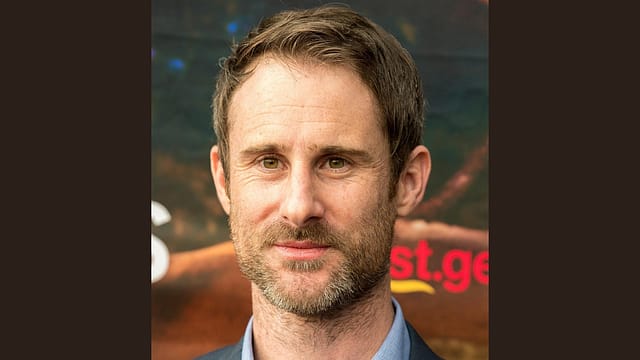
What happened to Craig Silvey?
Australian author Craig Silvey was sentenced to seven months in prison on November 2, 2026, for possessing and distributing child exploitation material. The 44-year-old had pleaded guilty in May after police searched his Western Australian home in January and seized electronic devices. Two other charges were dropped. The material in the case included images and videos of adults sexually abusing children.
Judge Hayley Cormann described his conduct as “repulsive” and “degrading”. His sentence was backdated to October 22, and he is eligible for parole.
The conviction has consequences beyond his imprisonment. His books had already been removed from teaching programmes, shop shelves and some libraries. Publishers had suspended sales and promotion. The sentence brings renewed attention to decisions that began months earlier.

The Era of Forever Wars
30 Oct 2026 - Vol 05 | Issue 44
Coping with an explosive Middle East
Who is Silvey, and why has this shaken readers?
He wrote books that children and teenagers were encouraged to read.
His 2009 novel Jasper Jones became a widely taught Australian coming-of-age story and was adapted for cinema. Runt, published in 2022, follows a girl and her dog and also became a film. His other books include Rhubarb and Honeybee.
For schools and parents, recommending an author can carry an element of trust. Silvey’s conviction has made his books difficult territory for readers who previously found reassurance in them.
Why were his books pulled before he was sentenced?
Schools, booksellers and publishers began making their own decisions when he was charged in January.
Western Australia initially stopped his books being used as public-school teaching texts while the case proceeded. After his guilty plea in May, Education Minister Sabine Winton made that exclusion permanent. Students who had already studied the texts were not to be penalised for referring to them in their final-year literature examination.
Allen & Unwin said in May that it would review the steps available to end its relationship with him, having paused sales, distribution and promotion. Some public libraries also removed his books.
These actions served different purposes. A school was deciding what children should study. A publisher was deciding whether to continue a commercial relationship. A bookseller was choosing what to stock.
Have other children’s writers faced similar consequences?
Yes. Britain’s William Mayne is a close parallel.
Mayne, an award-winning children’s author, admitted 11 indecent assaults and was sentenced to two-and-a-half years in prison in 2004. Walker withdrew titles; Jonathan Cape postponed a book, while Hodder put another on hold.
An essay published by the British section of the International Board on Books for Young People later recorded that no new conventionally published novels followed his imprisonment. His literary reputation could not preserve his former publishing career.
The United States offers another example. Gerard Jones, whose comics credits include Green Lantern, pleaded guilty to possessing and distributing child sexual abuse material. He received a six-year prison sentence in August 2018, according to the US Justice Department.
In February 2024, comics publication Bleeding Cool documented the omission of two Jones-written stories from the advertised contents of a DC/Marvel collection.
Comics also expose a complication: a story can involve a writer, co-writer, artist and other contributors. Removing it affects more people than the offender.
Has an author’s work ever returned after a conviction?
Yes. Japan’s Nobuhiro Watsuki provides a significant example.
The creator of Rurouni Kenshin was fined ¥200,000 in 2018 for possessing child sexual abuse material. Publication of the series’ Hokkaido storyline had been suspended. It resumed in June that year.
In announcing the return, publisher Shueisha cited Watsuki’s remorse and argued that responding to readers through the work was a responsibility shared by author and publisher. That was the publisher’s justification for resuming publication.
The example shows why a conviction alone cannot predict a book’s commercial future. Publishers can decide to withdraw work, suspend it or bring it back.
Does taking a book off a school list mean it is banned everywhere?
No. The decision’s scope matters.
Removing a novel from a teaching programme means students will no longer be assigned it there. A library withdrawal limits access through that collection. A publisher stopping sales changes commercial availability. Each needs to be described precisely.
Silvey’s exclusion from Western Australian public schools should therefore be identified as that specific decision. Calling it a worldwide ban would exaggerate what happened.
Libraries also have a different role from shops. The Australian Library and Information Association’s access principles support access to controversial material and resist attempts to restrict information, while recognising government powers of censorship.
That creates a difficult institutional question: should retaining a book be understood as preserving access, or as continuing to endorse its author?
Can keeping the work amount to honouring the offender?
Sometimes the argument is about public recognition as much as access.
After entertainer Rolf Harris’s 2014 conviction, his Australian hometown of Bassendean removed his artwork from council display and placed it in storage. Councillors disagreed over whether his art should be considered separately from his conduct. The paintings were retained rather than destroyed.
Literary scholar Penni Russon, writing about Silvey for Monash University in May, argued that readers can make different choices about books they once loved. She also pointed to library collection policies and the risks of removing work solely because of an author’s reputation.
A reader keeping an existing copy, a school assigning a text and a publisher commissioning another book involve different responsibilities. Treating them as one decision makes the debate harder to resolve.
How does this reach Indian readers?
Through the international books already marketed here.
Simon & Schuster India’s catalogue lists Watsuki’s Rurouni Kenshin volumes with rupee prices. His work’s continued commercial life is therefore relevant to Indian readers, too.
For an Indian parent, teacher or bookseller, the practical questions are recognisable: is the book appropriate for its reader, what is known about its creator, and what does recommending or buying it support?
What happens next?
Silvey’s sentence settles his punishment at this stage. Publishers, schools, libraries and readers still have separate decisions about his work.
Western Australia has already made its public-school exclusion permanent. Elsewhere, the useful question is which institution has acted, what it has removed and whether that decision concerns teaching, lending, promotion or sale.
A book’s future can differ across all four. Understanding who made each decision is the starting point for judging it.