Donald Trump downplays Iran war as US strikes Qeshm Island; explosions reported near Strait of Hormuz
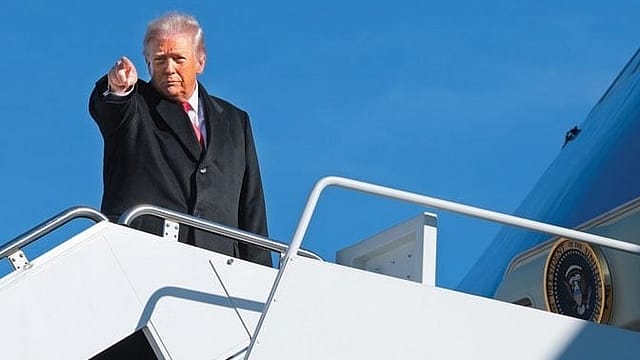
Donald Trump says the United States has little appetite for another war with Iran. But reports of American strikes on a strategically important Iranian island, explosions along the country's southern coast and Tehran's claims of shooting down US drones tell a more complicated story.
The Wall Street Journal, citing US officials, reported on Monday that American forces had struck targets on Qeshm Island in the Strait of Hormuz. The officials described the operation as defensive, saying it was intended to prevent Iranian forces from threatening commercial shipping through the vital waterway.
The report comes as Iran's state media reported multiple explosions on Qeshm Island and in the nearby coastal city of Bandar Lengeh early Tuesday. The cause of the blasts was not immediately established, and Iranian reports did not provide confirmed details of casualties or damage.
US strikes on Qeshm Island: What happened near the Strait of Hormuz?
US officials said an Iranian missile had targeted an American fighter aircraft, prompting it to return fire. They also said US forces intercepted another missile launched from Qeshm Island towards commercial shipping.

The Era of Forever Wars
30 Oct 2026 - Vol 05 | Issue 44
Coping with an explosive Middle East
The reported strikes are part of a series of limited American military operations against Iranian targets in recent weeks, the newspaper said. Washington has kept these actions relatively low-profile to avoid signalling a return to a wider military campaign.
Qeshm is strategically significant because of its location near the Strait of Hormuz, through which a substantial share of the world's oil and gas shipments pass. Any military escalation in the area could threaten commercial vessels and unsettle global energy markets.
Iran claims three US drones shot down near Hormuz
The developments followed a statement by Iran's Islamic Revolutionary Guard Corps (IRGC), which claimed that its forces had intercepted three US drones near the Strait of Hormuz. An Iranian state broadcaster reported that two MQM-170 reconnaissance drones were brought down south of Qeshm Island using electronic warfare systems. The IRGC separately claimed that an MQ-9 drone was destroyed east of the strait.
“The 55th advanced MQ-9 drone was tracked and brought down over the airspace east of the Strait of Hormuz by the Aerospace Force's newly developed air defense system, operating under the country's unified air defense network,” the IRGC said.
There was no immediate independent confirmation of the drone claims from the US military. The Associated Press also reported that Washington had carried out limited defensive strikes after Iranian forces allegedly used surface-to-air missiles against US assets.
Trump says Iran wants a deal as oil prices fall
Despite the military reports, Trump has publicly sought to play down the prospect of renewed large-scale fighting. Speaking to reporters on Monday, he said: “We had a war with Iran. We won,” adding, “I don’t know if you even call it a war because we haven’t been doing any fighting for months.”
In a post on X, Trump also linked falling oil prices to expectations of a diplomatic breakthrough, saying: “Oil Prices are DROPPING LIKE A ROCK, down almost $10 a Barrel, A RECORD, because people feel that there will not be a War with Iran. Iran wants a settlement as soon as possible. It could happen!”
Vice President JD Vance struck a similarly hopeful note in an interview with Fox News. “The President and I both feel pretty good about the prospects for potentially coming to a negotiated settlement. We're going to keep on working at it... We've certainly made some progress. We'll see if we can make some more.”
Iran warns Washington as diplomatic efforts continue
Tehran, however, has not suggested that an agreement is assured. Foreign Minister Abbas Araghchi said Iran was prepared for diplomacy as well as military confrontation, warning that renewed attacks would invite a stronger response. He said Tehran had presented its conditions and a proposed diplomatic plan, leaving the next move to Washington.
Foreign Ministry spokesperson Esmail Baghaei also said responsibility for advancing negotiations rested with the US, reiterating Iran's demand that the American naval blockade be lifted.
The competing signals leave the region facing an uneasy contradiction: diplomatic messages suggest a possible settlement, while reported strikes and military claims point to continuing confrontation. With the Strait of Hormuz central to global energy trade, even a limited exchange could have consequences far beyond Iran's southern coast.
(With inputs from ANI)