Danger Beneath the Waves: Toxic Pufferfish Surge in Mediterranean Waters Near Greece
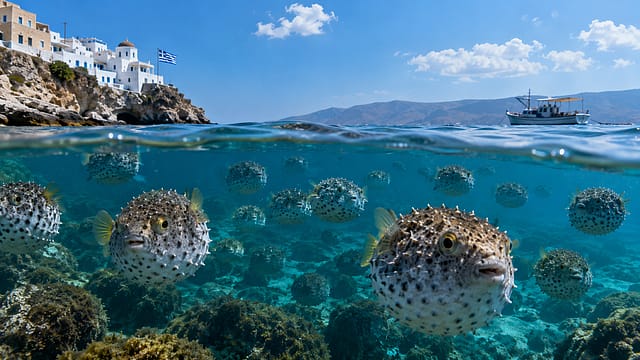
Greece's holiday coastline is facing an unusual marine threat this summer. Toxic pufferfish, capable of inflicting serious bite injuries, have been migrating into Mediterranean waters in growing numbers, alarming fishermen, tourism bodies, and health authorities alike.
With teeth powerful enough to cause severe physical injury and a separate, deadly neurotoxin in their skin and organs that is dangerous only if the fish is eaten, these fish are forcing both locals and holidaymakers to rethink how safe Greece's beaches really are.
What Is the Silver-Cheeked Pufferfish?
The silver-cheeked pufferfish, also known as Lagocephalus sceleratus, is a toxic fish species native to the Indian and Pacific oceans.
It reportedly travelled into the Mediterranean via the Suez Canal in search of warmer waters, eventually reaching Greece in time for the summer tourist season.
Why Are Fishermen So Worried About This Toxic Fish?

The Modi Years
02 Oct 2026 - Vol 05 | Issue 40
A Nation Rebuilt
Fishermen across Greece say the pufferfish have been destroying their nets and devouring their catch.
One Crete-based fisherman reportedly described the species as the destruction of the sea, warning that a bite could take a finger clean off, as per LADBible.
Has Anyone Been Injured by These Pufferfish in Greece?
An elderly woman was reportedly bitten without provocation at a beach near Athens last week and needed stitches.
The Greek Red Cross has since issued a public health warning, noting the fish's bite can cause serious injuries and heavy bleeding.
What Should You Do If You Are Bitten by a Pufferfish?
The wound should be cleaned immediately with water and soap, pressure applied to control bleeding, and medical attention sought without delay.
Is the Pufferfish's Neurotoxin Deadly?
The skin and organs of the silver-cheeked pufferfish contain tetrodotoxin, a powerful neurotoxin capable of causing heart and lung failure in humans if ingested.
Why Do Experts Say Encounters Are Rare but Should Not Be Ignored?
A marine expert from the Hellenic Centre for Marine Research said people should avoid approaching the fish, noting that past incidents involving lost fingers or toes occurred mostly when people tried to touch or feed them, as per LADBible.
What Is the Greek Government Doing About the Pufferfish Crisis?
Greece has introduced a paid fishing scheme offering €5.33 per kilogram for caught pufferfish, which are then frozen and incinerated, while Cyprus already operates a similar programme that pays about €4.73 per kilogram.
Should Tourists Cancel Their Greece Holiday Over This?
Medical and tourism associations in Crete have urged calm, stating there is no imminent danger to swimmers and that exaggeration often clouds such debates.
(With inputs from yMedia)