China Using Kindergartens to Assimilate Tibetans, Says Human Rights Watch Report
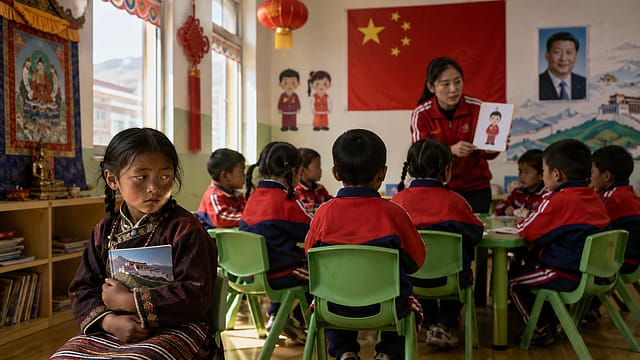
The Human Rights Watch has stated in a report that the Chinese government is enforcing Chinese-medium instruction and ideological influence on kindergarten children as part of efforts to assimilate Tibetans.
The 72-page report, titled Start with the Youngest Children: China Uses Preschools to 'Integrate' Tibetans, outlines that a 2021 directive issued by China's Ministry of Education, known as the Children's Speech Harmonisation plan, requires the use of standard Mandarin Chinese for all preschool teaching in ethnic minority regions.
While kindergartens are theoretically allowed to provide additional sessions in minority languages, these communities no longer hold legal authority to implement such provisions.
By significantly restricting Tibetan-language instruction during early childhood, a crucial period for language learning and identity development, the report argues that the Chinese government is accelerating the erosion of the Tibetan language and culture.
"The Chinese government, by focusing on kindergarten-aged children, is intensifying its efforts to strip Tibetan children of their native language, culture, and identity," said Maya Wang.

Open Minds 2026
26 Jun 2026 - Vol 05 | Issue 26
The power of ideas and arguments in 50 portraits
How did Human Rights Watch investigate China’s policies in Tibetan regions?
The findings are based on a review of Chinese legislation, policy papers, academic studies, and media reports.
Human Rights Watch also conducted interviews with seven Tibetans and experts who have recent, first-hand knowledge of conditions in Tibetan regions, where access remains highly restricted.
According to the report, many Tibetan children leave preschool either unable or reluctant to speak their native language, even within their own families.
Parents noted that within weeks or months of enrolling in kindergarten, children begin speaking almost exclusively in Chinese.
The 2021 Harmonisation Plan is described as the result of decades of policy changes that have steadily reduced mother-tongue education for minority groups.
Since the 1984 Regional National Autonomy Law, China has progressed through multiple stages of implementing mandatory Chinese-language instruction at increasingly earlier ages.
While this transition had already been completed in primary and secondary education, kindergartens were previously the last space where Tibetan could still serve as the primary medium of instruction.
In 2021, the Ministry of Education mandated that all kindergartens in minority regions adopt the "national common language," meaning standard Chinese, for all teaching and caregiving activities.
References to "bilingual education" were subsequently removed from official policy documents.
(With inputs from ANI)