Can Trump End Birthright Citizenship? Here's What His New Executive Orders Actually Do
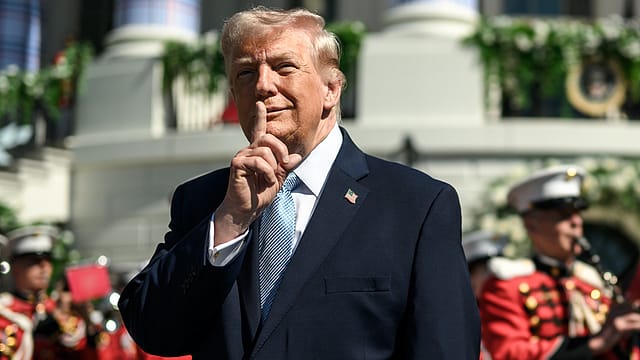
Donald Trump is once again taking aim at one of the most contentious issues in US immigration policy.
The US President has signed two executive orders targeting birthright citizenship and birth tourism, describing the move as a major crackdown on what he calls abuses of the American immigration system. The orders come weeks after a Supreme Court ruling reaffirmed constitutional protections for children born in the United States, setting up what could become another major legal and political battle.
Here's what you need to know.
What has Trump announced?
President Trump has signed two executive orders aimed at tightening US citizenship rules and curbing what his administration describes as misuse of the immigration system. "We're cracking down very big," Trump told reporters at the Oval Office. "They've taken birthright citizenship, and they've made a joke out of it." He said the measures were necessary after what he called an "unfortunate" Supreme Court decision on birthright citizenship, adding that his administration was now "making adjustments."
Rise of the Pivotal Power
18 Sep 2026 - Vol 05 | Issue 38
The BRICS declaration is a strategic victory for Modi
What is the first executive order about?
The first order seeks to identify categories of children born in the United States who, according to the administration's interpretation of existing law and recent Supreme Court guidance, should not automatically qualify for US citizenship. The White House said the list of categories is not exhaustive and is based on what it describes as historical exceptions recognised by the courts. Senior adviser Stephen Miller said the administration believes the Citizenship Clause of the Fourteenth Amendment has been interpreted too broadly over the years.
What is 'birth tourism'?
Birth tourism refers to the practice of foreign nationals travelling to the United States primarily to give birth so that their child automatically acquires US citizenship. Trump's second executive order directs the State Department and the Department of Homeland Security to stop issuing visas for that purpose and take steps to halt the practice. "For the first time ever in American history, birth tourism is banned," White House adviser Stephen Miller said, describing it as one of the biggest abuses of the immigration system.
Why is birthright citizenship so controversial?
The debate centres on the Citizenship Clause of the Fourteenth Amendment, adopted after the American Civil War. For more than a century, it has generally been understood to guarantee US citizenship to almost anyone born on American soil, regardless of their parents' immigration status. The Trump administration argues the provision was intended for a much narrower purpose and should not automatically apply in every circumstance involving foreign nationals.
Didn't the Supreme Court already rule on this?
Yes. Only weeks ago, the US Supreme Court reaffirmed that children born in the United States to parents who are unlawfully or temporarily present in the country are entitled to birthright citizenship under the Fourteenth Amendment. The court also relied on its landmark United States v. Wong Kim Ark precedent, which has long been regarded as the foundation of birthright citizenship in America. That is why Trump's latest executive orders are expected to face close legal scrutiny and could trigger fresh court challenges.
Who could be affected?
According to the White House, the executive orders are intended to target categories such as certain foreign nationals, people acting on behalf of foreign governments, and what the administration describes as individuals exploiting the immigration system through birth tourism. The administration says the measures are designed to preserve the integrity of American citizenship while preventing what it considers fraudulent use of US immigration laws.
What happens next?
The executive orders take immediate effect, but they are unlikely to be the final word. Given the Supreme Court's recent reaffirmation of birthright citizenship, legal experts expect the measures to face constitutional challenges that could once again bring the issue before the federal courts. For now, Trump's orders mark the latest chapter in one of America's longest-running and most politically charged immigration debates.
(With inputs from ANI)