‘Big Mistake’: Iran Warns of ‘Relentless’ Response as US Military Build-Up Raises Tensions
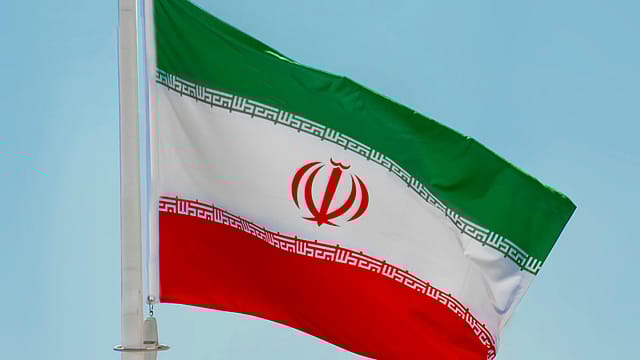
Iranian Parliament Speaker Mohammad Bagher Ghalibaf condemned what he described as enemy aggression, warning that any hostile action would be met with a strong response.
His remarks came against the backdrop of reported US military build-ups in the region, including the deployment of thousands of Marines aboard the USS Tripoli.
Ghalibaf said Iran, under the leadership of the Supreme Leader, would defend its rights and retaliate forcefully.
In a post on X, he wrote, "The enemy promotes its desires as news while threatening our nation at same time. Big Mistake. If they hit one, they'll take several back. God willing, the people of Iran, under the leadership of the Supreme Leader, will make the enemy regret the aggression and reclaim their rights."
He accused adversaries of waging a "soft war" by spreading psychological operations to destabilise Iran ahead of or alongside military action.
How did Ghalibaf respond to potential US ground invasion threats?
Earlier on Monday, he also warned against deceptive pre-market "news" campaigns, describing them as tools to manipulate financial markets during the conflict.
In further remarks, Ghalibaf issued a direct warning to Washington, stating that any ground invasion would face a "relentless" and "decisive" response.

Open Minds 2026
26 Jun 2026 - Vol 05 | Issue 26
The power of ideas and arguments in 50 portraits
He alleged that US diplomatic initiatives, including a proposed 15-point peace plan, were a cover for invasion plans.
He declared Iranian forces were "waiting" for US troops, threatening to "set them on fire" and "punish their regional partners forever".
Why did Iran say it will treat US and Israeli actions alike and target American bases?
He also said Tehran would no longer distinguish between US and Israeli actions, designating all American bases in the region as legitimate targets for the Islamic Revolutionary Guard Corps.
He added that the situation in the Strait of Hormuz would not return to its pre-war status.
In Washington, White House Press Secretary Karoline Leavitt said the US was assessing the credibility of Iran’s current leadership during ongoing negotiations.
Responding to questions about President Donald Trump and his confidence in Iran’s new regime, she said, "Well, that's part of the ongoing process that's taking place and the ongoing negotiations.”
“Of course, anything that they say to us privately will be tested, and we will ensure that they are being held accountable to their word. And if they are not, the President has laid out the military consequences that the Iranian regime will see if they don't hold true to the words that we are hearing privately behind the scenes,” Leavitt added.
Clarifying Trump’s remark that the new leadership appeared "more reasonable", Leavitt added, "When the President says "more reasonable," again, these folks are appearing more reasonable behind the scenes privately in these conversations than perhaps some of the previous leaders who are now no longer on planet Earth because they lied to the United States and they strung us along in negotiations, and that was unacceptable to the President, which is why many of the previous leaders were killed.”
“So again, this is another historic opportunity for Iran to do the right thing, to rid themselves of their nuclear ambitions, and to come to a deal with this President and the administration, or again, they will see the grave consequences of the United States armed forces, which they are continuing to see every day throughout this operation," she said.
How is Rizwan Saeed Sheikh facilitating US-Iran talks and confidence-building measures?
Meanwhile, Pakistan has stepped in as a facilitator for dialogue between the two sides. Pakistan’s Ambassador to the United States, Rizwan Saeed Sheikh, said efforts to broker peace were underway but cautioned that the process would be complex and time-consuming.
Speaking to Fox News, Sheikh pointed to initial confidence-building measures, including the movement of ships, as progress toward formal negotiations.
"And in terms of the who exactly dealing part we are dealing with is the fact that the confidence-building measure demonstrated in movement of ships that were allowed, eight in the first instance and now another twenty in the second instance, is not just a concept of operation, but a proof of concept that has been implemented to induce confidence in the system, which has to be a prerequisite for commencement of the actual negotiation procedure, but contacts are in place, " he said.
He also highlighted communication challenges within Iran due to the ongoing conflict.
"Let's look at the fact that Iran is a war-torn country with the communication channels certainly disrupted, and it is not even easy to get responses in a good time from the system that currently is in place there,” he added.
“So you would have noticed that these deadlines have been extended in the recent past, and we are working religiously with regard to the current deadline," he said.
Sheikh added that while Pakistan was facilitating discussions, the outcome ultimately depended on the parties involved.
"The process will take its own due course, and while Pakistan continues to be the facilitator, it is actually upon the conflicting parties themselves to not only create the prerequisites for negotiations and to be able to conduct them in all earnest, but they will have to take the decisions which make it successful," he said.
Earlier, President Trump said indirect negotiations with Iran through Pakistani intermediaries were making "positive progress", though he declined to provide details when asked about the prospects of a ceasefire agreement that could reopen the Strait of Hormuz.
(With inputs from ANI)