The case against rushing Starlink into India
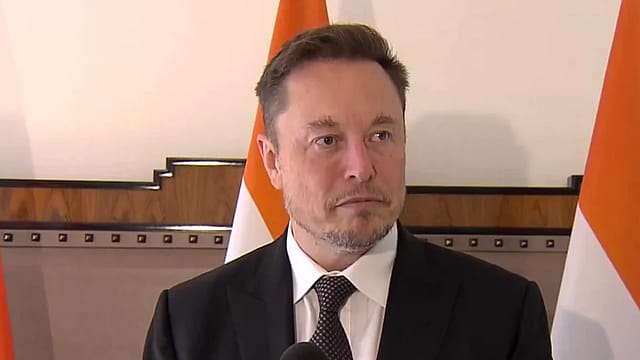
Elon Musk, founder of SpaceX, a company valued at over US$2 trillion whose biggest revenue-generating division is Starlink, has lately been on a social media offensive over the satellite internet service's launch in India not getting government clearance. He blames Reliance Jio’s promoters, the Ambanis. Jio itself has not got clearance for a similar service but even if what Musk says is true, exercising caution in allowing Starlink into India is merited. And he himself is the reason for such circumspection.
Companies worth trillions are rarely under the absolute whim of one man but with SpaceX it is. Musk is also an intensely political person and does not limit himself to the United States where he is based. His opinions, publicly voiced from X, the social media platform he controls, include opposing immigration of Muslims into the UK, claiming a ‘genocide’ of white people in South Africa and supporting a political party in Germany during elections there. Combine that then with Starlink itself being used as a geopolitical tool. In Iran, when protests were happening against the government, the internet service was made free to help agitators. In the first year of the Ukraine Russia war, the Ukrainians wanted Starlink's coverage to extend to Crimea but Musk refused claiming he didn’t want the war to escalate. A private businessman was taking decisions usually reserved for governments.

Zeroing In on ECI
09 Oct 2026 - Vol 05 | Issue 41
Constitutional legitimacy versus political opportunism
Musk argues that Starlink providing internet access to remote regions of India is a way of removing people from poverty. There might be an element of truth in it, but it’s not a one-to-one correspondence. People don’t immediately become internet-literate to find new livelihoods. It takes time. Among the few successes of India have been the telecom revolution and expansion of internet services. This is an area where an entity like Starlink is not an immediate necessity.
What India needs is more competition among Indian companies that provide such a service. It might take time to get there but it is better than letting go of some of its internet keys to companies and individuals whose political incentives can be aligned elsewhere.