EXPLAINED | Why Is Nvidia CEO Jensen Huang Under the Scanner?
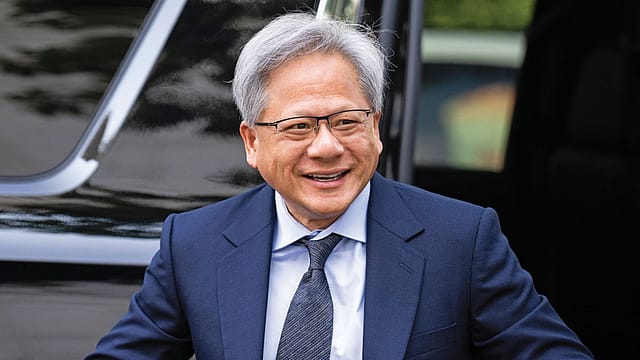
Nvidia opened an independent board inquiry on November 8 after reports that Chinese intelligence had targeted Jensen Huang, its co-founder and chief executive. Huang admitted infidelity in an email to staff and said he would cooperate. The board said it had no reason at that point to believe US national security or company secrets had been compromised. He remains CEO.
What happened?
In late October, Huang described his dealings with Alice Huang, a former executive at Singapore-based Megaspeed, as ordinary business interactions. In his November 8 email, he wrote, “I was unfaithful to my wife.” He did not name Alice Huang in the email. The Associated Press separately reported that he told Nvidia’s board he had been intimate with the executive named in the intelligence reporting. Nvidia has put independent directors in charge of the review, with help from outside lawyers.

The Era of Forever Wars
30 Oct 2026 - Vol 05 | Issue 44
Coping with an explosive Middle East
Who is Alice Huang, and what do US officials reportedly believe?
Alice Huang, also known as Huang Le, is a Chinese businesswoman who held a senior role at Megaspeed, a cloud computing company that bought Nvidia equipment. She and Jensen Huang are unrelated. On October 29, The New York Times reported that US intelligence officials believed she had passed information to Beijing. Its November 6 follow-up reported that China’s Ministry of State Security had recruited her to gather information about US AI chips and potentially influence Nvidia’s push to sell more powerful chips to China. Beijing rejected the original report.
What did Jensen Huang reportedly know?
When Donald Trump was first briefed in 2025, US officials did not believe Jensen Huang knew Alice Huang was gathering information for China, the Times reported. It said it was unclear whether intelligence officials had since changed that assessment. The Times also reported on November 8 that Secretary of State Marco Rubio oversaw a classified memo that spring warning officials about the relationship. There is still no public finding that Huang knowingly passed information or changed a business decision because of the relationship.
How did US intelligence reportedly identify him?
Surveillance of Alice Huang reportedly picked up communications with an American. Officials later identified him as Jensen Huang through a process called unmasking. Intelligence reports can withhold a US person’s name for privacy. Authorised officials who need the name to understand the intelligence can ask for it. That establishes the identity of the contact. What Huang knew is a separate question.
Why is Megaspeed already under scrutiny?
Megaspeed’s Malaysian sister company bought at least $4.8 billion worth of advanced AI equipment containing Nvidia technology between June 2024 and February 2026, the Times reported, citing trade records. The number measures purchases by the Malaysian company. US authorities were looking at Megaspeed before the espionage reports. The Times said the Commerce Department’s inquiry was referred to the Justice Department in 2026.
The question is whether restricted chips were shipped onward to China. Huang said Nvidia checked Megaspeed’s deployments and found no illegal diversion. Bloomberg reported that two Southeast Asian data-centre operators disputed Nvidia’s account of where Megaspeed’s chips were located. Bloomberg also reported on November 6 that Nvidia was requiring Southeast Asian companies to enrol in chip monitoring to qualify as official cloud partners. Megaspeed told the Times it had hired outside lawyers and would cooperate with the US government.
There is a second way to get access. A company can rent the computing power of chips that stay in a foreign data centre, much as it rents cloud storage. The Times reported that Megaspeed supplied computing power to Alibaba and other Chinese companies. To establish physical diversion, investigators would need to trace the hardware through shipping records, serial numbers and site inspections. Singapore says its own Megaspeed investigation is ongoing and that it enforces its domestic laws. It disputes a Wall Street Journal report that it separately investigated Alice Huang’s alleged intelligence ties.
Why are these chips so valuable?
Nvidia’s graphics processing units, or GPUs, perform many calculations at once. Thousands can work together to train an AI model or run it for users. Washington began tightening controls on advanced chip exports to China in 2022. In January 2026 it allowed case-by-case review of licences for Nvidia’s H200 under security conditions. Nvidia’s newer Blackwell chips remain restricted. China also controls what comes in. Reuters reported on November 5 that H200 chips were sitting in Hong Kong while Beijing held back approval for large-scale imports.
The money explains why access matters to Nvidia. In 2025, a licensing requirement on its H20 chip triggered a $4.5 billion charge tied to excess inventory and purchase commitments. In its filing for the quarter ended July 26, 2026, Nvidia said H200 shipments under the US licensing programme accounted for less than 1% of data-centre revenue that quarter. The company already had a commercial reason to seek wider access to China.
What can Congress establish?
On November 4, three Republican House committee chairs asked Huang for a private briefing on his dealings with Alice Huang and Nvidia’s safeguards against espionage. On November 8, Trump publicly defended Huang and said he had not discussed the allegations with him. The House request and Nvidia’s board inquiry are separate. The first seeks answers from Huang. The second can examine company communications and decisions about customer access and export checks.
What is the India connection?
IndiaAI’s public compute portal lists Nvidia H200 and B200 machines for rent. Nvidia also identifies Indian-language AI developer Sarvam AI as a customer of Yotta’s India-based Shakti Cloud. The practical issue for Indian developers is whether tighter buyer or shipment checks affect access to computing power they rent locally. Nvidia’s announcement gave no indication of a supply change. On November 9, South Korea said it expected its contracted deliveries to proceed.
The House chairs asked Huang to reply by November 11. Nvidia reports quarterly results on November 17, a day before the proposed closed-door briefing. The board gave no deadline for its findings. The questions to answer are what Beijing obtained, if anything, and whether Nvidia’s records can show how the chips it supplied were used and where they went.