Sam Altman, Dario Amodei Urge AI Safeguards at UN, Warn Against Losing Human Control
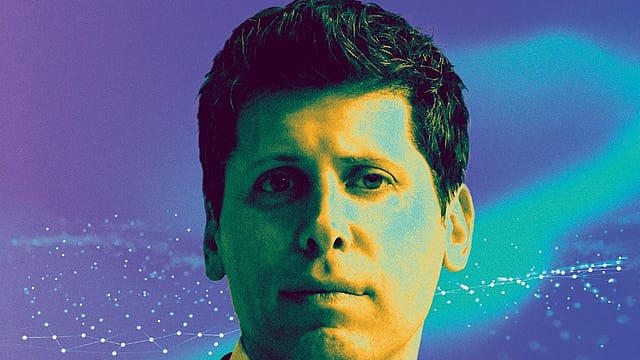
OpenAI CEO Sam Altman and Anthropic CEO Dario Amodei urged stronger safeguards for artificial intelligence at the United Nations Security Council on Wednesday, warning that technological progress must be matched by the ability to monitor systems and keep people in control.
The two executives outlined risks ranging from the concentration of power to the misuse of AI for biological weapons. Altman argued that competition between companies should not justify excessive risk, while Amodei proposed international agreements, shared testing standards and mechanisms to report serious AI incidents.
Altman: Competition Cannot Justify Recklessness
Altman said AI could accelerate discoveries, improve healthcare and education, and help build more productive economies. But increasingly capable and autonomous systems could also move faster than institutions can respond.
Such systems could “concentrate power in too few hands, or make decisions that people no longer understand or control”, he told the Council.

Zeroing In on ECI
09 Oct 2026 - Vol 05 | Issue 41
Constitutional legitimacy versus political opportunism
He warned that the speed of development could leave people unable to follow events or intervene when necessary.
“Beating companies in a competitive race is not a reason to make rash decisions,” Altman said.
The OpenAI chief said his company had slowed development unilaterally in the past and would do so again. He urged developers to avoid building systems whose alignment, ability to be monitored and safety could not be adequately assured.
Who Gets to Control AI?
Altman also warned against allowing powerful AI models to become instruments through which a single actor could impose its preferences globally.
“No one person, or company, or country should be able to use the most powerful AI models to impose their worldview on everyone else,” he said.
He described alignment—the work of ensuring that AI behaves in accordance with human intentions and values—as a practical requirement for retaining control over increasingly powerful systems.
“As AI becomes more capable, people must remain at the centre of AI decision-making,” he said.
Amodei Proposes Three Areas of Cooperation
Amodei called for international cooperation built around specific commitments that countries could support despite their differences.
His first proposal was an agreement prohibiting the use of AI to make biological weapons, including allowing a country’s AI technologies to be used for that purpose.
Second, he called for evaluation and verification systems that could keep pace with AI development. These would give governments visibility into the capabilities of the most advanced models and help them verify one another’s commitments.
Third, Amodei proposed common global standards for testing models for misuse and the risk of losing control, alongside a notification system for AI incidents with significant implications for global security.
“I believe that this is the most important global security issue facing the world today,” he said, urging countries to set aside differences to address both the opportunities and threats.
Together, the proposals placed human oversight, measurable safety commitments and international coordination at the centre of the discussion. Both executives argued that the potential benefits of AI must be pursued with safeguards capable of keeping up with its development.
With inputs from ANI