Why Are Faf du Plessis and Jonty Rhodes Backing ETPL? Europe’s Newest T20 League Explained
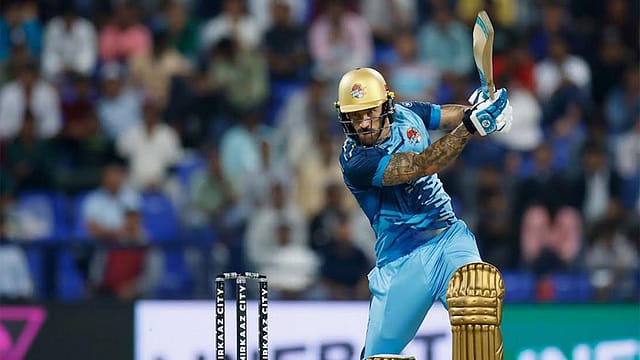
Faf du Plessis will not merely turn up, collect a cheque and swing his bat in Europe’s newest T20 competition. He has bought a piece of it.
Du Plessis, Jonty Rhodes and Heinrich Klaasen are among the co-owners of Rotterdam Dockers, one of six franchises in the inaugural European T20 Premier League. Bollywood actor John Abraham and managing partner Madhukar Shree are also part of the ownership group. Du Plessis will captain the team when the tournament begins on August 26.
For Rhodes and du Plessis, the bet stretches beyond one franchise or one season. They believe a professional league pairing European talent with some of the biggest names in world cricket could help narrow the distance between emerging teams and the sport’s established powers. But what exactly is the ETPL, why are so many celebrated cricketers backing it and can another franchise tournament genuinely transform European cricket?
Rise of the Pivotal Power
18 Sep 2026 - Vol 05 | Issue 38
The BRICS declaration is a strategic victory for Modi
What is the European T20 Premier League?
The ETPL is a new franchise competition bringing together teams based in Ireland, Scotland and the Netherlands. Its inaugural edition will run from August 26 to September 20, with matches staged at Voorburg in the Netherlands and Malahide in Ireland. The six franchises represent Amsterdam, Rotterdam, Dublin, Belfast, Edinburgh and Glasgow. The league describes itself as a European championship built across three cricketing nations and has received formal approval from the International Cricket Council. ETPL Cricket Ireland announced the ICC’s sanction for the competition in January 2025. The first season was initially planned for that year but was subsequently pushed to 2026. Cricket Ireland
Why are Faf du Plessis and Jonty Rhodes backing it?
Du Plessis sees two opportunities converging: Associate teams are becoming more competitive, while Europe still lacks a major recurring franchise tournament capable of bringing its best players together. The former South Africa captain said the performances of emerging teams at the 2026 T20 World Cup convinced him that the old cricketing hierarchy was beginning to crack. “I found myself supporting the Associate teams every time,” du Plessis said. “With the ETPL coming in, just imagine how strong the game of cricket will be two, three, five or ten years from now, when every team has the same opportunities.” Rhodes believes Scotland, Ireland and the Netherlands have repeatedly produced players capable of competing at a higher level but have not always had a sufficiently large commercial platform on which to develop and display that talent. “They have shown they can compete, but they haven’t always had the right platform,” Rhodes said. “Now, with the ETPL, they have a proper stage to take their game to the next level.” There is an important distinction: Ireland is a Full Member of the ICC, while Scotland and the Netherlands are Associate Members. The broader ETPL pitch, however, is to create a stronger professional ecosystem for players operating outside cricket’s wealthiest and most powerful markets.
What problem is the ETPL trying to solve?
Talent is only one part of producing a competitive international team. Players also require regular high-pressure matches, quality coaching, professional facilities, financial security and opportunities to share dressing rooms with elite cricketers. Associate players often impress during global tournaments and then return to a calendar offering far fewer top-level fixtures than those available to cricketers from India, Australia, England or South Africa. The ICC says Europe has 33 member countries, the largest membership of any of its regions, but those nations sit at vastly different stages of cricketing development. Scotland and the Netherlands operate near the top of the Associate structure, while several other European members are still building participation and domestic systems. ICC The ETPL is attempting to build a bridge between those two worlds: local and Associate cricketers on one side, established international players and franchise investment on the other.
How could one T20 league help Associate cricketers?
A young Dutch or Scottish player could now train with an international captain, face world-class bowlers and perform before a global broadcast audience without leaving the European cricketing ecosystem. That daily exposure may matter as much as the matches. Players can study how leading professionals prepare, recover, read pressure and adjust during a tournament. Strong performances can also attract scouts and franchises from other competitions, opening career paths that domestic Associate cricket may not provide on its own. Rhodes argues that playing “alongside and against some of the best players in the world” can accelerate development and push European cricket forward. The league cannot erase the structural divide on its own. But it can offer players something Associate cricket frequently struggles to supply: repetition under pressure, visibility and access.
Does the ETPL really have enough star power?
The player and ownership lists suggest the competition is chasing credibility from its first season. Du Plessis pointed to Steve Smith, Mitchell Marsh, Tim David and Klaasen while describing the overseas lineup as comparable with established franchise leagues. Smith and Marsh were reportedly signed for the Amsterdam franchise, while du Plessis and Glenn Maxwell are also expected to play in the competition. Ravichandran Ashwin has joined Dublin Guardians as captain and mentor. Amsterdam Flames are led by Marsh and also feature Smith, Tim David and Ajinkya Rahane. Such names give the league instant attention. Its longer-term value, however, will depend on whether European players become protagonists rather than supporting acts around imported stars.
Why have cricketers become team owners?
Ownership gives players a financial stake in the league’s future rather than limiting their relationship to a playing contract. Du Plessis, Rhodes and Klaasen formed the consortium that acquired the Rotterdam franchise. The deal was reported as an entry into a six-team tournament that brings together boards from Ireland, Scotland and the Netherlands. The wider ownership roster is equally striking. Steve Waugh, Glenn Maxwell, Chris Gayle and Rahul Dravid have been linked with different franchises, while Abhishek Bachchan is among the league’s backers. For the former players, Europe offers something mature cricket markets cannot: relatively open territory. The ETPL does not yet possess the valuations, entrenched loyalties or prohibitive entry costs of older leagues. That increases the risk but also leaves greater room for owners to shape the product and benefit if it grows. As du Plessis put it, nobody has yet captured the competition’s “full potential”.
Why does the 2026 T20 World Cup matter to this argument?
The tournament supplied fresh evidence that emerging teams can puncture cricket’s established order. Italy made its T20 World Cup debut and recorded its first victory, beating Nepal by 10 wickets. Scotland and Ireland also registered wins, while the Netherlands appeared at the tournament for the seventh time. Those results did not overturn the hierarchy, but they strengthened the argument that the gap is increasingly about resources, exposure and frequency of competition, rather than a complete absence of talent. The ETPL wants to turn those occasional flashes on the world stage into a more sustainable European pipeline.
Can the ETPL become one of the world’s major T20 leagues?
Star players can deliver a strong launch. Broadcast reach can manufacture visibility. Lasting success will be harder. The league must attract crowds, sustain investment, build distinct franchise identities and convince supporters that Rotterdam against Amsterdam or Glasgow against Edinburgh carries genuine sporting meaning. It must also find a reliable place in an already congested franchise calendar. Its first season has secured international distribution through broadcasters including JioStar, TNT Sports, HBO Max, Willow and Cricbuzz, according to The Economic Times. That gives the tournament reach across major cricket markets before its first ball is bowled. The Economic Times The larger test begins after the famous owners, inaugural ceremonies and headline signings have done their work. If European players emerge as stars, crowds return and the franchises survive beyond their novelty, the ETPL could give Associate cricket a professional engine it has rarely possessed. If that happens, du Plessis and Rhodes will have backed more than another T20 league. They will have placed an early bet on cricket’s next frontier.
(With inputs from ANI)