Rohit Sharma and Virat Kohli in New Zealand: One 74, Seven Failures and a World Cup Question
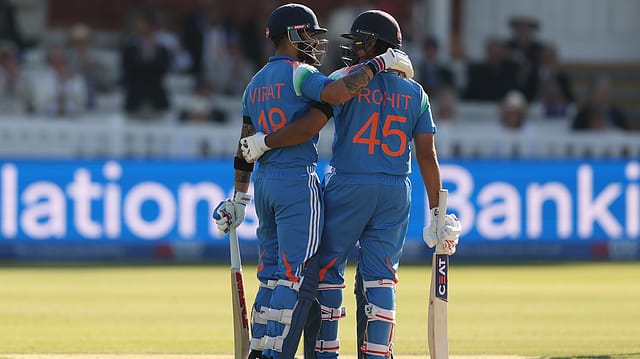
Virat Kohli began India’s tour of New Zealand with 74 from 51 balls. Rohit Sharma ended his part in it with 7 from 13.
Between those two innings lies a number that should trouble India before the 2027 World Cup.
Rohit and Kohli batted eight times between them in the five-match series. The third ODI was abandoned before a ball was bowled, so each man received four innings. Together, they scored 116 runs. Kohli’s 74 in Auckland accounted for almost 64 per cent of that combined return.
Remove the one innings that won India the opening ODI, and India’s two most experienced batters made 42 runs across their other seven attempts.
That is the problem behind the averages. Rohit finished with 30 runs at 7.50. Kohli made 86 at 21.50. India travelled to New Zealand seeking preparation for the seam and bounce likely to confront them in southern Africa next year. Their senior pair produced one convincing answer between them.

The Wealth Issue 2026
06 Nov 2026 - Vol 05 | Issue 45
Portraits of Dreamers and Doers under 35
Rohit and Kohli have earned the benefit of doubt.
Few Indian cricketers have carried greater responsibility, won more important matches or supplied more persuasive answers under pressure. Their pedigree demands patience after one poor series. It cannot place the 2027 World Cup question beyond examination. India have every right to ask whether two extraordinary careers still represent the strongest present-day choices for the conditions awaiting them next year.
Rohit Never Escaped the New Ball
Rohit’s sequence was 0, 23, 0 and 7.
Kyle Jamieson dismissed him twice. Matt Henry removed him first ball in the fourth ODI. Matthew Fisher ended his final innings of the series after Rohit had faced 13 deliveries for seven runs.
The Wellington innings contained the beginnings of a response. Rohit struck two sixes in his 23 from 28 balls, then chased a lofted drive against Jamieson, lost his shape and edged to second slip. He had survived the hardest phase and surrendered the opportunity before establishing control.
His two ducks were separated by that 23. The series offered no fifty, no decisive powerplay and no sustained partnership built around his presence.

Rohit’s recent ODI record prevents this tour from being presented as proof of terminal decline. He entered New Zealand after productive periods in the format, and his aggressive approach has repeatedly changed India’s tempo at the top. The problem is its dependence on conditions. The method that punishes length on predictable surfaces can become hazardous when bounce changes and the ball moves late.
India’s powerplay numbers capture the contrast. Since the 2023 World Cup final, their batting average in the first 10 overs at home has been 66.45. In SENA countries, it has fallen to 25.70, while the strike rate has dropped to 71.39.
Rohit is supposed to be India’s answer to that decline. In New Zealand, he became its clearest example.
Kohli’s 74 Prevented a Worse Reckoning
Kohli’s series requires a more measured judgement.
His 74 in Auckland was the best innings played by an Indian top-order batter on the tour. Chasing a revised target of 143, he struck 13 fours and a six, scored at 145.09 and ensured India began the series with victory. It showed authority against pace and an immediate understanding of the required tempo.
His next three scores were 7, 0 and 5.
In Wellington, Jacob Duffy dismissed him after seven balls. At Mount Maunganui, Henry bowled him for a four-ball duck during the opening-over destruction that left India 0/3. In the final ODI, Kohli edged Fisher after making five from seven deliveries.
The 74 proves Kohli can still control these conditions. The three failures that followed show how quickly a series can turn when India depend upon one senior innings to carry the top order.
Before the tour, Kohli had a formidable ODI record against New Zealand. He had scored 1,897 runs in 36 matches at 57.48, including seven centuries. In New Zealand itself, he had averaged almost 50. This series therefore represents an abrupt failure against an opponent and in conditions he has previously mastered.
Experience Was Supposed to Stop the Collapses
India’s concern extends beyond the two aggregates.
Rohit and Kohli are being carried towards the 2027 World Cup for precisely the situations New Zealand created. They have experienced hostile new-ball spells, fluctuating chases and tournament pressure. Their presence is meant to prevent one wicket from becoming three.
Instead, their dismissals repeatedly transferred responsibility to less experienced players.
India slipped to 113/7 while chasing 135 in Wellington. In the fourth ODI, Rohit and Kohli fell for ducks in Henry’s first over as India collapsed to 89 all out. In the fifth, their combined contribution was 12, leaving Axar Patel, Ishan Kishan and Naman Dhir to repair the innings.
The senior pair failed to rescue the collapses. On several occasions, their wickets began them.
This matters because India’s lower order is being forced to perform roles for which it was not primarily selected. Axar should provide flexibility and late acceleration. Kishan can attack once the innings has acquired shape. Naman Dhir should not routinely inherit the job of making a failed top order respectable.
One Poor Series Should Not Decide Their World Cup
The case for giving them the benefit of doubt is overwhelming.
Kohli won the first ODI with the only substantial Indian fifty of the series. Rohit’s broader career and recent performances show that four innings cannot erase his value. Both have spent years solving challenges that younger replacements have yet to experience. They have earned patience through performance rather than sentiment.
The BCCI has said that age will not determine selection for the 2027 World Cup. President Mithun Manhas identified fitness and performance as the relevant criteria.
That standard protects Rohit and Kohli from an arbitrary retirement clock. It also subjects them to the same evidence as everyone else. The question is legitimate precisely because the World Cup place must be earned by the cricketers they are in 2027, while respecting everything they have already been for India.
Rohit will be 40 during the World Cup. Kohli will be 38. Their ages should not disqualify them, but experience cannot become an exemption from scrutiny. If India select both, each place must be justified by present-day runs and a method capable of surviving southern African conditions.
The World Cup Question Has Changed
For much of the build-up, the question surrounding Rohit and Kohli was whether their bodies and motivation would carry them to October 2027.
New Zealand has made the cricketing question more urgent: can their batting still carry India through the conditions awaiting them there?
Kohli supplied one compelling answer in Auckland. Rohit supplied none across four innings. Together they left seven failures around one score of 74.
India do not need both men to dominate every bilateral series. They need them to remain at the crease when the ball is moving and the innings is beginning to fracture. That is the competitive reason for taking two veterans to one final World Cup.
Their pedigree entitles them to time, context and another opportunity. It does not entitle either man to an unquestioned place. Asking whether Rohit and Kohli remain India’s right choices for 2027 does not diminish what they have done. It takes the World Cup, and their roles in it, seriously.
In New Zealand, the younger batters kept receiving the repair job. If the pattern survives into southern Africa, India’s most experienced partnership may reach the World Cup carrying reputation when the team needs resistance.