PAKISTAN CRICKET IN CRISIS | Genius, Chaos & the Search for One More Impossible Comeback
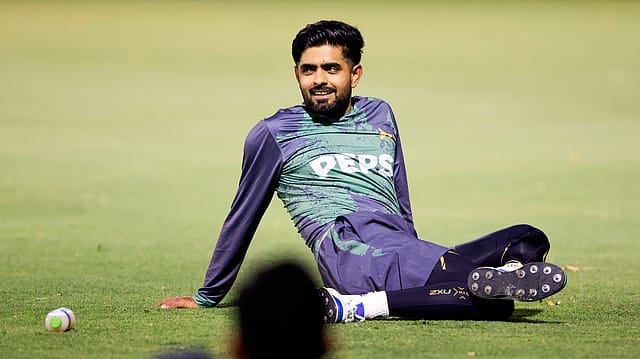
Pakistan cricket has always kept a trapdoor beneath its dressing room. At Lord’s, it opened again.
Pakistan began the second Test against England already trailing in the series. By the time it ended, the visitors had suffered a 194-run defeat, fallen 0-2 behind and surrendered any chance of taking home the trophy.
Their pursuit of 389 had barely begun when the score became 14 for three. Saud Shakeel resisted with 97, but Pakistan were dismissed for 194. In two Tests, no Pakistani innings crossed 200.
The first match had been lost by an innings and 103 runs. The second produced a five-wicket performance from Mohammad Abbas at Lord’s and Shakeel’s near-century. These were individual acts of defiance floating inside collective failure.

Zeroing In on ECI
09 Oct 2026 - Vol 05 | Issue 41
Constitutional legitimacy versus political opportunism
Pakistan responded in the most Pakistani way possible. The board sent seven players home before the third Test. Mohammad Rizwan, Imam-ul-Haq, Salman Ali Agha, Aamer Jamal, Khurram Shahzad, Ali Usman and Awais Zafar were released. Five uncapped players entered the squad. Head coach Sarfaraz Ahmed and bowling coach Umar Gul were removed from the tour.
Misbah-ul-Haq reportedly offered to resign from the selection committee. The Pakistan Cricket Board sought written explanations from selectors over the inclusion of Rizwan and Imam. National selector Aaqib Javed publicly said that captain Babar Azam and the coaching staff had not followed his recommendation to play fast bowler Ubaid Shah.
Then an injury became an integrity controversy. Imam missed both innings at Lord’s after suffering a calf problem while fielding. Footage of him later receiving throwdowns with the calf taped prompted allegations that he had exaggerated or faked the injury.
Aaqib called the episode a “big question mark” and said action would be taken. That allegation has not been established. Taking throwdowns does not prove that a batter was medically fit to withstand a Test innings. The difference matters because a selection dispute should not become a conviction delivered through television footage.
Yet the public accusation revealed how quickly Pakistan’s cricketing structure had begun consuming itself.
The selectors blamed the captain and coach. The board questioned the selectors. A selector attempted to resign. Players were sent home. Coaches were removed. Former captains attacked the purge. Ramiz Raja described it as a “panic-button” response. Shahid Afridi called the inclusion of white-ball cricketers in a Test squad illogical and shocking. Former Pakistan coach Mickey Arthur described the upheaval as “absolutely ridiculous” and said it exposed an absence of planning and stability, according to Reuters.
The diagnosis was failure. The treatment was detonation.
The Genius Subsidy
Pakistan cricket has spent decades appearing to function without the stable administration usually required to sustain an international team. Coaches came and went. Captains were appointed, undermined and removed. Selectors contradicted one another. Board leadership changed with political weather. Dressing rooms split into camps. Domestic structures were rebuilt, abandoned and rebuilt again.
And still Pakistan won. It won because institutional disorder was repeatedly subsidised by individual genius. A conventional cricket system tries to reduce uncertainty. Pakistan frequently weaponised it.
A match would drift beyond recovery. Then Wasim Akram would swing two deliveries. Waqar Younis would destroy the stumps. Saqlain Mushtaq would make the ball turn the wrong way. Inzamam-ul-Haq would walk into a collapsing chase and appear untouched by the panic around him. Shoaib Akhtar would approach the crease like a man trying to break the speed limit and the batter simultaneously.
Later came Younis Khan, Mohammad Yousuf, Shahid Afridi, Misbah-ul-Haq and Mohammad Amir. More recently, Babar Azam, Mohammad Rizwan and Shaheen Shah Afridi formed another elite spine.
Pakistan did not always need the system to work. It needed one extraordinary cricketer to make the system temporarily irrelevant. That was the genius subsidy.
The present crisis feels different because the chaos remains instantly recognisable, while the player capable of covering it is increasingly difficult to find.
The First Great Escape
The mythology began long before 1992, but that World Cup gave it its defining shape. Pakistan’s campaign in Australia and New Zealand was nearly finished before it had properly begun. The team won only one of its first five completed matches. Against England, Pakistan were bowled out for 74 and escaped defeat because rain ended the contest.
Imran Khan told his players to fight like “cornered tigers”. The phrase has survived because the team obeyed it. Pakistan defeated Australia, Sri Lanka and New Zealand to reach the semi-final. Inzamam, then 22, produced a breathtaking 60 from 37 balls against New Zealand. In the final at Melbourne, Imran and Javed Miandad rebuilt the innings before Wasim Akram changed the match with bat and ball. His consecutive dismissals of Allan Lamb and Chris Lewis remain among cricket’s most devastating acts of compressed genius. Pakistan were world champions.
The lesson absorbed by generations of supporters was thrilling and dangerous: disorder did not necessarily mean defeat. A team could stumble through a tournament, approach elimination and still discover immortality. Every subsequent crisis carried the memory of Melbourne.
By 1999, Pakistan possessed perhaps an even more astonishing collection of cricketers. Wasim and Waqar led the pace attack. Shoaib Akhtar supplied frightening speed. Saqlain had transformed off-spin. Inzamam and Mohammad Yousuf anchored the middle order. Saeed Anwar was among the world’s most elegant opening batters.
Pakistan reached the World Cup final at Lord’s. Then it disintegrated for 132. Australia completed the chase in 20.1 overs.
That defeat became the hinge between two eras. One of Pakistan’s most gifted teams had reached the grandest stage and produced its smallest performance. The match-fixing scandal that followed cast a shadow over the period. The Justice Qayyum inquiry resulted in life bans for Salim Malik and Ata-ur-Rehman and penalties or censures for several others.
Talent could rescue poor administration. It could not protect the sport indefinitely from suspicion.
Pakistan’s first great modern generation began to disappear after another disastrous World Cup in 2003. The team failed to reach the Super Six stage. Wasim, Waqar and Saeed Anwar never played for Pakistan again. The response resembled the current purge: remove the old names, announce renewal and wait for another generation to emerge. That generation did emerge.
Pakistan cricket was still producing miracles faster than its administration could extinguish them.
The World Cup That Became Something Darker
The 2007 World Cup brought another implosion. Pakistan lost to Ireland in Jamaica and crashed out in the group stage. The following day, coach Bob Woolmer was found unconscious in his hotel room and later pronounced dead. His death initially became the subject of a murder investigation. Jamaican police subsequently concluded that he had died of natural causes, not strangulation, as earlier suspected, Reuters reported.
The episode went far beyond cricket. Grief, conspiracy theories and the humiliation of defeat became entangled. Inzamam announced his retirement from one-day internationals.
Pakistan appeared broken. Three months later, it reached the final of the inaugural T20 World Cup. Misbah brought Pakistan to within one blow of defeating India in Johannesburg. His attempted scoop off Joginder Sharma landed in S Sreesanth’s hands. Pakistan lost by five runs. Even its revival contained heartbreak.
But another comeback was already being prepared.
On March 3, 2009, gunmen attacked the Sri Lankan team bus near Lahore’s Gaddafi Stadium. Six policemen and two civilians were killed. Sri Lankan players and staff members were injured. International teams stopped touring Pakistan. A national side had effectively lost its home.
Three months later, Pakistan won the T20 World Cup in England. Shahid Afridi, cricket’s great agent of beautiful disorder, produced half-centuries in the semi-final and final. Younis Khan captained with wit and calm. Mohammad Amir, only 17, announced the arrival of another extraordinary fast bowler.
Pakistan had moved from a terrorist attack that exiled international cricket to a world championship in the space of one season. No other team seemed capable of compressing despair and celebration so brutally. Then the young fast bowler at the centre of the triumph became part of the next catastrophe.
The No-Balls That Cost Pakistan Years
During the 2010 Lord’s Test, captain Salman Butt and fast bowlers Mohammad Asif and Amir became implicated in a spot-fixing operation involving deliberately delivered no-balls.
The International Cricket Council imposed lengthy bans. The three were later convicted in Britain and received prison sentences. Pakistan lost its captain and two exceptional fast bowlers, including a teenager who appeared capable of leading the attack for a decade.
The disgrace could have destroyed the team. Instead, Pakistan turned to Misbah. He did not offer Imran’s theatre, Afridi’s electricity or Wasim’s sorcery. His gift was control. Alongside Younis Khan, he built a Test side in exile, playing “home” matches in the United Arab Emirates.
Pakistan became exceptionally difficult to defeat there. Younis accumulated centuries. Misbah absorbed pressure. Saeed Ajmal spun opponents into confusion before his bowling action was suspended. Yasir Shah inherited the attack.
In August 2016, Pakistan rose to No. 1 in the ICC Test rankings for the first time since the current rankings system began. The ICC noted that the team had fallen as low as seventh three times before Misbah took charge. Pakistan had no Test cricket at home. It became the best Test team in the world. Another impossible comeback was complete.
The 2017 Champions Trophy began with Pakistan losing to India by 124 runs. The familiar machinery of crisis started immediately. The selection was attacked. The tactics were ridiculed. The team looked out of place in an elite tournament. Pakistan then defeated South Africa, Sri Lanka and England.
In the final, it met India again. Fakhar Zaman made 114. Mohammad Amir removed Rohit Sharma, Shikhar Dhawan and Virat Kohli. Hasan Ali completed a tournament in which he had become almost unplayable. Pakistan won by 180 runs, the largest victory by runs in a men’s ICC tournament final at the time. It had entered the competition ranked eighth and left with the trophy, as the ICC recorded.
The transformation required only two weeks. This is why Pakistan cricket finds reform so difficult. Chaos has been rewarded too frequently. A dysfunctional institution experiences a miracle and mistakes it for a model.
The Last World-Class Spine
The most recent revival formed around Babar, Rizwan and Shaheen.
Babar gave Pakistan something it had rarely possessed: a batter whose classical technique, statistical output and international stature could organise the team’s identity.
Rizwan converted relentless energy into runs across formats. Shaheen could decide a match with his opening over.
Pakistan reached the semi-final of the 2021 T20 World Cup after winning every group match. It defeated India by 10 wickets, its first victory over its rival in a men’s World Cup. A year later, Pakistan recovered from two defeats in its first three matches to reach the T20 World Cup final.
That team did not win either tournament, but it looked coherent. Its best players were near their peaks. Its supporters could again believe that Pakistan required only a small opening through which to charge.
The opening has since become a hole.
Pakistan finished fifth at the 2023 ODI World Cup, losing to Afghanistan for the first time in the competition. It exited the 2024 T20 World Cup in the group stage after losing to the United States. As host and defending champion, it failed to win a match at the 2025 Champions Trophy, its campaign ending after only two completed games and a washout. Reuters described it as a “miserable campaign”.
The Test decline has been even more severe. Pakistan lost a home series 3-0 to England in 2022. Bangladesh swept it 2-0 in Pakistan in 2024. In Multan that year, Pakistan scored 556 and still lost by an innings after England amassed 823 for seven declared.
The board responded by dropping Babar, Shaheen and Naseem Shah during the series. Pakistan prepared turning pitches, recalled Noman Ali and Sajid Khan, and recovered to win 2-1. That success may haunt the present decision-making. A dramatic purge worked once. The board now appears to believe detonation is a strategy.
Four Chairmen, Too Many Plans
Pakistan’s instability cannot be explained only through poor form.
Ramiz Raja became PCB chairman in September 2021. Najam Sethi replaced him in December 2022. Zaka Ashraf arrived in 2023. Mohsin Naqvi took charge in February 2024.
Four chairmen brought different administrators, selectors, coaches, priorities and ideas about domestic cricket.
The coaching room became another revolving door. Gary Kirsten left as white-ball coach in October 2024, six months after his appointment and before taking charge of a single ODI. Jason Gillespie resigned as Test coach later that year after only a handful of matches, subsequently saying he had been “completely and utterly blindsided” by the PCB’s decisions.
Aaqib became interim head coach. Mike Hesson took over the white-ball side. Sarfaraz was appointed Test coach in April 2026 and removed from the England tour four months later.
Pakistan is not merely changing personnel. It is repeatedly erasing institutional memory. A coach cannot establish authority if players expect the board to replace him. A captain cannot build a team when selectors publicly reveal private tactical disagreements. Selectors cannot be held meaningfully accountable when selection powers and committee structures keep changing.
Accountability requires defined authority. Pakistan frequently offers public punishment instead.
The Imam Question
Nothing illustrates that confusion better than the handling of Imam.
If the PCB possesses medical evidence that a player falsely declared himself unavailable, it should conduct an independent inquiry, allow the player to respond and publish a reasoned decision.
If it does not possess that evidence, a senior selector publicly promising action turns an unresolved fitness question into reputational damage.
The larger issue is not whether elite players have previously batted through fractures, bruises or muscle injuries. Bodies and injuries differ. A batter able to receive controlled throwdowns may still be unable to run, change direction, face sustained fast bowling or bat safely for several hours.
Imam may face legitimate questions. He is also entitled to a legitimate process.
Pakistan cricket’s crises become harder to contain because its internal disagreements so often become public entertainment. Selection meetings turn into television arguments. Private instructions become evidence for self-defence. Every official establishes that someone else possessed the power when the losing team was selected. A dressing room cannot develop trust while its administrators conduct their defence live on air.
Where Is the Next Rescue?
Pakistan will take five uncapped players to Edgbaston. Fresh selections can be justified when established cricketers repeatedly fail. New players deserve opportunities.
But youth is not the same as planning. Throwing inexperienced cricketers into a lost series against England and describing the gamble as proof of Pakistan’s talent risks treating them as both solution and shield. If they succeed, the board claims courage. If they fail, another group can be blamed.
That is not renewal. It is roulette.
Pakistan undoubtedly continues to produce gifted cricketers. Its streets, clubs, tape-ball circuits, academies and domestic competitions will keep revealing fast bowlers with startling pace, batters with audacious timing and spinners carrying unfamiliar variations.
The question is whether a talented player can now become a great international cricketer before the machinery around him changes captain, coach, role, format, technique and confidence.
Babar remains Pakistan’s most accomplished contemporary batter. Shaheen is still capable of destructive new-ball spells. Rizwan has carried the batting through difficult periods. Saud and Abbas showed at Lord’s that elite performances have not vanished.
But Pakistan once fielded clusters of players who belonged in any world XI. Wasim did not merely lead Pakistan’s attack. He altered how left-arm fast bowling was imagined. Waqar turned the yorker into an execution device. Inzamam could make pressure disappear. Younis retired with more than 10,000 Test runs. Misbah gave a homeless team a spine. Afridi could change a tournament in half an hour.
The present side has famous players. It does not yet have enough players performing at that historical level often enough to compensate for institutional malfunction. That distinction is the crisis.
Can there be another comeback?
Of course there can. Pakistan cricket has made a career out of arriving at its own funeral with a bat under one arm and a trophy under the other.
It escaped elimination to win the 1992 World Cup. It reached a global final months after the darkness of 2007. It won a world title after being driven from home in 2009. It climbed from spot-fixing disgrace to the top of the Test rankings. It lost to India by 124 runs and defeated the same team by 180 runs two weeks later. No sensible historian would declare Pakistan incapable of another resurrection.
But history can become a narcotic. Those comebacks did not prove that chaos was harmless. They proved that Imran, Wasim, Inzamam, Afridi, Younis, Misbah, Amir, Fakhar, Hasan, Babar, Rizwan or Shaheen could occasionally overwhelm it.
Pakistan cannot order another Wasim Akram by issuing a show-cause notice. It cannot sack its way to an Imran Khan. Five uncapped players cannot be expected to repair years of administrative churn during one Test at Edgbaston.
The next comeback will require something less romantic and more difficult: stable leadership, coherent selection, protected coaches, credible fitness protocols, a domestic structure allowed to mature and accountability that travels upwards as readily as it travels down.
The third Test may produce a young hero. Pakistan may win. That would be wonderfully characteristic. It would not prove that the purge was wise. For decades, Pakistan cricket followed a magnificent, maddening sequence: genius became chaos, chaos became crisis and crisis somehow produced an impossible comeback.
The team is back inside the crisis. The world is waiting for the comeback. Pakistan must first answer the question it spent too many years avoiding: What happens when the genius no longer arrives to save the chaos?