‘Nobody Can Question…’: FIFA Refereeing Chief Defends Referees Amid World Cup 2026 Row
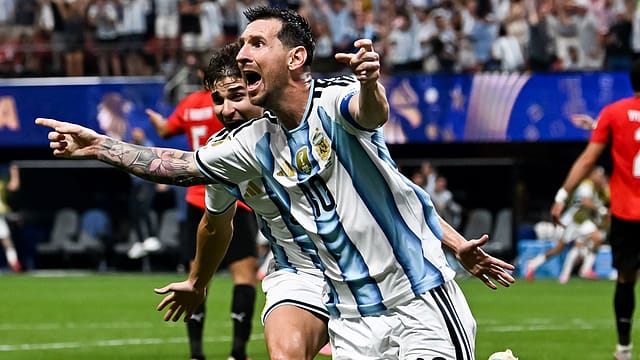
FIFA Chief Refereeing Officer Pierluigi Collina has strongly defended the integrity and independence of match officials at the FIFA World Cup 2026, insisting that referees cannot be influenced by anyone as controversy continues to surround several decisions during the tournament, including the contentious Round of 16 clash between Argentina and Egypt.
Speaking to FIFA after the completion of the Round of 16, Collina dismissed allegations of external influence on officiating and backed the decisions made by FIFA's refereeing team throughout the tournament.
VAR Under Fire Again as Argentina's FIFA World Cup Run Sparks ‘Bias Towards Messi’ Claims
The Modi Years
02 Oct 2026 - Vol 05 | Issue 40
A Nation Rebuilt
"Overall, we are happy. However, with such a high number of matches played in a relatively short period of time, it is normal that some things do not go as expected. When that happens, they are ready to work even harder to ensure they are fully prepared for the next match," Collina said, as quoted by FIFA.
He acknowledged that refereeing decisions would always be debated but drew a clear line against accusations questioning officials' integrity.
"Equally, nobody can claim that FIFA Refereeing can be influenced by anyone, not even by the FIFA President [Gianni Infantino]. He has always shown his full support for FIFA Team One while trusting us to work with complete independence. Match officials make honest decisions and, just like players and coaches, they always try to do their best," he added.
Why was Egypt’s goal vs Argentina overturned in the FIFA World Cup 2026 Round of 16 game?
Collina's remarks come after Egypt's dramatic 3-2 Round of 16 defeat to defending champions Argentina sparked widespread debate over officiating decisions.
Egypt believed they had taken a decisive lead when a second goal found the net, only for the referee to overturn it following an on-field VAR review.
Officials ruled that Egypt midfielder Marwan Attia had fouled Argentina defender Lisandro Martinez in the attacking possession phase by stepping on his foot before the goal was scored.
Explaining the decision, Collina said FIFA's interpretation of the Laws of the Game had been applied consistently.
"After every goal is scored, the VAR checks the attacking possession phase (APP). If a foul is identified in the build-up and is deemed to have had an impact on the goal, the VAR will recommend an on-field review. There is no defined limit regarding either the distance from goal or the amount of time between the incident and the goal," he said, as per FIFA.
"An example of this came in the Argentina v Egypt game where Egypt No. 19 Marwan Attia clearly treads on the foot of Argentina No. 6 Lisandro Martinez. We believe that a foul is a foul. Regardless of whether the foul appears 'obvious', if the referee did not see it on the field of play, the VAR can intervene," he added.
(With inputs from ANI)