Meet the ‘Sarpanch’ of Punjab: How Shreyas Iyer is Driving Punjab Kings’ Unbeaten IPL 2026 Run
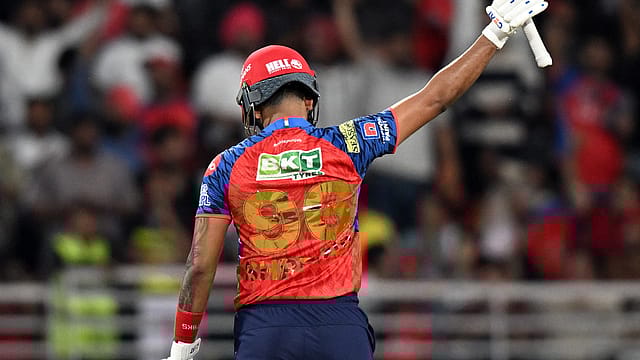
If last year lingered, this one burns longer.
Twelve months ago, Shreyas Iyer stood one step away. He was close enough to touch the trophy but far enough to lose it. And that kind of defeat seeps in--slow and stubborn--and stays. The Punjab Kings fell short at the final hurdle in IPL 2025. The noise faded but the memory didn’t.
And then Iyer walked into a new room.
Different jersey. Same expectation. Higher stakes.
What has followed in the Indian Premier League 2026 season isn’t just a strong start. It’s a shift in texture. Punjab Kings aren’t just winning—they look settled inside the win. Five games in, unbeaten. Four victories, one washed out. Top of the table. But more than the points, it’s the manner that stands out.
There’s no scramble in their cricket.
At the centre of it sits Iyer, batting like a man who has trimmed the excess. 203 runs in four innings. Average pushing 70. Strike rate brushing 188. Boundaries coming in clusters—14 fours, 14 sixes. The numbers tell you he’s in form. The rhythm tells you something deeper is in place.
He’s not forcing the game anymore. He’s dictating its pace. And somewhere along the way, a name found him: “Sarpanch.”
It started as a chant, a label tossed from the outside. He didn’t even know what to do with it.

Open Minds 2026
26 Jun 2026 - Vol 05 | Issue 26
The power of ideas and arguments in 50 portraits
“I love it. I was clueless at the start… what it meant,” he said. “Then my teammates explained—it’s the head of a family, a group. That gave me clarity. From there onwards, my journey started.”
That word—clarity—keeps returning. Because this version of Iyer isn’t trying to be everything. He’s cutting things out. Noise. Projection. Overreach. What remains is control—tight, deliberate, repeatable.
“The mission is to lift the trophy,” he says. Then he anchors it. “But the more you stay in the present, the more you stay in control.”
There’s discipline in that thought. And it’s visible on the field.
Take their chase against Mumbai. 195 on the board. Enough to rattle most sides early in a tournament. Punjab didn’t flinch. They paced it. Absorbed the moment. Then accelerated. The game was done in 16.3 overs. Clinical, almost impatient in how quickly it closed. Iyer’s 66 off 35 didn’t scream. It controlled. He picked his windows, held shape, and then pressed when the gap appeared.
Around him, the system is clicking. Prabhsimran Singh has turned the powerplay into a launchpad—211 runs already, striking above 170, attacking from ball one. Arshdeep Singh is delivering spells that bend matches early, not just containing but breaking momentum. Even in games where the start wobbles, the middle doesn’t. There’s a visible calm stitched through the innings.
That calm is not accidental. Iyer has reframed the contest. “We are playing for ourselves, not against the opponents. We just want to improve each day… when everything comes together, everything falls into place.”
It sounds almost inward-looking. That’s the point. Because it strips away the distractions—opponents, tables, projections, the chatter that grows louder with every win. What remains is execution. A team competing against its own ceiling.
And that’s a harder opponent to beat.
Punjab Kings, for years, have carried a certain unpredictability—bursts of brilliance, followed by drift. This season, that pattern looks interrupted. Not erased yet, but challenged. The edges feel tighter. The roles clearer. The dressing room quieter in its confidence.
You can see it in how they absorb moments. A rain-hit game against KKR doesn’t break momentum. A big total against Mumbai doesn’t trigger panic. A strong start doesn’t inflate reaction. Everything sits where it should. That’s alignment.
And it’s coming from a captain who has learned what to ignore. Last year, Iyer got close enough to feel the weight of the trophy without lifting it. That distance changes how you see things. It forces a choice—chase harder, or think sharper.
Right now, he’s chosen the second. There’s still a long season ahead. Form bends. Momentum slips. The table will shift. Punjab Kings have been here before—promising starts that faded into familiar endings.
But this version feels different in one crucial way.
They are not chasing the story. They are building it, one controlled passage at a time. And Iyer, the “Sarpanch” who didn’t ask for the title, seems comfortable holding it. And he is no wearing it as a badge but as a responsibility.
(With inputs from ANI)