Malinga, Bumrah and Mendis: The Most Unusual Bowling Actions in Cricket History
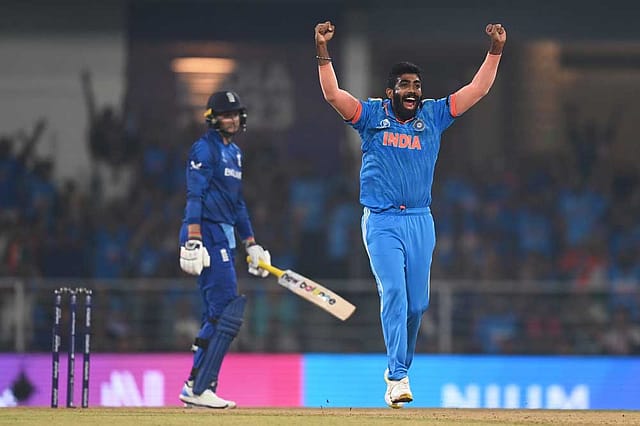
Cricket’s coaching textbooks often emphasise balance, rhythm, and repeatable bowling actions. Yet the history of international cricket shows that several pacers and spinners succeeded with techniques that appeared awkward or even anatomically improbable. These actions unsettled batters and redefined how unpredictability could be used as a weapon.
Here’s a more detailed insight.
Why have unusual bowling actions fascinated cricket fans?
Unusual bowling actions stand out because they break the visual patterns batters rely on. When the release angle or rhythm changes, a batter must recalibrate timing instantly. According to Wisden, cricket’s history includes several bowlers whose strange mechanics initially drew scepticism but later became defining strengths.
What made Lasith Malinga’s sling action so lethal?
Lasith Malinga revolutionised death bowling among modern pacers. His low release point produced a sling-like release that delivered yorkers at extreme pace. Malinga finished his international career with 546 wickets across formats, including 170 in ODIs and 107 in T20Is, the most by a Sri Lankan fast bowler. His four wickets in four balls against South Africa in the 2007 World Cup remains one of cricket’s rarest feats.
Why is Jasprit Bumrah’s action considered unconventional?
Jasprit Bumrah has a short run-up and a stiff-armed loading motion that differs from most fast bowlers. The ball leaves his hand closer to the batter than usual.

Survival Instinct
22 May 2026 - Vol 04 | Issue 72
India navigates global economic turmoil with austerity and smart diplomacy
Bumrah became the first Asian bowler to take five-wicket hauls in Test matches in South Africa, England, and Australia in the same calendar year (2018), underlining how his unusual mechanics translate into effectiveness across conditions.
How did Shivil Kaushik’s unusual action capture attention?
Shivil Kaushik gained attention for one of the most unconventional bowling actions in modern cricket. The left arm wrist spinner twists his body almost 180 degrees during delivery. His head often turns away from the batter at release, making the ball’s trajectory difficult to read.
Why has Usman Tariq’s bowling action sparked debate in international cricket?
Usman Tariq has drawn attention during the 2026 T20 World Cup for his unusual “pause-and-sling” delivery. His brief halt during the stride disrupts a batter’s timing.
Despite questions about legality, the ICC cleared his action, and he has taken 18 T20I wickets with an average of 11.16.
Why was Ajantha Mendis once called cricket’s ultimate mystery spinner?
Ajantha Mendis transformed spin bowling through deceptive variations. His famous carrom ball was flicked with the middle finger, turning unexpectedly. He took 26 wickets in his debut Test series against India in 2008, one of the most dominant early performances by a spinner.
Based on ICC match records, Mendis also became the fastest bowler to reach 50 ODI wickets, achieving the mark in just 19 matches.
How did Muttiah Muralitharan challenge traditional biomechanics?
Muttiah Muralitharan remains the most prolific wicket-taker in Test history with 800 wickets. Across formats, Muralitharan finished with 1,347 international wickets, the highest in cricket history.
His action drew scrutiny because of an unusual elbow extension. A congenital condition allowed him to generate extraordinary revolutions, helping him disguise deliveries such as the doosra.
How does Dan Lawrence’s eccentric off-spin trouble batters?
Dan Lawrence is primarily known as a middle-order batter, yet his part-time off-spin features a dramatic windmill-style load-up before release. The busy motion obscures the release point. In T20 competitions, he has taken over 60 wickets, often acting as a partnership breaker.
What explains the success of these unusual bowling actions?
Unusual bowling actions alter the release window and the ball's trajectory. Sports biomechanists explain that when the ball emerges from an unfamiliar angle, a batter’s brain receives delayed visual cues. That fraction of uncertainty often proves decisive against elite pacers and spinners.
What do unconventional bowling actions reveal about cricket’s evolution?
Cricket history shows that effectiveness often matters more than textbook technique. From Adams’ chaotic spin to Malinga’s sling and Bumrah’s stiff arm rhythm, unconventional mechanics have repeatedly shaped the game.
According to biomechanical studies cited in Wisden, unusual bowling actions may continue to challenge traditional coaching wisdom.
(With inputs from yMedia)