La Roja Claims A Deserved Triumph While Messi, the GOAT, Bows Out In A Mundane Setting
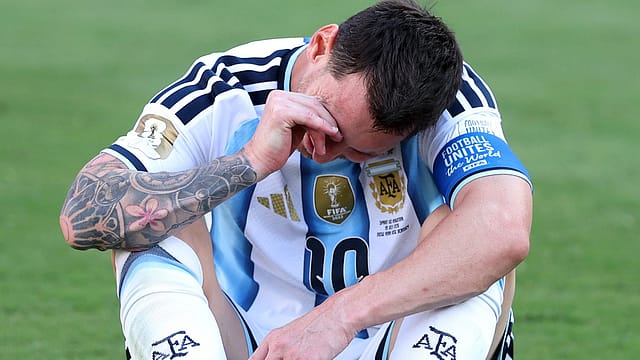
The 2026 World Cup saw Lionel Messi, the most decorated professional player in football history, bid a tearful farewell at the MetLife Stadium, perhaps the least romantic of venues for the GOAT of the most watched athletic event in the world, even as Spain, which outplayed La Albiceleste by light years in the final of the once-in-four-years FIFA tournament hosted this year by the US, Mexico and Canada.
La Furia Roja excelled over the defending champions in all key stats of the match that went into extra time, which saw Ferran Torres, who was substituted to play against Argentina, score the championship-winning goal, netting the 106th-minute goal to trounce the Messi-led team 1-0, reminiscent of Germany's Mario Gotze, who scored the extra-time winner against Argentina in the 2014 final in Brazil.
The Vanguard
21 Aug 2026 - Vol 05 | Issue 34
BJP Rearmed for 2029
Captained by Rodri, Spain outsmarted Argentina on all counts. While Spain made 20 shots, of which 11 were on target, Argentina had no shot on target to boast of among its three late shots; in possession and passes, and fair play too, Spain were far ahead of the Argentines. The winning Spanish team, managed by Luis de la Fuente, won zero yellow cards compared with five for Argentina, who had to play the Europeans with a 10-man team after midfielder Enzo Fernández was sent off with a red card in the 90th minute of the match – which was the second yellow card he received, resulting in an automatic red – following a serious foul on 19-year-old Barcelona player Pau Cubarsi, who went on to win the FIFA World Cup Young Player of the Year Award.
While Spain enjoyed 68% possession in the final match, the 104th one in this tournament, Argentina also scored low in passes at 445 compared with Spain's 803.
Argentina, which drew sharp criticism this time around over alleged favouritism and refereeing in its favour, generated controversy in this game too after the referee disallowed Nico Williams' extra-time goal. There was widespread criticism that Argentina were not just world favourites, but also FIFA's "special" team.
Earlier in the tournament, FIFA faced accusations from football pundits and spectators in multiple games, including the disallowing of Mostafa Ziko's goal that gave Egypt a 2-0 lead over Argentina when VAR suggested a foul on Lisandro Martínez at least 20 seconds earlier. Although Messi's magic was for all to see in his magical assists and goals, Egypt filed an official complaint against the refereeing. Again, in the match against England, Enzo Fernández, who received two yellow cards on Sunday, was unpunished for a tackle on Elliot Anderson. But then Messi proved himself with his stellar assists in that match, first to Enzo Fernández, who equalised in the 85th minute, before Lautaro Martínez headed home a stoppage-time winner. Yet, in the final, Argentina's Nicolas Tagliafico played dirty on Spain's young sensation Lamine Yamal. For its part, FIFA's refereeing chief, Pierluigi Collina, officially defended the integrity and independence of the match officials.
Of course, there is no denying that, overall, Messi is the GOAT, starting off spectacularly with a hat-trick against Algeria, taking his tally in this tournament to eight goals and four assists. As a recipient of eight Ballons d'Or and six European Golden Shoes, besides being adjudged the world's best player by FIFA eight times, Messi is simply the most decorated leader in the history of professional football.
In all the World Cup tournaments he has played, Messi has created history by scoring 21 goals, starting with one in Germany in 2006, zero in South Africa in 2010, four in Brazil in 2014, one in Russia in 2018, seven in Qatar in 2022 and eight this time around.
Now, as I pen this article, I remember what I wrote four years ago in the winter of December after the final match of the Qatar World Cup that saw Messi, then aged 35, elevate himself to the status of the best of the best in the history of football.
I wrote the following lines in admiration of his footballing brain:
“Lionel Andrés Messi, who made his FIFA World Cup debut in 2006 and incurred the wrath of the local press in his native Argentina in the 2010, 2014 and 2018 World Cups for not bringing home the glory that Maradona did 36 years ago, redeemed himself in the final match between La Albiceleste and rival France in the packed Lusail Stadium in Doha, Qatar, on Sunday (December 18) the way even someone who wields his magical footballing skills does only in dreams: two goals, a hockey assist, leadership, and tireless charm.”
I went on:
“The victory that brought him out of the shadow of Maradona in a cliff-hanger of a match in the Arab city – with Les Bleus resurrecting themselves much later in the game – not only freed him from the long spell of unfair comparisons by his countrymen and football analysts alike with yesteryear icons but also with contemporaries like Cristiano Ronaldo of Portugal. His feat in this Cup lays to rest most such claims. The former Barcelona forward – now with Paris Saint-Germain owned by Qatar – led a team that was at its aggressive and skilful best to a triumph that will be talked about for ages. It was the best final match yet in World Cup history that saw Argentina walk away with the Cup for the third time, the first being in 1978.”
On July 19 this year, the Argentine performance was clumsy and Messi's own was awkward. Messi fought back tears after accepting the medals for the second-best team of the tournament before disappearing into the dressing room. If he had won the match for Argentina this time, too, his country would have gone down in history as the first team since Brazil in 1962 to win two consecutive FIFA World Cups.
A visual that impressed everyone, however, was that of Lionel Messi and Lamine Yamal sharing a warm hug after the final whistle, perhaps symbolic of the end of an era and the rise of a new star.