From Indore Rooftop Nets to India Test Debut: Inside Saransh Jain’s Remarkable Cricket Journey
There are dreams that arrive like lightning. Saransh Jain’s came by accumulation.
One more morning in the nets. One more unglamorous domestic match. One more spell on a weary pitch. One more season spent watching younger men enter the fast lane while he remained on cricket’s long road, carrying an ambition that appeared increasingly unreasonable to everyone except himself.
And then, at the age of 33 years and 145 days, the road reached Colombo.
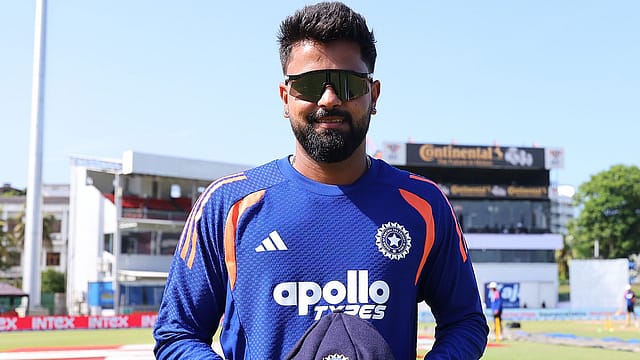
Before the second Test against Sri Lanka on Sunday, Ravindra Jadeja handed Jain his India cap in the team huddle. He reportedly is India’s oldest Test debutant in the 21st century and the oldest Indian to make an international debut since Robin Singh, who was 35 when he first played for the country in 1998.

Zeroing In on ECI
09 Oct 2026 - Vol 05 | Issue 41
Constitutional legitimacy versus political opportunism
The statistics make Jain a late debutant. They do not begin to describe him.
His is a story about what happens after the applause does not come. About continuing after selection meetings end without your name, auction paddles remain lowered and another birthday makes the national dressing room seem more distant. It is about the discipline required to preserve a dream long after dreaming has ceased to feel romantic.
The India cap was the news. The wait was the achievement.
A cricket ground on the roof
Before Colombo, there was a rooftop in Indore.
Saransh’s father, Subodh Jain, had played first-class cricket for Madhya Pradesh and knew both the seductions and cruelties of the game. When a proper ground was not always available, he improvised. He enclosed the roof of the family home with netting and created a miniature practice arena for his son.
Saransh bowled there. He batted there. Occasionally, he sent the ball through a neighbour’s window.
His mother, Sangeeta Jain, reportedly underlined in one of the interviews that her husband would promise to replace the broken glass, then assure the neighbours that they would one day be proud of the boy responsible. She also remembered Saransh injuring his hands during those sessions, bandaging them and returning to practise.
It is tempting, now that he has become an India cricketer, to treat the rooftop as prophecy. It was nothing of the kind. Thousands of fathers put up nets. Thousands of children strike balls against walls. Most of those dreams disappear quietly into studies, jobs, responsibilities or the enormous gap between being good and being chosen.
The roof did not promise Saransh an India cap. It merely gave him somewhere to begin.
His elder brother was originally regarded as the family’s more likely cricketing prospect. Saransh, those who knew him recalled, was the mischievous one, not always sufficiently serious about the game. But the brother eventually turned towards his studies and Saransh turned more deeply towards cricket.
Even his unusual cricketing identity was shaped at home. He bowls off-spin with his right arm but bats left-handed. His brother, Saurabh Jain, told PTI that Saransh initially copied his right-handed batting until their father noticed that the younger boy timed the ball more sweetly from the other side. Subodh told him to become a left-hander.
The father was building a cricketer piece by piece. Then life asked whether the son could carry on without him beside the net.
The note Saransh never discarded
In 2014, while Saransh was touring Australia with a club team, Subodh was diagnosed with oral cancer.
The family did not tell him immediately. They feared the news would break his concentration and bring him home. Subodh underwent surgery and, unable to speak properly afterwards, communicated through writing. One of the notes he reportedly wrote asked Saransh to remain focused on cricket.
Saransh kept it. There are pieces of paper that carry more weight than trophies. That note became a private covenant between a father who could barely speak and a son whose career had barely begun.
Subodh’s illness did not magically clear the obstacles from Saransh’s path. The years that followed would require a form of endurance far removed from the rousing montages of sports films. There were no packed stadiums, extravagant contracts or breathless television debates. There was only domestic cricket and its relentless examination of conviction.
Saransh made his first-class debut for Madhya Pradesh against Tamil Nadu in December 2014 and took five wickets. He later told India Today that the performance convinced him that cricket was not impossibly difficult if one remained hardworking and disciplined.
A five-wicket debut can look like the opening chapter of a rapid ascent. It wasn’t.
Between 2014 and 2019, Saransh played only eight Ranji Trophy matches. Jalaj Saxena, an established off-spinning all-rounder, stood ahead of him. Opportunities came too infrequently for rhythm and disappeared too quickly for security. Saransh admitted that the uncertainty affected his confidence. When a player knows that one poor match may send him back to the bench, even opportunity begins to resemble a threat.
He waited for games. Then he worried about wasting them. By 2020, he was 27, no longer young by the impatient standards of Indian cricket, and still not a permanent member of his state side. That was when Chandrakant Pandit arrived.
The coach who saw what others had missed
Pandit has built a formidable reputation in Indian domestic cricket by seeing value where others see inconvenience. In Saransh, he saw a genuine off-spinner whose craft had not been flattened by the defensive demands of white-ball cricket.
Cricbuzz reported that Pandit found a player short of confidence but full of questions. Saransh wanted to understand lengths, fields and methods of dismissal. He did not merely want instructions. He wanted the reasoning behind them.
The coach gave him something more valuable than technical advice: security.
Pandit backed Saransh even when that required leaving out more experienced players. He assured him that experimentation would not cost him his place. Then he suggested a change that would become central to Saransh’s bowling. Instead of beginning over the wicket like most off-spinners, he wanted him to come around the wicket from his first delivery.
Saransh resisted. He feared the angle would diminish his chances of securing leg-before decisions. Pandit urged him to look beyond a single mode of dismissal. Bowled, caught behind, bat-pad, slip and short leg remained available. The coach was asking the bowler to abandon a familiar route in order to discover a more dangerous one.
Saransh tried it. The angle became his signature. His high release, drift and dip allowed him to challenge both edges of the bat. Pandit subsequently trusted him with the new ball, another unusual responsibility for an off-spinner.
Technique mattered. Trust mattered more. Saransh finally knew that one bad spell would not erase him. The frightened fringe player began bowling like someone entitled to occupy the crease, the contest and the future.
The summer that changed everything
Madhya Pradesh entered the knockouts of the 2021-22 Ranji Trophy without ever having won the competition under its present name. Saransh entered them with a career still waiting to acquire definition.
He took 13 wickets across the quarter-final, semi-final and final. Against Mumbai in the title match, he also made 57, helping Madhya Pradesh secure a decisive first-innings lead on their way to a historic triumph.
The medal represented more than a championship. At 29, after years of intermittent selection, Saransh had finally become central to a winning team.
He did not allow the breakthrough to become a solitary bright season. Sample his progression: 35 Ranji wickets in 2022-23, followed by 27, 21 and then 30 in the next three seasons. In 2022-23, he also scored 360 runs and received the BCCI’s Lala Amarnath Award as the Ranji Trophy’s best all-rounder.
This was no sudden hot streak. It was sustained evidence. Yet Indian cricket can make even extraordinary domestic numbers feel invisible. The IPL commands the money, cameras and conversation. A cricketer absent from it can seem absent altogether.
Saransh registered for successive IPL auctions. No franchise bought him in 2024, 2025 or 2026. Even when he made the final auction shortlist, the paddle did not rise. He did spend six weeks as a Kolkata Knight Riders net bowler in 2024. Afterwards, he reportedly told Pandit that he did not want to return merely to supply practice. If a franchise bought him, he would go. But his deeper ambition was to play Test cricket for India, and he feared that chasing white-ball opportunities could erode the red-ball craft on which that dream depended.
It was an astonishing act of clarity.
For a domestic cricketer in his thirties, the IPL offered visibility, money and proximity to the stars. Test selection remained a remote possibility. Saransh chose the distant dream over the available room. He was not rejecting the IPL. He was refusing to confuse nearness to the Indian team with playing for India.
Making himself impossible to ignore
By his early thirties, Saransh understood that respectable figures would not be enough. He had to make non-selection harder to justify than selection.
He did precisely that.
In the 2025 Duleep Trophy, Saransh took 16 wickets in two matches for Central Zone, six more than the tournament’s next-highest wicket-takers. He also scored two half-centuries. In the final against South Zone, the BCCI recorded his first-innings figures of five for 49. Central Zone won the title and Saransh was named Player of the Series.
When he spoke during the tournament, Saransh acknowledged that the national selectors were watching. His task, he said, was simply to give his best and leave the rest to them.
That sentence contains the psychological architecture of the long-serving domestic cricketer. Control the ball. Control the preparation. Control the effort. Entrust the verdict to rooms you cannot enter. His most recent Ranji season made the case even louder. According to the ICC, he scored 518 runs at an average of 57.55 and took 30 wickets at 20.43. Across three of his previous four Ranji campaigns, he had crossed 300 runs and 25 wickets.
Then came the India A tour of Sri Lanka. In the second unofficial Test at Galle, Saransh made an unbeaten 70 and collected six wickets across the two innings. He had demonstrated not only that his domestic record travelled, but that it could travel to the very conditions in which India would soon need him.
By the time the selectors convened, he had assembled a case too substantial to be dismissed as sentiment. He had 2,223 first-class runs and 188 wickets from 54 matches. He could attack as an off-spinner, bat seriously down the order and endure the long, tactical labour of red-ball cricket. His age had once counted against him. Now it certified his experience.
The phone that would not stop ringing
The call-up did not arrive with cinematic orchestration.
Saransh reportedly visited Indore’s Shri Ranjeet Hanuman Temple. When he returned, his phone was crowded with missed calls and congratulatory messages. That was how he realised he had been selected for India’s Test tour of Sri Lanka.
His father put up a WhatsApp status: “Mera sapna tha, woh poora hua.” It was my dream. It has been fulfilled.
But even selection was not the final destination. Saransh was in the squad for the opening Test at Galle but did not play. The old ritual returned in a more exquisite form: prepare, hope, wait.
Then came the second Test in Colombo. Jadeja handed him the cap. A cricketer Saransh had watched for years was welcoming him into the small fraternity he had spent half his life trying to reach. Somewhere inside that moment were the rooftop net, the broken windowpanes, the father’s handwritten note, eight Ranji games in five years, the auction rooms that passed him over and the coach who told him he would not be punished for trying something new.
The cap did not invalidate those years. It gave them meaning.
The courage to remain unfashionable
Modern sport worships precocity. A teenager is a sensation; a 20-year-old is an investment; a player approaching 30 is discussed in the language of time running out. Careers are assessed before they have had the chance to become lives.
Saransh Jain’s journey interrupts that clock.
He reached India without an IPL contract, without the propulsion of viral celebrity and without being marketed as the next anything. He travelled through club cricket, age-group cricket, the Ranji Trophy, the Irani Cup, the Duleep Trophy and India A. His was the old road to the Indian Test team, still open but increasingly hidden beneath the floodlights of the new game.
That makes his debut larger than a personal triumph. It is an affirmation of domestic cricket and the players who spend years performing beyond the television frame. It tells them that the scorebooks are still being read. That selectors can still notice work measured in seasons rather than reels. That first-class cricket, demanding and frequently anonymous, can still lead to a Test cap.
Yet the easiest mistake would be to turn Saransh into a comforting fable and declare that every dream comes true if pursued for long enough.
They do not. Sport is filled with gifted players who worked just as hard and were never selected. Persistence provides no guarantee. That is precisely what makes it courageous. Saransh continued without knowing whether the reward would ever arrive. He did not persevere because success was certain. He persevered while failure remained entirely possible.
At 33, Saransh Jain did not defeat age. He defeated the idea that age had already defeated him. The boy on the rooftop kept bowling. The young man on the margins kept returning. The domestic professional kept recording runs and wickets when the larger cricketing world was looking elsewhere. And on a Sunday morning in Colombo, India finally looked back.
Some dreams arrive early enough to resemble destiny. Others arrive late enough to reveal character.