It’s Vaibhav’s World (Cup)
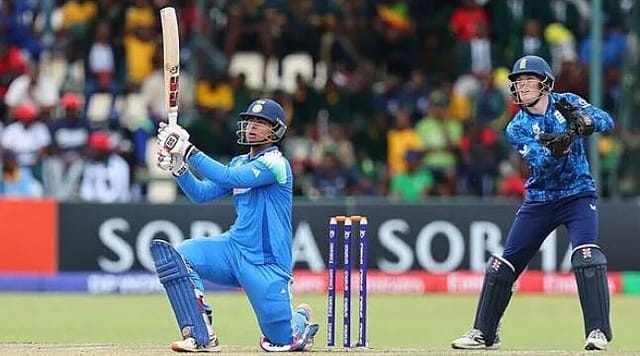
When Vaibhav Sooryavanshi swished his tired arms and was strangled down the leg side at precisely the halfway stage of India’s innings, which is the 25th over, during the U-19 World Cup final, he had scored 175 runs. Yes, 175. From just 80 balls that he had faced. With 15 fours and 15 sixes; which essentially means that a 150 of Sooryavanshi’s runs were scored from all of 30 balls at the scenic Harare Sports Club, now the venue for the greatest Youth ODI innings ever played.
What makes the happenings in Zimbabwe on Friday even more ludicrous, and this is worth reiterating, is that Sooryavanshi is all of 14, making his largely 19-year-old teammates and opponents – finalists England on this day – at this World Cup way, way older than him. Yet, at one point, the child from Samastipur, Bihar, looked like he would ease his way to the first individual score of 300 in international 50-over cricket across age-groups. As he walked off the field, well shy of what could’ve been, with India’s score on 251/3 midway through their batting innings, the result of this match had already been decided. It would take the rest of the Indian side four more hours to put the finishing touches to what Sooryavanshi had already ensured within minutes, that of handing the country a record-sixth U19 World Cup title.
On Friday, however, the team, the trophy and everything else for that matter took a backseat to Sooryavanshi’s headlining act. To his genius. Here was a kid who was once again playing top-level cricket better than anyone his age ever had – greater even than the greatest of all child prodigies until now, Sachin Tendulkar at 14. Already Sooryavanshi had made a global splash by scoring a hundred on his Indian Premier League debut for Rajasthan Royals last season. Not just any hundred, but the second-fast of all time (35 balls) and the fastest-ever by any Indian. But the World Cup final, even though against inexperienced teenagers, seemed a step above all his earlier knocks, for it was an unfiltered view into his capabilities, which is so far above his contemporaries that it almost seemed like a joke.

War on Iran: The War That No One Won
10 Apr 2026 - Vol 04 | Issue 66
And the price of surviving it
Sooryavanshi opened the innings and started off slow, relatively. His first four boundaries were all fours, as the lefty looked to find the gaps rather than muscle the ball into the grass embankments beyond the ropes. But that would change after just one upper cut six off fast bowler Alex Green in the seventh over, and now Sooryavanshi had tasted blood and craved for the whole meal.
For a 14-year-old to pump the ball with ease into the stands of an international ground is a sight to behold. For him to do so repeatedly, often times with multiple sixes in the same over, like when spinner Farhan Ahmed was lofted for three of them in the 15th over, which cost him 27 runs in all, is a scene so improbable that it simply stops one and all in their tracks. Six after six, he brought up century in just 55 balls, and took just 16 deliveries to go from 100 to 150. At one point during this madness, the projected team score was over 650 runs. In an ODI. All of this because of a 14-year-old child, batting in his first major final for the country. None of this made sense. None of this was supposed to either.
India got to ‘only’ 411 after Sooryavanshi got out, given that the next highest score to his 175 was captain Ayush Mhatre’s 53. They still ended up winning by exactly 100 runs, closer than it should’ve been after England’s middle-order batsman Caleb Falconer pummelled a century (115 from 67 balls) to put himself firmly on his country’s short-format radar. In any other match, Falconer’s powerful strokeplay and counterattacking innings would’ve had its share of the limelight. But on a day that will forever be remembered more for a knock than the World Cup final itself, it was rightly all about the brightest prospect on cricket’s vast horizon, Vaibhav Sooryavanshi.