India, Sri Lanka & ‘What If’: Did India Bat Too Long in Colombo?
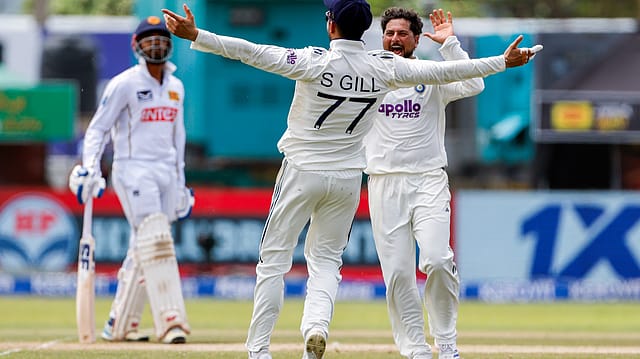
India finished the Colombo Test needing two wickets.
Somewhere inside their 503 runs, therefore, hindsight will insist that a few were unnecessary. Perhaps it was the final fifty. Perhaps the final twenty. Perhaps merely the 22 deliveries Dhruv Jurel needed after a rain interruption to travel from 95 to his century.
Return those minutes to India’s bowlers, the argument goes, and the series ends 2-0. Except Test cricket does not return time without rewriting everything that happened inside it.
Declare earlier and Sri Lanka may bat differently. India may not enforce the follow-on. Sonal Dinusha may arrive under different circumstances. Shubman Gill may have to set a fourth-innings target. The pitch may deteriorate differently because fewer balls have struck it. Even the rain may intervene at a less useful moment.
Zeroing In on ECI
09 Oct 2026 - Vol 05 | Issue 41
Constitutional legitimacy versus political opportunism
That is what makes a declaration the game’s most beautiful gamble. A captain must decide that his team has scored enough before the match supplies any proof. Gill waited until India reached 503 for nine in 138 overs. Sri Lanka were eventually bowled out for 290 and asked to bat again, 213 runs behind. They then reached 395 for eight in their second innings, powered by Dinusha’s second century of the Test, and escaped with a draw.
India won the series 1-0. The scoreboard recorded a draw in Colombo. History will preserve a question.
Did India bat too long?
The 13 Runs That Bought India a Follow-On
The simplest indictment of Gill runs like this: India occupied 138 overs, batted deep into the second day and built a total far beyond what they needed. When the match ended with Sri Lanka eight wickets down, every additional over spent batting began to resemble an over India’s bowlers had been denied.
But 503 was not merely a monument to excess. It purchased something important.
In a five-day Test, the side batting first needs a lead of at least 200 runs to enforce the follow-on. Sri Lanka made 290. That means, with the benefit of the final score, India needed at least 490.
They declared 13 runs beyond that line. At 489, Sri Lanka’s eventual total would have left India 199 ahead. Gill could not have sent them back in. At 490, he could.
This is the Colombo paradox. The runs that appeared to consume time also created India’s quickest route to victory. Without the follow-on, India would probably have batted again, hurried towards a declaration and then attempted to dismiss Sri Lanka on the final day. That route may have left the bowlers even less time.
Nor could Gill have known that Sri Lanka would make precisely 290. If India had declared at 450 and dismissed the hosts for 240, the decision would have looked inspired. If Sri Lanka had reached 320, it would have appeared reckless.
Captains operate without the scorecard that critics receive afterwards. India had begun the second day at 300 for five. Jurel and Rishabh Pant added 112 for the seventh wicket. Jurel pushed towards his hundred while rain interrupted play for more than two hours. After the resumption, Sri Lanka squeezed him on 95 before he reached three figures. India then carried on until Prasidh Krishna’s boundary took the score beyond 500, prompting the declaration.
The ICC’s account of the day noted that India were left with only three overs in fading light. Yet those three overs brought two wickets and left Sri Lanka at eight for two.
The declaration had worked instantly. That matters. If India had declared earlier, the new ball might have encountered different light, different batters and a less startled opponent. Those two wickets cannot simply be retained while the declaration is moved backwards on an imaginary timeline.
Hindsight likes to edit only one variable. Cricket changes them all.
When 503 Became Too Much
The argument against the declaration grew stronger only as the match travelled.
Sri Lanka recovered from eight for two to reach 290, with Dinusha making 103 and Pasindu Sooriyabandara 80. India needed part of the fourth morning to remove the final two wickets before Gill enforced the follow-on.
The hosts then batted with considerably greater assurance. Sooriyabandara made 92, Kamindu Mendis scored 55 and Sri Lanka closed the fourth day at 229 for six, already 16 ahead. Rain had also shortened the day, according to the ICC’s match report.
India still began the final morning four wickets from victory.
Then Dinusha and Keshara Nuwantha consumed an entire session. Their seventh-wicket partnership crossed 100. Nuwantha, batting at No. 8, turned survival into an occupation. Dinusha completed another century. By tea, Reuters reported, Sri Lanka were 383 for eight and 170 ahead.
India had removed eight batters. Time protected the last two.
That is when the final phase of India’s innings returned for cross-examination. Manav Suthar had made 18 from 51 balls. Mohammed Siraj had occupied 29 deliveries for three. India added 43 runs for the final three wickets after reaching 460 for seven.
Were those runs insurance or indulgence? The answer again depends on the number 290. Without some of those lower-order runs, India may not have secured a 200-run lead. Yet every ball consumed by the tail became precious once Sri Lanka’s tail began consuming balls of its own.
India’s last four batters faced 95 deliveries between them. On the final day, Nuwantha alone faced 150 during his 46. Lahiru Kumara then blocked for nearly 50 balls. This was not simply a delayed declaration costing India a win. It was one tail buying the follow-on and another tail surviving it.
The Decisions History Refuses to Settle
Test cricket is crowded with declarations that acquired a different meaning after the final wicket failed to fall.
At Edgbaston in 1957, England followed on 288 runs behind West Indies. Peter May and Colin Cowdrey then constructed a 411-run partnership, at the time a Test record for the fourth wicket. England reached 583 for four before May declared unbeaten on 285.
West Indies were set 296 in less than three hours. They collapsed to 72 for seven but survived. England had transformed probable defeat into near victory, yet the sight of three wickets still standing allowed the inevitable question: could May have declared earlier?
A contemporary reconstruction of the match notes that the target was effectively impossible when May finally called his batters in. Yet England still took seven wickets in the available time. Twelve more overs might have finished the match. They might also have allowed West Indies to arrange their resistance differently.
At The Oval in 1981, Australia delayed their declaration while debutant Dirk Wellham pursued a century. He reportedly spent a painful half-hour on 99 and was dropped before reaching 103. Australia finally declared at 344 for nine and set England 383.
England finished at 261 for seven. The result had no bearing on the destination of the Ashes, which England had already secured. Wellham became one of the few Australians to make a hundred on Test debut. Yet the match remains part of the declaration argument because Australia ended three wickets short. The innings preserved a young batter’s landmark. Did it surrender a victory?
At Lord’s in 2014, Alastair Cook’s England set Sri Lanka 390 after declaring before the final day. Sri Lanka finished nine wickets down. Nuwan Pradeep survived the final five deliveries after overturning an lbw decision from Stuart Broad.
Cook was forced to defend the timing. He argued that England had scored 40 or 50 runs in the final four overs of their innings and that an earlier declaration would have offered Sri Lanka a more inviting chase. The Guardian reported that England began the last over needing two wickets and found only one.
One more wicket would have made Cook’s calculation look exact. One fewer over made it look cautious.
In Barbados in 2022, Joe Root gave West Indies 282 to win from 65 overs. Kraigg Brathwaite, who faced 673 deliveries across the Test, blocked England’s route to victory. West Indies finished at 135 for five.
Root later conceded to the BBC that he could have been “a bit braver”. He wondered whether England might have declared ten overs earlier and defended 240 rather than 282. But that is the captain’s trap. Reduce the target enough and a team that intended to survive may begin to chase. More time for the bowlers can also mean more hope for the batters.
Aggressive declarations have consequences too. Michael Atherton gave South Africa 204 from 36 overs at Johannesburg in 1995. They completed the chase with two balls remaining. What would have been celebrated as attacking captaincy became a defeat.
The critics who demand an earlier declaration rarely volunteer to absorb that risk.
Gill’s Decision Was Defensible. The Question Remains
Gill had several reasons to keep batting. India were leading the series and did not need to manufacture a reckless contest. Rain had already disrupted the Test. The pitch remained friendly enough for substantial partnerships. India wanted a total large enough to bring the follow-on into play even if Sri Lanka recovered. Jurel was approaching a century. The lower order was still adding runs.
Most importantly, 503 did produce the position India wanted. Sri Lanka followed on. India entered the fifth day needing four wickets. Later, they needed two. A captain who creates that position has hardly misread the Test.
India’s bowlers also had opportunities. Dinusha survived an lbw decision on review early on the fourth morning before completing his first-innings century. Sooriyabandara and Kamindu built a 115-run partnership in the second innings. Nuwantha resisted through the first session of the final day. The Indian spinners bowled no-balls, squandered pressure and struggled to finish Sri Lanka’s lower order.
A declaration cannot be blamed for every wicket that bowlers fail to take. Yet the what-if survives because two wickets are close enough to provoke it. If India had declared half an hour earlier, would those two wickets have arrived? If Gill had called Jurel in before his hundred, would India have won at the cost of a young batter’s milestone? If India had stopped at 480 and Sri Lanka still made 290, would batting again have consumed more time than the follow-on saved?
There is no honest way to know. That is not a weakness in the story. It is the story. One-day cricket asks a captain to divide a known number of overs. Test cricket asks him to estimate how much time the future will require. Runs can be counted. Wickets can be counted. Time becomes valuable only after it has disappeared.
A declaration is the only decision in cricket in which a captain voluntarily ends success. He must walk onto the field, recall his own batters and decide that abundance has become waste. If he declares early and loses, he was reckless. If he waits and draws, he was timid. If his bowlers take the final wicket, the same decision becomes masterful. Gill stopped India at 503. It bought him the follow-on, a second assault on Sri Lanka and a fifth morning that began four wickets from victory. It left him two wickets short.
History will now do what history always does with a declaration. It will return the clock to Shubman Gill and ask him to stop it somewhere else.