History Scripted: R Praggnanandhaa Becomes First Indian to Win Norway Chess Title
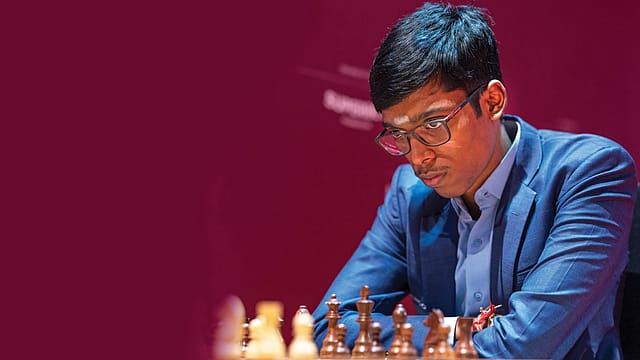
Indian Grandmaster R Praggnanandhaa has added another milestone to Indian chess by becoming the first Indian player to win the prestigious Norway Chess title.
The 20-year-old secured the crown with a final-round victory over Germany's Vincent Keymer in Oslo, completing one of the most impressive late surges seen in the tournament's history.
Why Is Winning Norway Chess Such a Major Achievement?
Norway Chess is widely regarded as one of the strongest tournaments in the world. The 2026 edition featured an elite field that included World No. 1 Magnus Carlsen, reigning world champion D Gukesh, Alireza Firouzja, Wesley So and Vincent Keymer.
Winning a tournament of this calibre requires consistent performances against some of the best players on the planet, making Praggnanandhaa's achievement particularly significant.

Look Who's Talking Regime Change
23 Oct 2026 - Vol 05 | Issue 43
How Did Praggnanandhaa Position Himself for the Title?
The Indian Grandmaster entered the final round half a point behind tournament leader Wesley So.
That meant Praggnanandhaa needed a strong result against Vincent Keymer to put himself in contention for the title. Playing with the white pieces, he seized the initiative and converted a crucial victory when it mattered most.
The win earned him the maximum three points available, taking his total to 18 points and moving him to the top of the standings.
What Made His Victory Run So Remarkable?
Praggnanandhaa's triumph was built on an exceptional run of results in the closing stages of the tournament.
In the four days leading up to the final round, he defeated Alireza Firouzja, World No. 1 Magnus Carlsen and reigning world champion D Gukesh. The tournament also saw him complete a rare double over Carlsen, one of the greatest achievements of his young career.
Those victories transformed him from a contender into a genuine favourite for the title heading into the final day.
What Happened to Wesley So's Title Chances?
Wesley So entered the final round as the tournament leader and remained in contention until the very end.
He drew his classical game against Alireza Firouzja before winning the subsequent Armageddon tiebreak to earn additional points. However, Praggnanandhaa's victory over Keymer proved decisive, allowing the Indian Grandmaster to finish ahead of So in the final standings.
How Did Magnus Carlsen and Gukesh Finish?
The final-round clash between Magnus Carlsen and world champion Gukesh Dommaraju ended in a classical victory for Carlsen.
The Norwegian star continued pressing throughout a long battle and concluded the tournament with a win in front of his home fans. However, the result was not enough to challenge for the title, as Praggnanandhaa had already done enough to secure first place.
What Were the Final Standings?
After 10 rounds, Praggnanandhaa finished as champion with 18 points.
Wesley So secured second place with 17 points, while Alireza Firouzja completed the podium in third with 15.5 points after an impressive campaign.
What Does This Mean for Indian Chess?
Praggnanandhaa's victory represents another landmark moment for Indian chess, which continues to produce world-class talent.
Defeating a field featuring the reigning world champion, the world's top-ranked player and several elite Grandmasters underlines his growing status among the game's leading players. Becoming the first Indian to win Norway Chess further strengthens his credentials as one of the brightest stars of the current generation and adds another chapter to India's expanding legacy in global chess.
(With inputs from ANI)