From Olympic Dreams to a 10-Year Ban: The Second Doping Case That Could End Shivpal Singh's Career
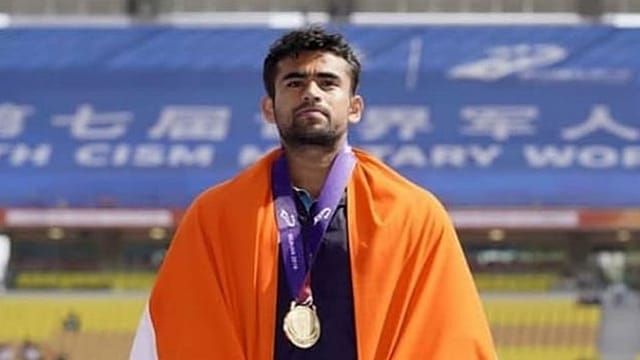
For a brief moment in 2019, Shivpal Singh looked like one of Indian athletics’ brightest stories.
The Uttar Pradesh javelin thrower had just won silver at the Asian Athletics Championships in Doha with a personal best throw of 86.23 metres. It remains the best throw of his career. He was part of a new generation of Indian javelin athletes beginning to attract global attention.
Two years later, he was competing at the Tokyo Olympics.
Today, the conversation is very different.
Shivpal Singh has been handed a 10-year ban by the National Anti-Doping Agency (NADA) Disciplinary Panel after testing positive for methandienone, a prohibited anabolic steroid. According to PTI, this is his second anti-doping rule violation, triggering a much harsher punishment under anti-doping rules.
Rise of the Pivotal Power
18 Sep 2026 - Vol 05 | Issue 38
The BRICS declaration is a strategic victory for Modi
At 31, the suspension could effectively bring his athletics career to an end.
Why Has Shivpal Singh Been Banned for 10 Years?
The latest sanction stems from a positive test for methandienone, an anabolic steroid banned under the World Anti-Doping Agency (WADA) code.
The substance may sound familiar because it was also at the centre of Shivpal's previous doping case.
Under anti-doping regulations, a second offence carries significantly heavier penalties than a first violation. NADA's disciplinary panel therefore imposed a 10-year period of ineligibility, one of the most severe punishments handed to an Indian track-and-field athlete in recent years.
The decision dramatically changes the trajectory of a career that had once appeared headed in the opposite direction.
Haven't We Heard This Story Before?
Yes.
And that is what makes the latest development so consequential.
Shivpal first landed in trouble in 2021 after an out-of-competition sample tested positive for methandienone. In August 2022, NADA's Anti-Doping Disciplinary Panel imposed a four-year ban.
At the time, many believed that would effectively end his international career.
But the story took an unexpected turn.
How Did Shivpal Get His First Ban Reduced?
Shivpal appealed the four-year suspension and argued that the positive test had been caused by a contaminated supplement rather than intentional doping.
According to documents from NADA's Appeal Panel and reporting by PTI, the supplement he had declared on his doping control form was tested and found to contain methandienone despite the substance not being listed on the label. The appeal panel accepted that contamination had played a role and reduced the ban from four years to one year in January 2023.
The ruling was significant.
Not only did it allow Shivpal to return to competition, it also prompted the panel to urge authorities to crack down on fake and contaminated supplements being sold to athletes.
What Happened After Shivpal’s Comeback?
For a while, the comeback seemed real.
Freed to compete again, Shivpal returned to the circuit in 2023 and quickly found success. He won bronze at the National Inter-State Championships in Bhubaneswar and later claimed gold at the National Games in Goa. PTI reported that the performances suggested he was rebuilding momentum after the suspension.
His most recent recorded appearance came at the Indian Open Throws Competition in March 2025, where he finished second.
Now, those results are likely to be remembered as the final chapter of his competitive career.
Who Is Shivpal Singh and Why Did He Matter to Indian Athletics?
Long before the doping cases, Shivpal was regarded as one of India's most promising javelin throwers.
The nephew of former international thrower Parameshwar Singh, he emerged through India's athletics system as a powerful and technically gifted athlete. His silver medal at the 2019 Asian Athletics Championships remains one of the biggest achievements of his career.
He later represented India at the Tokyo Olympics, although he struggled to reproduce his best form there and did not progress beyond the qualification stage.
For a generation of Indian athletics fans, Shivpal was part of the same broader javelin boom that eventually saw Neeraj Chopra become an Olympic champion.
What Does the Ban Mean Now?
A 10-year suspension is not technically a lifetime ban.
But in practical terms, it may feel like one.
Shivpal is currently 31. Even if he serves the entire period and returns, he would be in his forties before becoming eligible again.
Athletes have staged remarkable comebacks before.
But few have returned from a second doping offence and a decade-long absence in a physically demanding event like the javelin throw.
That is what makes this story so striking.
It is not merely about another doping suspension.
It is about the distance between promise and reality.
A decade ago, Shivpal Singh was chasing medals.
Today, he is confronting a 10-year ban that may define how his career is remembered.
(With inputs from ANI)