FIFA’s New AI Offside Tech Promises Faster Calls at World Cup 2026
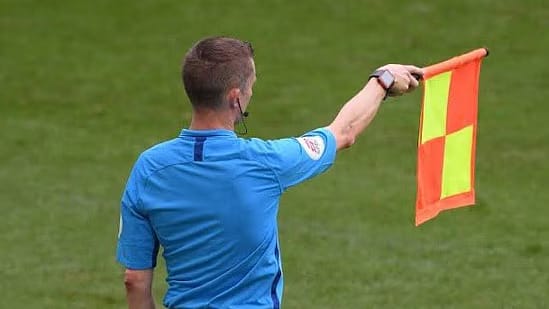
The offside rule has frustrated football fans for decades. From hair-width VAR delays to flag controversies that derail entire matches, the system has long needed an overhaul.
Ahead of FIFA World Cup 2026, football's governing body is deploying a significantly upgraded Semi-Automated Offside Technology (SAOT) that uses AI, real-time tracking, and 3D player avatars to make calls faster, clearer, and harder to dispute.
What Is the New Offside Technology FIFA Is Using?
The Semi-Automated Offside Technology, or SAOT, was first introduced at the 2022 World Cup in Qatar.
The 2026 version incorporates more advanced AI and real-time tracking that monitors dozens of data points per player multiple times every second. When a potential offside occurs, the system automatically alerts the VAR team, which confirms the call before relaying it to the on-field referee.

Zeroing In on ECI
09 Oct 2026 - Vol 05 | Issue 41
Constitutional legitimacy versus political opportunism
How Much Faster Will Decisions Be?
A real-time audio alert will now be sent to the assistant referee if a player is more than 10 cm offside.
Previous versions tested at the Club World Cup only notified officials if a player was greater than 50 cm offside. This tighter threshold means fewer delayed flags and less needless play continuing after an offside has occurred.
Why Is FIFA Creating 3D Avatars of Every Player?
FIFA has confirmed that AI-enabled 3D avatars will be created for all 1,248 players across the 48 competing squads, according to the BBC.
Each player will be digitally scanned in a process that reportedly takes just one second during pre-tournament photo shoots. These avatars will power clearer offside animations shown on stadium screens and broadcasts worldwide.
What Is the New Out-of-Bounds and Line-of-Sight Technology?
FIFA has introduced technology that determines whether the ball crossed the byline before a goal was scored.
A chip inside the ball identifies which player last touched it, helping VAR verify corner decisions. Two virtual feeds replicating each goalkeeper's perspective will also assist with line-of-sight offside calls.
Does the System Have Any Limitations?
The technology cannot detect the tightest margins and struggles when players are on the ground or positioned very close together. It also only applies to positional offside and not subjective calls requiring interpretation.
Could This Finally End Football's Offside Controversy?
Probably not entirely, but it marks a meaningful step forward.
The tragedy of Nottingham Forest striker Taiwo Awoniyi, who reportedly had to be placed in an induced coma in May 2025 after colliding with a post when an assistant delayed raising an offside flag, has given this reform urgency beyond mere technicality.
At the 2026 World Cup, the upgraded offside technology will face its biggest test yet.
(With inputs from yMedia)