David Warner Drunk-Driving Case Explained: A$1,500 Fine, Breathalyser Lock and Sydney Thunder Fallout
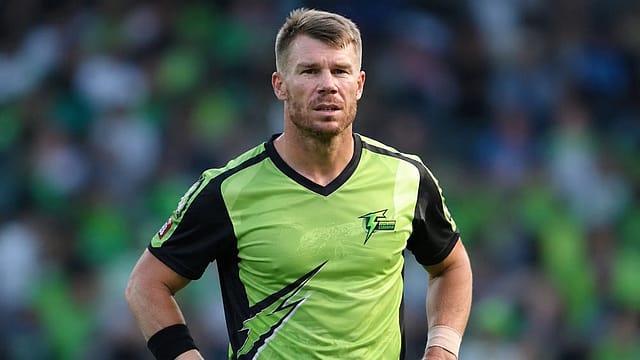
David Warner saw the roadside breath-testing operation ahead and stopped his car.
Then he tried to leave the driver’s seat. That attempted switch with a female passenger did not work. Police approached the vehicle, tested the former Australia opener and recorded a blood-alcohol concentration of 0.104, more than twice the legal limit.
Four months later, Warner walked into a Sydney court seeking to avoid a criminal conviction. He left with one, along with an A$1,500 fine and an order that will make him blow into a breathalyser before his car can start for the next 12 months. The consequences may not stop at the courthouse. Warner still captains Sydney Thunder, a franchise associated with a New South Wales government campaign against drink-driving.
The Identity Project
11 Sep 2026 - Vol 05 | Issue 37
Amit Shah leads the mission for a national demographic correction
What happened on the night of the offence?
Warner was driving his family home from a social gathering in Sydney’s eastern suburbs during the Easter weekend when he approached a random breath-testing site in Maroubra. The Waverley Local Court heard that Warner stopped short of the testing point and attempted to exchange seats with a female passenger. According to ABC News, Warner had consumed three glasses of white wine. An initial roadside test returned a positive result, while a subsequent reading recorded a blood-alcohol concentration of 0.104. The legal limit for most drivers in New South Wales is 0.05. Warner pleaded guilty in July to mid-range drink-driving.
Why was the reading classified as “mid-range”?
Under New South Wales government guidelines, a blood-alcohol concentration above 0.08 but below 0.15 constitutes a mid-range prescribed concentration of alcohol offence. Warner’s reading of 0.104 placed him comfortably inside that band. Police prosecutor Sergeant Adrian Walsh argued that the reading had not merely crept into the mid-range. He told the court that it was “well into” the category and that the need to deter others carried particular weight. The presence of Warner’s children in the car also aggravated the offence, the court heard.
What punishment did Warner receive?
Judge Clare Farnan convicted Warner, fined him A$1,500 and ordered him to participate in the alcohol interlock programme for 12 months. Warner can apply immediately for an interlock licence because he has already spent time off the road. The judge accepted that the 39-year-old was unlikely to commit the offence again, but stressed that drink-driving continues to contribute significantly to crashes across New South Wales. The ruling therefore placed public deterrence ahead of Warner’s request to avoid a conviction.
What does the interlock order mean?
An alcohol interlock is an electronic breath-testing device connected to a vehicle’s ignition. The driver must provide a breath sample before starting the car. If the device detects alcohol, the engine will not start. The New South Wales programme can also require additional breath tests while the vehicle is being driven. Participants must demonstrate during the final six months that they can separate drinking from driving before the interlock condition is removed. Failed tests can trigger a medical examination and extend the interlock period. For Warner, the order means he will be allowed to drive only vehicles fitted with the device while the condition remains attached to his licence.
Why did Warner’s lawyer ask the court to spare him a conviction?
Warner’s barrister, Awais Ahmad, described the decision to drive as “impaired, impulsive and frankly foolish”, but argued that his client had accepted responsibility and completed a traffic offenders’ programme. The defence also maintained that Warner had already suffered additional punishment through intense media coverage, personal attacks and possible damage to future commercial opportunities. His lawyers submitted that this was his first encounter with the criminal justice system and urged the judge to deal with the case without recording a conviction. The prosecution countered that Warner’s status strengthened the need for accountability. As a prominent cricketer, father and role model, it argued, his conduct carried influence far beyond the vehicle. The judge recorded the conviction.
Did Warner’s driving history matter?
Yes. The prosecution told the court that Warner’s traffic record included 10 speeding offences and three instances of using a mobile phone while driving. None of those previous infringements amounted to an earlier drink-driving conviction, but they weakened the argument that his wider road record deserved special leniency. Warner had also been driving with his children in the car. The prosecution argued that even a short journey under those circumstances could have produced devastating consequences.
What did Warner say after sentencing?
Nothing publicly. He left Waverley Local Court without commenting as reporters and camera crews waited outside. His silence followed an argument from his legal team that extensive coverage had already affected his commercial prospects. The court, however, rejected the suggestion that publicity should replace a formal conviction.
Could the case cost Warner the Sydney Thunder captaincy?
That question remains open. Warner retired from international cricket in 2024 after playing 112 Tests and more than 250 limited-overs internationals for Australia. He has since worked as a Fox Sports commentator while continuing to play franchise cricket and captain Sydney Thunder in the Big Bash League and Karachi Kings in the Pakistan Super League. The Thunder complication is particularly uncomfortable because the franchise is associated with a New South Wales government road-safety campaign. Cricket NSW told Sky Sports that it strongly advocates safe driving and continues to treat Warner’s offence seriously, including by educating players about the dangers of drink-driving. It has not announced whether Warner will remain Thunder’s long-term captain. That decision could carry consequences beyond one team. Warner’s lawyer told the court that commercial opportunities were already being affected. A criminal conviction creates a harder reputational problem for franchises, broadcasters and brands than a charge awaiting resolution. The court case is over. The cricketing fallout may only have begun.
(With inputs from ANI)