Everything You Want to Know about India’s Doping Paradox
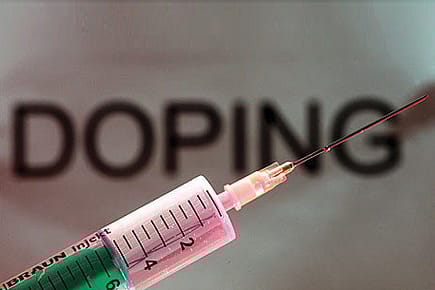
Having competed and worked in international and professional sports, I’ve seen things that would turn your hair white. And if you have white hair, you’d go bald, even if you’re female! In 1997, I crossed paths with one of the most devious doping experts the world has ever known. Doctor Bernd Pansold was number 2 in the East German sporting ‘miracle’ and tried to convince me that getting a syringe in my rear end was good for my health. It wasn’t, he failed, and only a month later did I realise who I’d just met, plus how close I’d come to destroying my body and mind.
Fighting match-fixing in soccer and tennis, pleading with parents not to send their young daughter to a convicted pedophile for training, and many other moments caused me to walk away from full-time sports work in 2013. I focused more on journalism and exposing corruption. Well, I spoke openly about corruption and gave those affected by it a voice. You see, if you ‘blow the whistle’ or ‘speak out,’ you get blacklisted. No matter what the sport, omerta is rife at all levels. So something as insidious as doping, a practice that can make the differences between also-ran and medalist, or between $1,000 and $1,000,000, is too big to fail. It’s so important to the sporting success of nations that the national anti-doping agencies are quick to cover up any failures to keep their grift going. All receive government funding in some form or another, so they will not bite the hands that feed them, except….in India.

I.N.D.I.A. Falling
12 Jun 2026 - Vol 04 | Issue 75
The Unravelling of an Alliance
Table Toppers
India led the way with doping failures in 2025, again. Kenya is right up there with their track and field (T&F) athletes getting ‘popped’ almost weekly, and Russia would be challenging again for top spot were it not for most of their competitors not being allowed in international competition. While hundreds of Indian sportspeople got busted or sanctioned by the National Anti-Doping Agency India (NADA), a handful of UK sports folk were handed bans by their UK counterparts. Not a single top-level athlete of note was caught, despite their global success in sports like T&F, rugby, soccer and boxing.
The most tested sports in the UK in 2025 were soccer, rugby union, T&F, cricket, rugby league, cycling, and boxing. The most played, the most valuable, the most suspect sport had the most tests, but nobody got the boot. Even when they were caught, they had Therapeutic Use Exemptions (TUEs) which allowed them to use performance enhancing drugs. See, if you’re going to cheat, cheat cleverly. And for those footballers who missed a test or two, never take a test you won’t pass. And if you do, make sure you have asthma or an underactive thyroid so you can magic up a TUE. And this leads me back to the most populous nation in the world.
Runaway, Runaway
While I never watched the movie, there is a scene in Monty Python and the Holy Grail, where they shout “Run away! Run away!” Well, that’s common practice in Indian T&F meets. KP Mohan, former Deputy Sports Editor of The Hindu, told us on Capital Sports how this insane situation plays out.
“Sometimes there seems to be an advance warning given that NADA testers will be there, so these athletes don’t line up or just run away,” he told me when asked about images and videos of syringe-laden toilets or outhouses circulated online. “It’s a particular problem that is not going away and the anti-doping agency is having a very hard time.”

At one meet in Pune, the arrival of testers from NADA caused a sudden withdrawal of a dozen-plus athletes last Summer. You never take a test you won’t pass. I asked Kaypeem, are the athletes doping or just not aware of the rules?
“It is both. Some are genuinely unaware [that they’re clean], others don’t know if they are clear [drugs have washed out of their systems].”
Jonathan Selvaraj, of Sportstar, also told Capital Sports that this issue is not only affecting senior athletes, but juniors too.
“It is quite widespread and not just confined to athletics,” he believed. He did note that NADA is doing their best, echoing Mohan and a host of other Indian sports journalists we’d spoken with over the years. Unlike their UK, US, and (previously) Russian counterparts, NADA seem genuinely committed to tackling the scourge of doping. And now I’ll explain why.
Do Indians love their children too?
I’m paraphrasing a touching anti-war song by Sting, Indians replacing Russians, to form a question I asked of a NADA India official last November.
“We perform intelligence-led operations, in addition to regular in- and out-of-competition tests. We all feel like we’re a step behind, but this does not mean we give up.”
I asked them the question about kids doping.
“It’s prevalent, growing, as many children from sixteen, seventeen, they go on the internet and see, ‘Oh look, this can make me stronger, faster, recover quicker’ and they’re born with gadgets in their hands.”
So why do they do it and what about the parents?
“Why do you dope? Win. Get a scholarship, money. It’s not all the same, but I think…it’s results. We [Indian society] put so much pressure on our children to succeed that this manifests into such ways. Sport is not sport, it’s business, it’s life and it’s death. Instead of children enjoying it, they feel [pressure].”
And I’ve seen this before. I saw it with those parents sending their child to a pervert tennis coach. I saw it with a tennis player my company managed, going to train in Spain with doping coaches. I saw it with a footballer signing black and white contracts (black was cash in hand, white was legal). In two of the cases I pleaded with parents to talk sense into their kids, but they were so caught up in the fame and potential fortune thing that I was a nuisance.
“Why don’t you want our child to succeed and improve, it’s more money for you?” The mother of the girl sent to a known child abuser screamed down the phone at me. I didn’t know how a parent could be so lost.
And yet, this is where India can win and stand head and shoulders above her rivals. NADA is already doing work that every single anti-doping campaigner I know and respect admires. India is above what is happening at this moment. Here’s why.
Family first, legacy matters
Being the world’s most populous nation means more work for an under-funded and over-stretched anti-doping agency. They are not causing athletes to dope, or coaches to give bad advice, or parents to push kids too hard. They are trying to educate, inform, and enforce. The Government of India wants sporting success, but not at the cost of, well. Ok, not to become another Russia.
Russia had, has, and will continue to have issues with doping. The man who turned an anti-doping lab in Moscow into a worldwide doping advisory operation making millions, ran away from criminal prosecution. Grigory Rodchenkov became the ‘victim’ of the situation that blew up from 2013 onwards, allowing the US to dictate terms to Russia in the field of sports. That US, who’ve topped every Olympics medals table but one since 1996. The one time they weren’t top dogs? Beijing in 2008, when China were masters of the universe. India’s not going to challenge US supremacy soon, so there is time to correct the course.
Hosting the Olympics in 2036 will increase pressure not only on athletes and coaches, but on administrators too. Medals will be expected and nobody wants to be another Greece in 2004, who stumbled home with 6 golds, a huge doping scandal involving their top male and female athletes, and billions in debt. Pressure will be put on the Indian Olympic Association to bring home gold, but this is sports. One misstep, a delayed dip, wind blowing a bullet off line or simply underperforming will lose medals.
So now, 10 years out from the biggest Olympics and Paralympics ever, India and Indian society have to decide what they want to achieve. Junior athletes competing right now, from age 8 to 18, will be the backbone of that Olympic team. These kids are the ones who will carry the burden of the biggest nation on the planet. All of India, and Indians, abroad will tune in to cheer, jeer, sneer, and ultimately witness the nation's ascension to the pinnacle of world sport. It is as vital to India as launching even more unicorns, or space rockets.
Right now, NADA is battling against the odds to make sure that kids can achieve their dreams safely. They are leading the world in their efforts. Their job is to make sure that they’re not using performance enhancing drugs that could at best disable, at worst kill them in the medium-to-long term. But it takes a village to raise a child and India has the intelligence, social cohesion, and humanity to make sure that the path taken by the US, UK, Russia and many others is changed. Winning is great, but not at the expense of our children’s health and wellbeing. Trust me, I know.