T20 World Cup: India’s Title Defence in Peril as Tactical Rigidity and Lack of Plan B Raise Questions
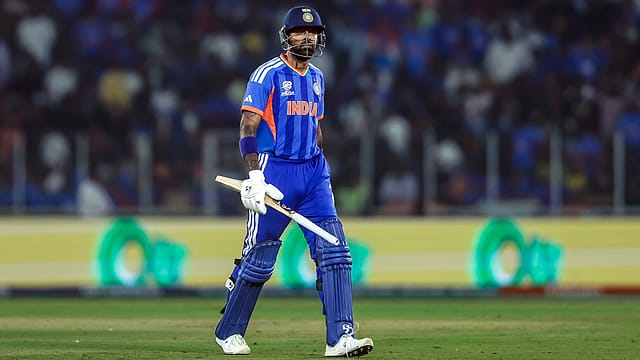
Cricket, in its original form, could once be described as a laidback sport played on sunny afternoons where the batting and bowling sides tried to outwit each other with skill and strategy.
Even in the brutality of the Bodyline era, the game and its followers could afford a sense of romanticism. In contrast, modern-day cricket, particularly after the advent of T20s, has transformed into a far more intense and data-driven contest where romanticism has made way for machismo and strategic thinking is often shaped by technological inputs and match-up analysis.
While data is undeniably scientific and influential, it has not replaced the human skills and situational awareness that the game still demands.
That is where the current Indian team appears to be faltering repeatedly. Despite possessing an assortment of unmatched talents, the side has struggled when challenged, often failing to think on its feet and seemingly lacking a Plan B in crisis situations.
Questions have inevitably been directed at coach Gautam Gambhir and captain Suryakumar Yadav, though the broader team has also come under scrutiny.
Why Does Team India Still Lack a Plan B in Crisis Moments?
Gambhir’s influence on team decisions is widely acknowledged, yet repeated setbacks, some of them embarrassing, suggest that the players have not fully absorbed lessons on handling pressure situations.

Youth Issue 2026
24 Apr 2026 - Vol 04 | Issue 68
50 Portraits of Icons and Achievers
After India’s Test series loss to South Africa at home last November, a frustrated Gambhir had blasted his team.
His remarks pointed to the core issue, yet India’s response in tough moments indicates that the problem persists.
In the Super 8 match against South Africa, India were six down for under 90 with six overs remaining while chasing an almost 190-run target.
Did Rinku Singh’s Shot against South Africa Reflect India’s Lack of Game Awareness in Crisis?
When Rinku Singh walked in and attempted an aggressive shot off just his second ball, only to be caught at long-on, it raised questions about game awareness.
With victory looking improbable and he being the last recognised batter, adding valuable runs to limit the net-run-rate damage could have been the logical alternative.
Selection and utilisation decisions have also come under the scanner. Choosing Washington Sundar ahead of Axar Patel for match-ups against left-handers seemed justified initially, given the presence of Quinton de Kock and Ryan Rickelton in the opposition’s top order.
However, once both were dismissed by Jasprit Bumrah, Sundar was given only two overs despite having the third-best economy rate in the side after Bumrah and Arshdeep Singh.
The move suggested a lack of a secondary plan from the captain regarding a bowler picked specifically for tactical reasons.
Is India’s Aggressive Template Hurting Their T20 World Cup Title Defence?
India’s apparent disregard for opposition strategies has further compounded their struggles. Rival teams have consistently used off-spinners to unsettle the left-handed opening pair of Ishan Kishan and Abhishek Sharma, yet the think tank has not visibly altered its approach.
The result has been repeated early dismissals, with one of the openers registering ducks in four of the five games played so far.
The insistence on maintaining the same aggressive template, often summarised as playing the same way as in the past couple of years, has increasingly appeared to be a lazy response to evolving challenges rather than a strategic conviction.
The consequences have been significant in the ongoing T20 World Cup on home soil. India’s title defence is in serious trouble following a 76-run loss to South Africa in Ahmedabad, which pushed their net-run-rate into the negative.
Thursday’s double-header is set to play a decisive role in determining their future in the tournament.
What Must India Do to Stay Alive in the T20 World Cup Race?
Apart from winning their remaining two matches, India also need South Africa to win both their remaining games against West Indies and Zimbabwe.
Overcoming West Indies in particular could prove difficult given that they remain unbeaten and have already posted 254 against Zimbabwe at the Wankhede Stadium, the second-highest total in the tournament’s history.
Meanwhile, Zimbabwe all-rounder Brad Evans has said his side is focused on executing its own plans ahead of the clash with India, despite acknowledging the strength of the opposition.
"They are a great side. We are not too focused on them. We are focused on us. So, you know, we put our plans in place, and we have had the relevant conversations within our batting groups, our bowling groups and our fielding groups. And so, yeah, we are fully focused on us, not the opposition. We know they are one of the best sides in the world. So we are just going to leave everything out there," he said.
Evans, who has taken 45 wickets in 29 T20Is at an average of 16.75 and scored 131 runs in 15 innings, stressed that Zimbabwe were not overconfident despite a strong group stage campaign that included wins over Sri Lanka and Australia.
How Is Zimbabwe Adapting to Indian Conditions Ahead of the crucial India game?
Reflecting on their previous 107-run defeat to West Indies, he admitted that many players were experiencing Indian conditions for the first time after playing the group stage in Sri Lanka.
"The last game did not go as planned. We came across a side which is experienced in these conditions, and a lot of squad members played their first game in India. But we stood up to the challenge. We were not good enough, but we have taken a lot on the board and learnt our lessons. Hopefully, in the game against India, we can put our best foot forward," he said.
He also noted the role of conditions, observing that there was not much dew in Mumbai during the second innings but a “little bit” of it in Chennai, which could assist the chasing side.
"We have got our plans to tackle it when it comes here," he added.
On India’s left-heavy top order featuring Abhishek Sharma, Ishan Kishan and Tilak Varma, the right-arm pacer said he has prepared specific strategies.
"I have got my plans for left-handers and right-handers and in the powerplay and in the death overs," he said.
(With inputs from ANI)