Tamil Nadu Assembly Elections 2026: Sowmiya Anbumani Stakes Her Claim in PMK’s Dharmapuri Stronghold
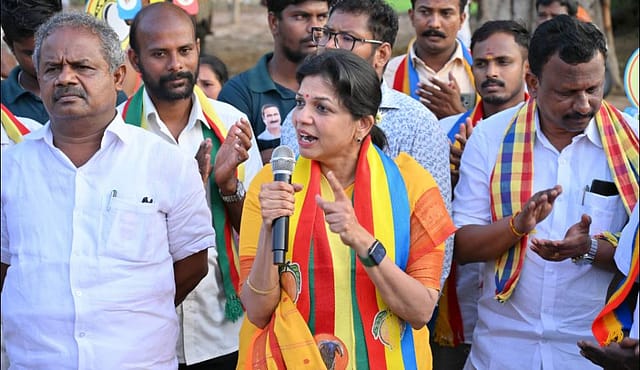
Why have you chosen what is seen as a relatively safe constituency?
You have to go back and win where you lost. I contested and lost here in the parliamentary election, so I’ve come back to reclaim that space.
So this is a personal battle of sorts?
No, not at all. The Pattali Makkal Katchi has been contesting in Dharmapuri for many years. We have a strong presence here—our MLAs are from this region, across Salem and Dharmapuri. It is a stronghold for us, and there is a lot of work to be done. Of course, there is work to be done everywhere, but Dharmapuri is close to our hearts. My husband represented this constituency as Member of Parliament from 2014 to 2019. It’s our hometown, our native place.
How would you describe your relationship with the NDA, and the BJP in particular? Do you see them as a positive force on the ground?
Very good. We’ve been associated with them since 2014, and we’ve remained in the alliance throughout. There is a good rapport and a strong working relationship. Whatever negative perception may have existed about BJP during the parliamentary elections, I don’t think it matters as much in an Assembly election. What I hear on the ground is strong anti-incumbency against the DMK government. People want change. They want the AIADMK to return to power, and we, as allies, will support that effort.
The Modi Years
02 Oct 2026 - Vol 05 | Issue 40
A Nation Rebuilt
The DMK swept the last election with a strong pitch to women voters. You’ve also been speaking about women-centric issues this time. What’s different now?
Every party releases a manifesto, and the DMK made around 550 promises in 2021. By our count, only about 66 have been fulfilled. The rest—across education, employment, and women’s empowerment—remain unaddressed.
More importantly, women’s safety has been seriously compromised. This is not just about alcohol; it’s about drugs. Substance abuse has become far more visible than it was five years ago. We are now hearing about and confronting crimes—sexual violence, including against children—that are deeply alarming. People are worried. Women, in particular, are angry. There is a sense that the government has failed to provide protection. That anger will reflect in how they vote.
Employment opportunities haven’t really been central to the campaigns in the district so far. What specifically would you do for this district?
Across Tamil Nadu, government jobs are limited, even though vacancies exist—in hospitals, police stations, and other departments. These posts are not being filled, even when people retire. That reduces the number of people available to serve the public and affects how institutions function.
At the same time, private sector opportunities are also limited. In some neighbouring states, there is a policy that reserves up to 75% of jobs for locals who have given land for industrial projects. Tamil Nadu does not have such a policy in place, though it was promised.
What kind of employment can you generate here?
Dharmapuri is an agrarian district. We produce tomatoes, mangoes, tamarind, flowers. There is huge potential for value-added industries—mango processing, perfumeries, tamarind packaging. But the infrastructure isn’t there. We need storage facilities, including refrigerated warehouses. None of this exists at scale.
There is also a SIPCOT industrial estate here—about 1,400 hectares—lying vacant for nearly 15 years. Two inaugurations have been held, but not a single factory has come up. We want to bring industries there and create jobs locally.
Dharmapuri has a strong base of students who do well academically, but there are no jobs here. Many migrate to Bengaluru, Krishnagiri, or other districts. We need to create opportunities so they can stay and work here.
What do you make of the Vijay factor?
We’ll have to see how that plays out.