The Abandoned Kejriwal
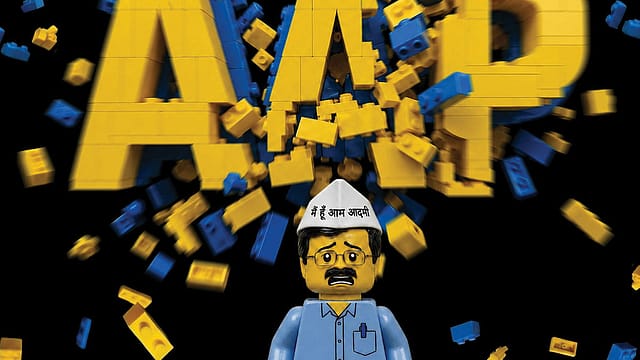
BARELY TWO MONTHS AFTER AAM AADMI PARTY (AAP) LEADER Arvind Kejriwal wept that he was “not corrupt” after a special court discharged him and 22 others in the Delhi liquor policy case, holding evidence against them as hearsay and not good enough to be put to trial, the winds of fortune changed direction again. On April 24, AAP Rajya Sabha MP and one-time Kejriwal confidant Raghav Chadha announced that seven of the party’s 10 MPs in the Upper House had defected. Hardly had the AAP leadership absorbed the shock that the breakaway MPs announced their impending merger with the Bharatiya Janata Party (BJP) followed by formal recognition by Rajya Sabha chairperson, Vice President CP Radhakrishnan. It was a stunning turn of events.
The relief in the liquor case, which had resulted in the arrest of Kejriwal and former Delhi Deputy Chief Minister Manish Sisodia, was hailed as a major victory for AAP but proved short-lived. To begin with, the Central Bureau of Investigation (CBI) quickly sought a review of the special court order in the Delhi High Court. There were some obvious flaws in the discharge order marked by sweeping remarks that seemed to overlook serious observations about the evidence against Kejriwal and others accused in previous rulings of the Delhi High Court denying them bail. Sisodia finally secured bail in August 2024 and Kejriwal—after a brief period of interim bail—in September 2024. The high court found the trial court’s remarks calling for departmental action against the investigating officer unwarranted and stayed portions of the ruling. This set the stage for a confrontation between presiding Judge Swarana Kanta Sharma and Kejriwal with the latter seeking her recusal for attending a programme organised by the Rashtriya Swayamsevak Sangh’s (RSS) legal wing. He claimed that her stay of parts of the trial court order seemed to indicate a predisposition to the view that the special court’s conclusions were erroneous. When Justice Sharma dismissed the recusal plea, Kejriwal in a video declared he would not appear before the judge either in person or through an advocate as an act of “satyagraha” and Sisodia made a similar declaration.
But at the time Kejriwal was embroiled in his showdown with Justice Sharma, another storm was brewing, one with serious implications. Earlier in April, AAP replaced Chadha as party deputy leader in Rajya Sabha with businessman and Lovely Professional University founder Ashok Mittal, accusing him of not speaking up against BJP in the House. Chadha denied the charge but AAP leaders Atishi, Saurabh Bhardwaj and Sanjay Singh doubled down on him. It is unclear whether Kejriwal’s faction anticipated that Chadha was planning a coup that would turn the tables on his detractors but the bickering went on alongside the courtroom drama. Now that the split is out in the open and rebels have found a new home in BJP, questions are being asked about the implications for the AAP government in Punjab which enjoys a massive majority of 92 MLAs in a House of 117. A split in its ranks is not an easy proposition but many of the AAP MLAs are not bound by strong bonds of ideological affinity to the party. The defection of Ashok Mittal, named by AAP as Chadha’s replacement, is not just ironic given his close links with the party but also indicative of deeper interests at play that can presage a political churn in Punjab once results to the current round of state elections are declared on May 4.

The story of Raghav Chadha, currently at the centre of the storm in AAP, began like many others drawn to the party as a volunteer in Anna Hazare’s India Against Corruption movement when he was 22. His reasons for joining AAP were no different from other volunteers who were fired up by its promise of out-of-the-box alternative politics. And like so many others, he has quit the party, citing disenchantment with it, claiming it was no longer the same.
When Chadha switched to BJP, the development came as no surprise. The first fissure in their relations had surfaced in 2024 after Kejriwal, then Delhi chief minister, went to prison, facing allegations of corruption and money laundering in the Delhi liquor policy case. Chadha left for London, citing an eye surgery. After that, it was never the same. The friction deepened. Once he was stripped of the post of deputy leader of the party in Rajya Sabha, the cracks were laid bare. “Silenced, not defeated,” Chadha wrote on X. The signs of an impending rupture were writ large.
Two days after Chadha quit AAP along with six other Rajya Sabha MPs, he took to Instagram to counter the memes, jokes and ridicule over his joining BJP, the very party he had once dubbed as comprising of illiterate goons. “Today, this party (AAP) is no longer the old party. Today, this party has a toxic work environment. You are stopped from working. You are stopped from speaking in Parliament,” said Chadha. Many prominent members of AAP have left over the years, right from its early days, but none has been able to inflict the damage that the departure of Chadha and the other six MPs has done. The list of rebels includes former cricket star Harbhajan Singh, Swati Maliwal, Sandeep Pathak, Vikramjit Sahney and Rajinder Gupta. As has been the case, most of AAP’s 10 Rajya Sabha MPs have business backgrounds rather than a party affiliation. Whenever someone quit the party, Kejriwal would say those who want to leave could go, recalls a former AAP member, one of the many who resigned over the past decade disillusioned with the leader’s unilateral style of functioning.
After BJP’s sweep of Delhi in the 2025 Assembly elections jolted and demoralised the party, which had been the local choice despite BJP’s dominance in Lok Sabha polls, the merger of the breakaway group with BJP is the most serious crisis AAP has faced. Of those who left, Kejriwal had handpicked favourites like Chadha, Pathak and Maliwal who were seen to be ideologically aligned with AAP. The latest exodus signals more than ideological discord and bodes ill for the party with the Punjab elections due in February 2027.
The development is particularly a concern for Kejriwal as his bid to stay away from Justice Sharma’s court may not work. The high court will almost certainly proceed hearing the CBI’s appeal against the trial court order and the AAP leader’s legal team is likely aware that the higher court could consider the case closely. The conclusion that the evidence in the Delhi liquor case is so deficient that it is not worthy of being put to trial flies against the observations of higher courts. The remand order of the special judge who heard the Directorate of Enforcement’s (ED) case after Kejirwal was arrested on April 21, 2023 noted that the evidence placed before her pointed to the leader’s role in the liquor policy and the irregular manner in which it was formulated without approval of the Group of Ministers (GoM) set up for the purpose. The court found merit in the ED’s argument that Kejriwal was part of a conspiracy to favour certain individuals and was involved in the kickbacks. In its order denying Kejriwal bail, the Delhi High Court had previously held that “the Hon’ble Supreme Court in case of Manish Sisodia v. CBI & Ors. 2023 INSC 956 has observed in para no. 21 that one charge was clear from any perceptible legal challenge that in a period of about 10 months, the wholesale distributors had earned `581 crore as fixed fee, out of which the excess profit earned due to increase of margin from 5% to 12% i.e. `338 crore was the proceeds of crime, emanating from the Delhi Excise Policy 2021-22.” The ED and CBI investigations have submitted that advance kickbacks were paid with the object of cartelisation and money used for funding AAP’s election campaign in Goa had been tracked through hawala operators and agents who transported the cash. The special court order discharging Kejriwal and others held that the Prevention of Money Laundering Act (PMLA) cannot be a substitute for election law remedies, a finding that is bound to be challenged.
IT IS NO secret in the party that Chadha had the AAP chief’s ear. Kejriwal took his views into consideration during meetings, at times preferring them over those of others, contrary to what Chadha is now alleging, a party leader says. Articulate and young, his career took off. He became an MLA from Delhi’s Rajinder Nagar at 31, was catapulted to the Upper House at the age of 33 and just as his political career soared, his personal life grabbed the limelight when he married Bollywood actor Parineeti Chopra in September 2024.
According to a former AAP member who had seen Chadha from the days of the IAC agitation, he was fiercely ambitious, knew how to impress Kejriwal and gained his trust, while people spent close to a lifetime to become even an MLA. Chadha was given a ticket to fight the 2019 Lok Sabha election from South Delhi but he lost to BJP’s Ramesh Bidhuri. Kejriwal wanted Chadha to become his election agent in the 2025 Delhi Assembly polls but the latter demurred, according to the AAP member. By then, Chadha had started distancing himself from his political guru. His speeches in Parliament, according to AAP sources aligned with Kejriwal, gradually lost their sting in taking on the Modi government. He refused to sign a letter seeking impeachment of the Chief Election Commissioner. Apart from personal differences, there has been financial dealings and speculation that the arrangement had soured along the way.
“It is not elected representatives who enter Rajya Sabha, but those who are selected by the party. It’s difficult to keep individual egos aside. Those who keep their interests over national interest may go. There will be several others who will join. The weak links will quit,” says AAP leader and lawyer Somnath Bharti, a former MLA from Delhi’s Malviya Nagar.
While AAP leaders may play down the exit of the Rajya Sabha MPs, the development has undoubtedly rattled the party. The challenge before AAP is to keep its flock together, with its political fortunes witnessing a slump following its defeat in Delhi, questions being raised about its distinctiveness, the centralisation of power making it resemble other parties, and Kejriwal along with other party leaders facing a legal battle over corruption charges. Although Kejriwal remains the supremo, his hold on the party after its ejection from office has become a key question.
With Punjab, the only state where AAP is in power, being in play after the rebellion of Chadha and others, Sisodia convened a meeting of MLAs in Jalandhar. “We are now focusing on states. There are Assembly elections in Punjab and Gujarat next year,” says AAP’s Rajya Sabha MP Sanjay Singh. While AAP leaders speak of other states, the party is a non-starter outside Punjab as the results to the Gujarat civic polls showed. AAP faced a setback in the Surat Municipal Corporation where its tally came down to four from 27 seats in 2021 when it had displaced Congress to become the main opposition to BJP. BJP won all 15 municipal corporations and 33 of 34 district panchayats, losing one to AAP. The party has five out of 182 MLAs in Gujarat. In Delhi its strength is 22, down from the 62 it had won in 2020 in a House of 70. The party also has two MLAs in Goa and one in Jammu & Kashmir.
It was Pathak’s switch to BJP that took the party by surprise. Low-profile, unlike Chadha, Pathak had quit his job as a professor at IIT, Delhi to join AAP. He was rewarded by Kejriwal for his work in the run-up to the Punjab elections with a nomination to Rajya Sabha. In March, Pathak had been vocal in the House targeting the Modi government, saying the autonomy of institutions was being compromised through the selection of their heads. He also said the Election Commission’s Special Intensive Revision (SIR) exercise was being rushed and compressed to just a couple of months. As he parted ways with AAP, Pathak said he had joined the party because it spoke of “kaam ki rajniti (politics of work)” but that was no longer the case. Both Chadha and Pathak had a role in AAP’s victory in Punjab in 2022.
Maliwal, who had worked with Kejriwal closely since 2006, six years before Hazare’s movement began, and was made chairperson of the Delhi Commission for Women, had a bitter falling out in 2024. She alleged that she was assaulted by Kejriwal’s personal assistant Bibhav Kumar at the chief minister’s residence. “If anyone is a traitor, it’s Arvind Kejriwal. When he started his movement, he wore torn pants, used a two-rupee pen, and drove around in a completely dilapidated car. We were all inspired, thinking that this man would bring change to the country. During the movement, he showed the entire country so many big, sweet dreams… As soon as he came to power, he built a house worth a hundred crores. And now, after the people of Delhi defeated him, he has moved to Punjab. They are using Punjab like an ATM. The man who used to speak out against VIP protocol, moves with a cavalcade of at least 50 cars,” she told ANI, after joining BJP.
AAP had faced criticism for going against the spirit of its aam aadmi claims by nominating money bags who were parachuted into the Upper House though they were not aligned to the party ideologically. Ashok Mittal faced ED raids on April 15 over alleged violations of Foreign Exchange Management Act (FEMA). He was seen to be very thick with AAP and Punjab Chief Minister Bhagwant Mann. “Now that he has joined BJP, how is he clean?” asks Singh, who has written to the Rajya Sabha Secretariat stating that AAP’s position in the House has been changed without any discussion in the party. AAP plans to move court if the seven former party MPs are not disqualified under the anti-defection law, arguing that they violated the law. The rebels contend that being two-thirds the strength of the party in the House, their merger with BJP could not trigger disqualification.
Sahney, who has been most vocal after the split, told the media that it all began with the “sidelining” of Chadha and Pathak, despite their contribution to AAP’s victory in Punjab in 2022. It was Chadha who had told him at the World Economic Forum at Davos in 2022 that Kejriwal was looking for credible faces from Punjab for Rajya Sabha. Sahney said his association with AAP was limited to raising issues for Punjab. Cricketer-turned-politician Harbhajan Singh has been silent after the split. In 2024, he had defied the party line, insisting he would attend the Ram temple consecration at Ayodhya. Rajinder Gupta, founder and chairman emeritus of the Trident Group, considered one of the richest industrialists in Punjab, and a Padma Shri awardee for his contributions to trade and industry, had in March praised Kejriwal and Mann on X for “people-centric and progressive governance” and a “forward looking” industrial policy.
“AAP started with the promise of being a political party with a difference, pursuing democratic politics, transparency, accountability, policies focusing on public interest and an internal ombudsman. Unfortunately, Kejriwal took control and betrayed the original roadmap. In Rajya Sabha, tickets were given on the basis of what could be leveraged. When you make such non-ideological choices, this is bound to happen. It has now become like any other party, making it difficult to survive the onslaught of BJP,” says Supreme Court lawyer Prashant Bhushan who, along with activist and psephologist Yogendra Yadav, was expelled from the party for “anti-party” activities after the 2015 Delhi elections.
Kejriwal had kept BJP at bay winning the Assembly elections a second consecutive time in 2020, capturing a crucial vote bank spanning both the middle class and weaker sections with subsidised electricity and water, free bus rides for women on DTC buses, and schemes to upgrade government schools and mohalla clinics. He, however, lost the 2025 Delhi Assembly polls to BJP, held a year after his arrest. He had made the election his litmus test.
“While the rise of AAP is a significant chapter in India’s political history, the fall of the party from its founding principles is equally crucial. It serves as a stark reminder of why honesty, fairness and transparency struggle to survive in Indian politics. The story of AAP’s transformation—from a movement of idealists to a party driven by the ambitions of a single leader—is a cautionary tale for all who seek to bring about political change,” writes Sayantan Ghosh in his book The Aam Aadmi Party: The Untold Story of a Political Uprising and Its Undoing.
AAP’s rise was meteoric but after a long stint in office in Delhi the idea started crashing like a house of cards. Part of the reason was that Kejriwal adopted a personally aggressive stance towards Prime Minister Modi but was unable to explain corruption charges and the poor pace of development in the national capital. Can Kejriwal, the middle-class IITian who had captivated Delhi’s aam aadmi, resurrect the party? Or will it crumble under the weight of his missteps? Those who are still in AAP blame the troubles on BJP but that will not offer much solace in the testing times ahead.