Substance, not just duration, make Parliament an effective watchdog
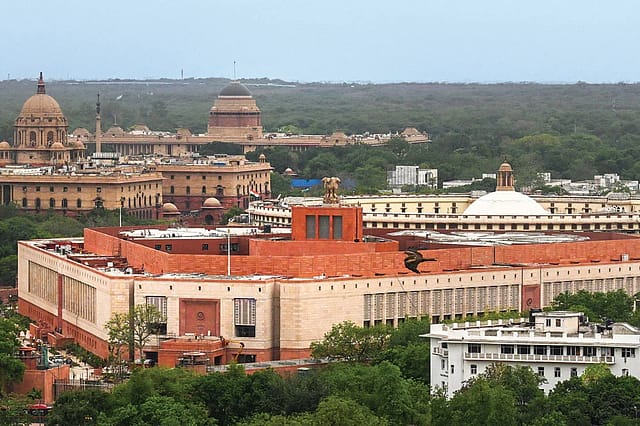
The scheduling of the winter session of Parliament from December 1 to 19, providing for 15 working days, has led to Opposition parties protesting that working of Parliament and accountability of government has been truncated. Congress media in-charge Jairam Ramesh said “clearly the government has no business to transact, no bills to get passed and no debates to be allowed.” Trinamool’s Derek O’Brien said the government suffers from “Parliament-phobia” or a “morbid fear of Parliament.”
The charge of curtailing Parliament requires attention as the Lok Sabha and Rajya Sabha are essential to holding the government to account, to debate important national issues and legislation and consider reports submitted by various parliamentary committees. While past record shows that short sessions are not unknown, a longer session does offer more time for discussion and scrutiny of government business.

Zeroing In on ECI
09 Oct 2026 - Vol 05 | Issue 41
Constitutional legitimacy versus political opportunism
Opposition face a test too
Yet, it is not only the government that faces a test. Parliament sessions deliver an assessment of how effective the Opposition is in making its point and questioning the government. The late Bharatiya Janata Party (BJP) leader Pramod Mahajan, parliamentary affairs minister during the Vajpayee government, would say Parliament is about “mooch ki ladai” or, in the context under discussion, “scoring the debating point” much like a skillful fencer breaches an opponent’s defence. Parliament is a forum for oratory, the sharp feint and thrust of floor tactics and above all, political timing.
With a stable government in office, the Opposition needs to play the waiting game. This offers an opportunity to stand up and deliver effective speeches and present an alternate vision. During the 10 years that United Progressive Alliance was in office from 2004 to 2014 this is exactly what BJP leaders like Arun Jaitley and Sushma Swaraj did with considerable flair. In comparison Congress leader Rahul Gandhi’s interventions often sound like angry diatribes. Barring a few leaders in regional parties, the Opposition ranks lack speakers who can counter Prime Minister Narendra Modi and home minister Amit Shah. Within Congress, leaders like Shashi Tharoor and Manish Tewari lose out to inarticulate party loyalists.
The monsoon session of Parliament that preceded the winter session saw two-thirds of the planned time in the 21-day session washed out by disruptions, according to PRS Legislative Research. The PRS analysis points out that Question Hour – the primary means by which MPs ask questions on policy and matters relating to their constituencies – was particularly impacted. Lok Sabha functioned for 23% and Rajya Sabha for 6% of the sanctioned time. Bills were passed without discussion amid bedlam. Experienced MPs, being able to finely judge when the House was going to be adjourned, were out of the chambers just as the chair called a break.
LOP is a full-time job
During the monsoon session, Parliament witnessed just one substantial discussion on Operation Sindoor. On most other days, the India bloc stonewalled functioning of Parliament demanding a discussion on the Election Commission’s special intensive revision of the Bihar electoral roll. The government refused to concede the demand as this would subject the EC to partisan political attacks with no means of defending itself against the scandalous allegations that were sure to be levelled against the election watchdog. But in the process, the Opposition failed to take up other urgent matters such as the deadlock in India-US trade talks and the effective of punitive tariffs on Indian businesses.
On most days, Rahul Gandhi is absent from Lok Sabha in the afternoons. As leader of Opposition he has an unique opportunity to make his mark with the chair bound to hear when he desires to make an intervention. Politics is a full-time job and requires careful attention to detail. This involves a shrewd appreciation of issues that resonate with the wider public opinion and use of parliamentary tactics. Disruption, beyond a point, becomes a blunt weapon, and is repetitive. It might cause discomfiture in the treasury benches but the Opposition has much more to gain when the Houses function as can be judged by the headlines garnered in the next day’s newspapers and on tv.
Repeating tactics, same result
The decision to convene Parliament for barely 20 days might well reflect the assessment that most days are going to a wash out given the thinking in the INDIA bloc. The Congress’s tactics are unlikely to be affected by an adverse Bihar result. In all likelihood, Bihar will be added to Maharashtra and Haryana as a state where Congress and its allies were cheated out of a victory due to “vote chori” allegedly organized by the EC in cahoots with the BJP. The improbability of such a conspiracy, media reports exposing Congress’s Haryana allegations to be untrue or failure to establish the case in the Supreme Court are not going to deter the party from disrupting Parliament.
Congress and Trinamool are also competing with one another in announcing a boycott of parliamentary committees. Their absence from a joint committee of Parliament that will examine three Bills on the removal of the Prime Minister, chief ministers and ministers at the Centre and the states on being arrested on serious criminal charges will only further weaken parliamentary scrutiny. It might be true that the Opposition might be unable to prevent the JPC from making its recommendations. But the proceedings and information provided to JPC members would have greatly enlarged the debate on the legislations.