Match 22 and the Catch-22: How DMK’s Numbers Shape the Delimitation Arithmetic
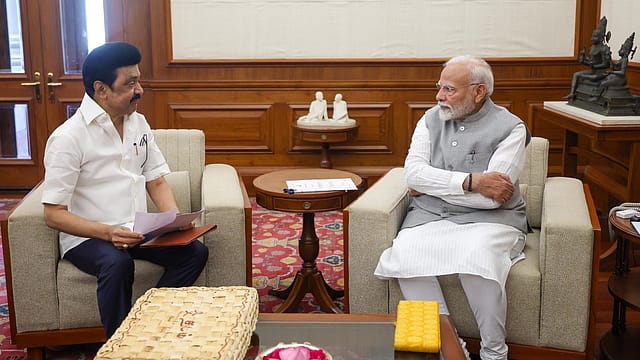
The battle over the proposed Delimitation Bill may turn less on the sheer size of the Opposition than on how a handful of MPs vote, abstain, or cross over. A headcount based on current Lok Sabha alignments puts the BJP-led NDA within striking distance of its goal—with the DMK’s 22 MPs sitting right at the pressure point.
Because a constitutional amendment requires a two-thirds majority, the numbers matter acutely. Out of a sanctioned Lok Sabha strength of 543, three seats are vacant, the Speaker does not vote, two MPs—Amritpal Singh and Engineer Rashid—are in jail, and Trinamool Congress MP Kalyan Banerjee remains suspended in the continuation of the Monsoon Session. That leaves an effective strength of 536, putting the two-thirds threshold at 357 votes.
Hot Pursuit
27 Nov 2026 - Vol 01 | Issue 02
The Shah Doctrine of Internal Security
NDA Starts at 331
Excluding the Speaker, the BJP has 240 MPs. Along with allies and supporting parties—the Telugu Desam Party (16), Janata Dal (United) (12), Shiv Sena led by Eknath Shinde (13), Lok Janshakti Party (Ram Vilas) (5), Hindustani Awam Morcha (Secular) (1), Janata Dal (Secular) (2), YSR Congress Party (4), Apna Dal (Soneylal) (1), NCP (Sharadchandra Pawar) (8), Shiromani Akali Dal (1), NCP (1), the rival Trinamool faction (20), Rashtriya Lok Dal (2), Jana Sena Party (2), Asom Gana Parishad (1), AJSU Party (1), and Sikkim Krantikari Morcha (1)—the NDA camp stands at 331.
The Opposition bloc accounts for 200 MPs: Congress (98), Samajwadi Party (37), Mamata Banerjee’s Trinamool Congress faction (seven voting members), DMK (22), CPI(M) (4), RJD (4), AAP (3), IUML (3), JMM (3), Shiv Sena (UBT) (3), CPI (2), CPI(ML) (2), AIMIM (1), VCK (2), Azad Samaj Party (1), National Conference (1), Kerala Congress (1), MDMK (1), RLP (1), Bharat Adivasi Party (1), RSP (1), Pappu Yadav (1), and Vishal Patil (1).
Four MPs remain unaligned: members from the Zoram People’s Movement and the United People’s Party Liberal, alongside Independents Mohmad Haneefa and Umeshbhai Babubhai Patel. If all four back the NDA, its tally rises from 331 to 335—still 22 votes short of the rounded-up threshold of 357.

The DMK’s 22 MPs and the Politics of Abstention
The DMK’s 22 MPs give the party outsized leverage not only through a "yes" or "no" vote, but also through abstention—which shrinks the effective denominator and lowers the two-thirds bar.
Scenario 1: DMK Switches Sides
If the four unaligned MPs vote with the NDA (335) and all 22 DMK MPs back the Bill, the ruling alliance reaches 357—matching the two-thirds mark on an effective strength of 536.
Scenario 2: DMK and Four Unaligned MPs Abstain
If the DMK abstains rather than votes against, and the four unaligned MPs also stay away, abstentions total 26. Effective strength drops from 536 to 510, bringing the two-thirds threshold down to 340. With the NDA at 335, it would need five additional votes to clear the bar.
Scenario 3: DMK, Trinamool Faction, and Four Unaligned MPs Abstain
The sharpest arithmetic shift for the NDA comes if the DMK (22), the eight-member Mamata Banerjee-led Trinamool faction in this calculation, and all four unaligned MPs abstain. Those 34 abstentions pull effective strength down from 536 to 502, lowering the two-thirds requirement to 335—equal to the NDA’s 335 tally.
The most favorable route for the NDA would combine support from the four unaligned MPs with abstentions from parties otherwise inclined to oppose the Bill, reducing the hurdle without forcing a wholesale opposition flip. Even then, nothing is automatic: the tally hinges on party discipline, attendance, eligibility to vote, and the continued suspension of the barred MP.
For the ruling alliance, the 22 is a genuine Catch-22—winning over or neutralizing a major southern party on delimitation carries steep political costs, yet ignoring the numbers makes the math far harder.
For the Opposition, Match 22 is a test of whether tactical abstentions can crack unity—or whether the 22 hold the line.