‘Mamata Banerjee is at the end of her political shelf-life. The game is up, and the party is over’
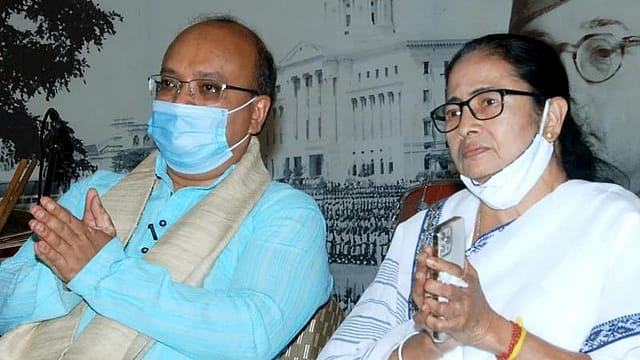
Netaji Subhas Chandra Bose’s grandnephew Sumantra Bose, a noted political scientist who has closely watched Mamata Banerjee’s political career and the Trinamool Congress for decades, says in an interview to Open that the last straw for her colleagues has been her continuing support for her anointed dynastic successor Abhishek, who is a figure of loathing not only among the people of West Bengal but in Trinamool ranks as well.
Bose, who was formerly Professor of International and Comparative Politics at the London School of Economics and currently holds a similar position at Krea University in Andhra Pradesh, is from a family with close connections to TMC. His brother Sugata Bose was earlier a Lok Sabha member representing the Trinamool Congress and his departed mother Krishna Bose a three-term Lok Sabha MP, representing the Congress in her first term and Trinamool Congress in the subsequent two terms.
The Vanguard
21 Aug 2026 - Vol 05 | Issue 34
BJP Rearmed for 2029
Talking about a likely return of Banerjee to the Congress, her parent party, Bose, an alumnus of Amherst College, Massachusetts, and Columbia University, says. “Of course, the return of the prodigal daughter to the parent party after three decades would represent a bittersweet moment of reunion. However, the Congress would be well-advised to not compound its already overwhelming problems by inducting Mamata Banerjee (and her nephew, since they come as a pair).”
The scholar, whose most recent books include Religious Politics: India, Turkey, and the Future of Secularism (Cambridge University Press, 2018) and Kashmir at the Crossroads: Inside a 21st-Century Conflict (Yale University Press, 2021), discounts the prospects of a CPM resurgence in West Bengal. It does not have the political imagination or the organisational capacity to reinvent itself and rejuvenate its marginal, comatose existence in West Bengal, he argues, adding, "In its moment of triumph, the BJP would be very well-advised to tread carefully in governing West Bengal.”
Edited excerpts from the interview:
As a person who has watched the Trinamool Congress’s (TMC) rise and fall closely, can you tell me when did it start unravelling itself?
On December 29, 1997, I happened to be present at the Trinamool Congress’s launch rally in Kolkata. The venue was the Shyambazar panch-matha (five-point) junction in north Kolkata, dominated by a statue of Netaji Subhas Chandra Bose on horseback. The atmosphere was electric. From my vantage point on the stage, I was able to click panoramic photographs of the crowds thronging Shyambazar from all sides. I still have that album. I last looked through it in August 2024, when the Shyambazar junction became the focal point of mass protests against Mamata Banerjee’s government after the RG Kar Hospital rape-murder incident.
I had gone to the end-1997 rally with my mother, Professor Krishna Bose. In 1996, the Congress won nine of West Bengal’s 42 Lok Sabha constituencies. Of these MPs, two—Krishna Bose (Jadavpur) and Ajit Panja (Calcutta North-East)—joined the fledgling outfit floated by Mamata Banerjee, the MP from Calcutta South.
When Mamata arrived, pandemonium broke out and she was mobbed by excited supporters. The crowds erupted in a deafening roar when she finally climbed on the stage and they caught sight of her. Sudip Bandyopadhyay turned to me and whispered: meye-ta jadu! jadu! (this girl is magic! magic!).
Looking back, the seeds of the downfall to come were evident on that day. A rabble, consisting mainly of unemployed and unemployable young men, formed the bulk of the gathering. The rabble had two animating emotions: the personality cult of the leader (Didi! Didi!), and anti-CPM fervour. This was an urban and semi-urban underclass, a lumpenproletariat, whose numbers had multiplied since the CPM took power in 1977.
After Trinamool came to power in 2011, the rabble—joined quickly by myriad opportunists who flocked to the new dispensation, including the worst elements of the CPM—spawned state-wide rackets of organised crime with unlimited licence from the top. And in office, the Didi cult took the form of utterly capricious, whimsical rule—more and more so over time. In 2011, I privately told my mother, and only partly in jest, that while the 42-year tyranny of the “Brother Leader” (Muammar Gaddafi) had just been overthrown in Libya, the era of the “Sister Leader” had begun in West Bengal. I also told her that the new chief minister’s closest analogue in Indian politics was the similarly folksy Laloo Yadav. But I did not anticipate then what proportions Mamata Banerjee’s “jungle raj” would assume over time, turbo-charged from 2014 onwards by the brazen, limitless criminality of her heir-apparent.
My personal connection with Trinamool ended 20 years ago, in 2006, when my mother quietly and permanently severed her political ties with Mamata Banerjee (although superficially civil personal relations continued). The hallmark of Mamata Banerjee’s 15 years in power is the moral rot she inflicted on West Bengal. Gradually, I came to realise that such a rotten edifice of government could not survive. The final unravelling began with the civil society uprising triggered by the RG Kar Hospital incident of August 2024.
What are the mistakes that the TMC did not learn from the mistakes of the Communist Party of India (Marxist), or CPM?
In power, Mamata Banerjee copied the CPM’s two-point populist formula: pro-poor posturing, and stoking Bengali resentment against a hostile Centre. Trinamool also replicated CPM’s modus operandi on the ground: exercising control through a mixture of patronage and intimidation via dominance of the panchayat system in the countryside, the municipal bodies in urban and mofussil areas, and local party branches everywhere. And then there was that other carryover from CPM rule—the resort to strong-arm tactics (rigging) in elections at all levels.
Like the CPM, the Trinamool seem to have deluded themselves that this ensemble of tactics would ensure power in perpetuity. In my interview on this subject to you in January 2026, I had noted that “the self-inflicted fate of the once-dordandapratap (all-powerful) CPM should serve as a warning to Trinamool, of just how far the once-mighty can fall. But it won’t, as the Trinamool edifice is too rotten to permit any self-rectification or repair.”
How do you compare the CPM rule with the TMC's?
By comparison, the Trinamool’s tenure degenerated quite quickly into anarchy. Unbridled loot and plunder became the norm, an extortion economy took hold across the state, and Mamata Banerjee’s party and government became a kleptocracy from top to bottom. Sabai khachhe—everyone is feeding at the trough of corruption, in some form—became a common phrase to describe the anarchy. In earlier interviews to you, I compared Trinamool in power to the Cosa Nostra (Sicilian Mafia). It was also like a homegrown rebirth of the East India Company in the 21st century—predatory and ruthlessly extractive.
The CPM, of course, never indulged in personality cults. Trinamool, by contrast, was built on Mamata Banerjee’s cult of personality. From 2014 onward, this was joined by a second leader cult, that of the nephew, who was celebrated in Trinamool vocabulary as Banglar Juboraj (Crown Prince of Bengal), and Agamir Kandari (Helmsman of the Future).
Under the aunt-nephew duopoly, Trinamool in time surpassed CPM’s outstanding rigging record—a real feat. In the 2024 Lok Sabha election, Abhishek Banerjee won the Diamond Harbour parliamentary constituency just south of Kolkata by a margin of over seven lakh votes. He got massive leads from all seven assembly segments comprising the constituency. In the Falta segment, he led by 1.68 lakh votes and secured 89 percent of the votes polled—nearly on par with the 95 percent polled by Bashar al-Assad in the Syrian presidential election of 2021. Two years later, in the assembly election of 2026, Falta’s Trinamool candidate—a notorious henchman of Banerjee’s—polled three percent, of which a fifth were postal votes. Many Falta residents told me that they were able to vote freely for the first time in over a decade, ever since Bhaipo (The Nephew) appeared in their lives in 2014.
The 34 years of CPM rule were an era of continuous, comprehensive decline in West Bengal.
For a while, her crafty dole-politics staved off the inevitable but eventually, her government drowned in the monumental garbage of accumulated malfeasance. But Mamata Banerjee’s deepest and most damaging legacy is the hollowing out of “any semblance or pretence of morality in public life,” as I told you in January 2026.
Why is that we are seeing this level of a massive exodus out of TMC? Is it organic or is there more to it than meets the common eye?
This is the most interesting question. Trinamool has an impressive electoral record. In the Lok Sabha, it won 19 of West Bengal’s 42 constituencies in 2009, 34 of 42 in 2014, 22 of 42 even in 2019, in the election that heralded the BJP’s rise in the state (40.3 percent of the votes, 18 seats), and 29 of 42 constituencies in 2024. After finally running the faltering CPM out of power in the 2011 Vidhan Sabha election, Mamata Banerjee decisively defeated a CPM-Congress alliance in 2016 and saw off an armada-style BJP campaign in 2021. Electoral setbacks and even heavy defeats are par for the course in the life of any political party. Why then has the 2026 debacle precipitated Trinamool’s implosion within weeks?
The brief and preliminary answer to the puzzle is that in power, Trinamool mutated from a political party into an organised criminal enterprise, and its government mutated into a kleptocracy. Politics reduced to organised crime and kleptocracy cannot survive without power. Stripped of power—and the resources of patronage and the instruments of intimidation and coercion that power provides—the post-2011 West Bengal equivalent of the Sicilian Mafia has been exposed as a hollow shell rotted away from the inside.
There is another reason why a varied assortment of “rats”—old-timers and newcomers, veteran politicians and the spectrum of chancers recruited to Mamata Banerjee’s Mad Hatter’s Party over the past 15 years—are abandoning the capsized ship. I noted in an interview to you on this subject in May 2026 that Mamata Banerjee is “constitutionally incapable of any introspection and self-correction”. That was not a casual statement but one informed by long acquaintance and observation—I have known her since April 1982, nearly three years before she became the Congress MP from Jadavpur in December 1984. Her complete denial of and disconnection from reality apparent since May 4, 2026 has convinced her flock that they must look elsewhere if they are to have a political future. The last straw has been her continuing support for her anointed dynastic successor, who is a figure of loathing not only among the people of West Bengal but in Trinamool ranks as well.
What do you think of the idea of Mamata joining the Congress?
This is a very intriguing—and indeed amusing—scenario to contemplate. Of course, the return of the prodigal daughter to the parent party after three decades would represent a bittersweet moment of reunion. However, the Congress would be well-advised to not compound its already overwhelming problems by inducting Mamata Banerjee (and her nephew, since they come as a pair). In politics, it is usually a mistake to write someone off. However, a cautious exception can be made in Mamata Banerjee’s case. She is at the end of her political shelf-life. The game is up, and the party is over. The acutely miserable figure she cut sitting next to Sonia Gandhi at the INDIA bloc’s funereal meeting in New Delhi’s Constitution Club on June 8, 2026, said it all.
The Trinamool predicament is an extreme example of the growing existential crises of one-state “regional” parties run as family businesses. That, combined with the continued incompetence and ineptitude of the Congress—the original dynastic party—is deepening the deficit of effective political opposition in the country, to the detriment of what remains of India’s democracy.
Do you see chances of a CPM resurgence in West Bengal?
It is too early to say but I strongly doubt it. The CPM does not have the political imagination or the organisational capacity to reinvent itself and rejuvenate its marginal, comatose existence in West Bengal. A young, well-spoken early-30s woman leader of the party, who unsuccessfully contested both assembly and parliamentary elections in West Bengal during the 2020s, described the problem in private conversation: “When the hardware is obsolete and defunct, introducing fresh software is useless.”
That said, politics abhors a vacuum. After the CPM condemned itself to near-oblivion by joining the Congress in the failed anti-Mamata alliance of 2016, the void that opened up in the opposition space was filled by a hitherto marginal contender, the BJP. The 2026 outcome in West Bengal was not an endorsement of Hindutva, or of Narendra Modi. It was, quite simply, a vote to oust Mamata Banerjee, who never evolved from her street agitator roots and proved unfit to govern. In its moment of triumph, the BJP would be very well-advised to tread carefully in governing West Bengal.