Israel election 2026: Why India ties are unlikely to change, whatever happens to Netanyahu
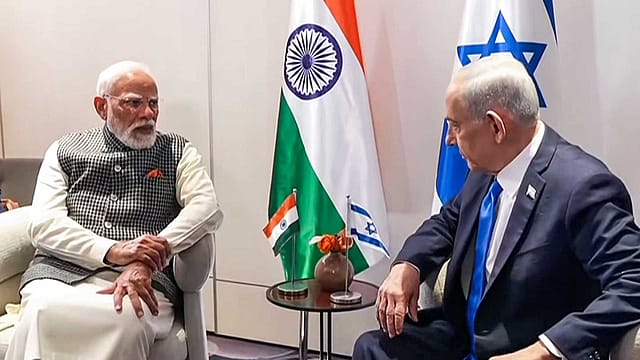
Can an election change the leadership of a country without changing its closest international partnerships? That is the message Israel is sending New Delhi ahead of its October 27 parliamentary elections. Mishelle Sirota, spokesperson for the Embassy of Israel in India, has said the relationship between the two countries will remain unchanged regardless of the result, even as Prime Minister Benjamin Netanyahu faces one of the most consequential electoral tests of his political career.
Speaking to ANI on Monday, Sirota said, "India and Israel relationship will not change, even for the slightest, no matter who is going to be chosen." Her remarks come as voters prepare to elect representatives to Israel’s 120-member Knesset, with the result likely to determine who gets the first opportunity to form the next government.

Look Who's Talking Regime Change
23 Oct 2026 - Vol 05 | Issue 43
Israel election 2026: Why Netanyahu faces a crucial test
Tuesday’s election is the first Israeli national vote since the Hamas-led attack of October 7, 2023, which triggered the war in Gaza and a wider period of regional confrontation. Netanyahu’s handling of security failures, subsequent military operations and domestic political disputes has become central to the campaign.
According to Reuters’ October 26 election preview, Netanyahu’s Likud party has faced declining support since the 2023 attack, although the race has narrowed. Neither his governing bloc nor his opponents have a clear path to a parliamentary majority, making coalition negotiations crucial. Israel uses proportional representation, meaning the party that wins the most votes does not automatically secure the premiership; a viable governing coalition must be assembled.
Who could replace Benjamin Netanyahu as Israel’s prime minister?
Netanyahu’s principal challengers include former military chief Gadi Eisenkot, who leads the centrist Yashar party, and former Prime Minister Naftali Bennett, whose joint electoral alliance with Yair Lapid is called Together, or B’Yachad. Former defence minister Avigdor Lieberman and former general Yair Golan are also competing for political influence.
Netanyahu’s coalition has included far-right parties led by Finance Minister Bezalel Smotrich and National Security Minister Itamar Ben-Gvir, alongside ultra-Orthodox parties. Reuters reports that disputes over military-service exemptions, the cost of living and accountability for the October 2023 security failures are among the issues shaping the election.
What does the election mean for India-Israel relations?
Sirota has stressed that the Israeli Embassy represents the state rather than a particular political party. "As an embassy, we will obviously represent every government that is going to be chosen, and I do have a very strong belief in the democratic system in Israel," she said.
There is a recent diplomatic signal of continuity, too. PM Narendra Modi and Netanyahu reportedly spoke on October 22, reaffirming their commitment to the countries’ Special Strategic Partnership and discussing regional developments. Defence, technology and counterterrorism remain important areas of engagement.
What Israeli voters want after years of war
Sirota said the election was a "celebration of democracy", with approximately 7.3 million eligible voters expected to participate. "Obviously, there are different opinions. That's the beauty of democracy. So I think after three years of war, a lot of the Israeli citizens want to see better days. We want to be in peace with our neighbours," she said.
She also emphasised the importance of security, saying, "We obviously have to keep the safety of our civilians in our borders in place, and it's a very strong consensus in Israel that we will make sure that every single citizen is safe no matter what our neighbours are planning. And unfortunately, they are sometimes planning to hurt us very badly."
The election may alter Israel’s domestic leadership and coalition arithmetic, but a change of government does not automatically mean a change in foreign policy. For India, the immediate question is whether the next Israeli government can sustain existing cooperation while navigating a region still marked by conflict and uncertainty. The embassy’s position is clear: New Delhi’s relationship with Jerusalem is intended to outlast any single election.
(With inputs from ANI)