EXPLAINED | No Winter Session This Time? Four Times Parliament Went Without One
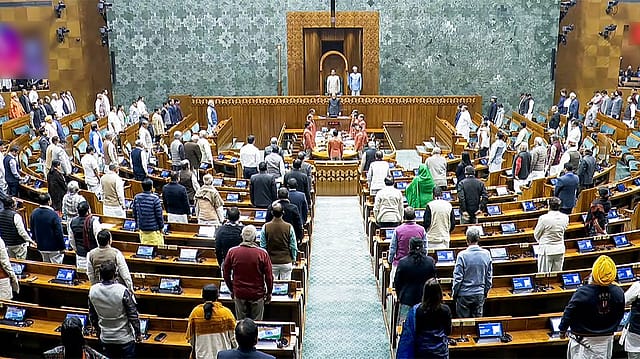
The question of whether Parliament will hold its customary Winter Session has acquired a new political dimension this year. After weeks of uncertainty over the parliamentary calendar, the government has asked the Lok Sabha to reconvene on November 30 and the Rajya Sabha on December 2, with the sittings expected to conclude by December 3.
Union Parliamentary Affairs Minister Kiren Rijiju said the government had requested the presiding officers of both Houses to reconvene Parliament to transact “essential government business”. The government has not officially specified the legislative agenda. However, the timing has fuelled speculation that it may bring back legislation linking delimitation with the implementation of 33 per cent reservation for women in Parliament and state legislatures.

Anatomy Of A Stillborn Revolution
20 Nov 2026 - Vol 01 | Issue 01
Whatever Happened To The Cockroach Janta Party?
The proposed move is politically significant. A constitutional amendment on the issue was defeated in the Lok Sabha in April, after failing to secure the required two-thirds majority. The government is now expected to make another attempt, although the numbers and the opposition to the proposed delimitation exercise remain major challenges.
But the special sitting does not, by itself, answer the question about the Winter Session. The November sittings are being held by reconvening the Monsoon Session, which was adjourned sine die on August 13 but had not been prorogued as of November 27. Whether the government will subsequently convene a separate Winter Session remains unclear.
If the customary session is not held, 2026 could become the fifth occasion since Independence when Parliament goes without a Winter Session. The previous instances were in 1975, 1979, 1984 and 2020. Each came amid an exceptional political or national circumstance.
WHY DOES PARLIAMENT HAVE THREE SESSIONS?
Parliament generally meets for three sessions every year: the Budget Session, the Monsoon Session and the Winter Session. The Winter Session usually takes place in November and December and provides an opportunity for the government to introduce legislation, respond to questions and face scrutiny from the Opposition.
However, the Constitution does not prescribe three sessions annually or mandate a separate Winter Session. Article 85 empowers the President to summon each House of Parliament, while requiring that no more than six months elapse between the last sitting of one session and the first sitting of the next.
The three-session calendar is therefore a parliamentary convention rather than a constitutional obligation. This gives the government considerable flexibility in deciding when Parliament meets, although it cannot allow the six-month constitutional limit to be breached.
This distinction is important because a session can be adjourned sine die without being formally prorogued. Adjournment sine die brings the sitting to an indefinite close, while prorogation formally ends the session. Parliament can be called back during an existing session if it has not been prorogued.

1975: THE EMERGENCY
The first of the four instances came during one of the most consequential periods in India's political history. On June 25, 1975, Prime Minister Indira Gandhi's government declared a National Emergency, suspending several civil liberties and placing restrictions on political opposition and the press.
The Lok Sabha met between July 21 and August 7 that year. It did not reconvene until January 1976. Consequently, there was no separate Winter Session in 1975.
The absence of the customary session came amid the extraordinary political circumstances of the Emergency, when democratic institutions and parliamentary scrutiny were operating under severe constraints. The period would go on to reshape Indian politics, culminating in the lifting of the Emergency in March 1977 and the general election that followed.
1979: THE SIXTH LOK SABHA IS DISSOLVED
Four years later, Parliament again went without a Winter Session, this time because of political instability.
The Janata Party government, which had come to power after defeating the Congress in the 1977 general election, was weakened by internal divisions. Morarji Desai resigned as Prime Minister in July 1979. Charan Singh subsequently took office but could not secure a majority in the Lok Sabha.
The Sixth Lok Sabha was dissolved prematurely on August 22, 1979, paving the way for fresh elections. The next Lok Sabha was constituted after the January 1980 election.
With the existing House dissolved and a new one yet to be elected, there was no Winter Session in 1979. The episode demonstrated how the collapse of a government and the dissolution of the Lower House can disrupt the regular parliamentary calendar.
1984: AFTER INDIRA GANDHI'S ASSASSINATION
The third instance followed another major political upheaval.
Prime Minister Indira Gandhi was assassinated by two of her bodyguards on October 31, 1984. Her son Rajiv Gandhi was sworn in as Prime Minister, and the country subsequently went into a general election.
The eighth Lok Sabha held its first sitting on January 15, 1985. There was no Winter Session in 1984, as the political transition and the election intervened before the new House could convene.
The Congress returned to power with an overwhelming majority under Rajiv Gandhi, winning 404 seats in the Lok Sabha. The election marked a significant moment in the country's political history, coming in the aftermath of the assassination and widespread violence.
2020: THE COVID-19 PANDEMIC
The most recent occasion came 36 years later, during the COVID-19 pandemic.
India was dealing with a public health emergency, with restrictions on movement, social distancing requirements and concerns over the spread of the virus. Parliament's Monsoon Session in September 2020 had already been shortened and lasted only 10 sittings.
The government did not convene a separate Winter Session that year. Instead, the next parliamentary meeting took place during the Budget Session in January 2021.
The decision drew criticism from sections of the Opposition, which argued that Parliament should have continued to meet and hold the government accountable during the crisis. The government, however, cited the pandemic and the health risks associated with convening a large gathering.
WHAT MAKES 2026 DIFFERENT?
The immediate issue is the government's decision to call Parliament for a short special sitting without announcing a separate Winter Session.
The proposed business is also politically consequential. The government is expected to consider reviving the delimitation-linked legislation on women's reservation. The earlier constitutional amendment sought to expand the Lok Sabha's strength and link the implementation of the 33 per cent quota to a delimitation exercise. Its defeat in April exposed divisions over the proposed redistribution of parliamentary representation, particularly concerns raised by southern states.
The Opposition has raised questions on the government's intentions and has demanded clarity on the proposed legislation. The delimitation exercise could have implications for the distribution of Lok Sabha seats among states, making it a contentious issue beyond the question of women's representation.
There is also a procedural distinction. The Monsoon Session was adjourned sine die in August but had not been prorogued by November 27. This allowed the government to reconvene the existing session rather than summon an entirely new one. The special sitting, therefore, is not the same as a regular Winter Session.
For now, the government has announced dates for the special sitting but has not clarified whether a separate Winter Session will follow. If it does not, 2026 will join 1975, 1979, 1984 and 2020 as the fifth year in which Parliament has gone without its customary Winter Session.
The larger question, however, is not simply how many times Parliament has skipped a particular session. It is how much time the country's highest legislative institution spends meeting, debating and scrutinising the executive. The Constitution sets a maximum gap between sessions; the convention of a Winter Session provides an additional opportunity for democratic accountability. A special sitting may address immediate legislative priorities, but it does not necessarily replace that wider parliamentary function.