CJP says its summer protests rebuilt a “culture of dissent” in India after a long lull
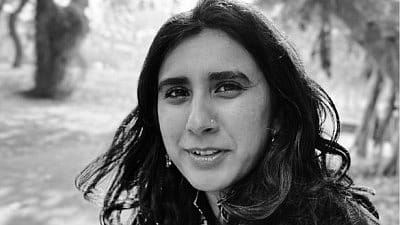
Stating that a lot has changed between the June-July protests led by the Cockroach Janta Party (CJP) and now, Mehr Pasricha, its policy head and spokesperson, says that the “culture of dissent” that she claims was absent for more than a decade in India was rebuilt in the summer of this year by CJP months before protests resumed in October for the resignation of Chief Election Commissioner (CEC) Gyanesh Kumar.
In the summer protests, CJP, which was formed after the Chief Justice of the Supreme Court of India, Surya Kant, referred to unemployed young people in India as cockroaches and parasites, occupied the Jantar Mantar protest venue demanding the resignation of then Union Education Minister Dharmendra Pradhan, an agitation that proved to be a resounding success.

Losing Memory
16 Oct 2026 - Vol 05 | Issue 42
The making of a medical and social emergency
Launched by Abhijeet Dipke in May as an online collective in Boston before he flew back home, CJP soon seized the moment and sought accountability from the government for a series of exam leaks and irregularities in the marking system. Leftist student unions such as the Students’ Federation of India (SFI), All India Students’ Federation (AISF) and the All India Students Association (AISA) supported the CJP’s protests, which included a weeks-long hunger strike.
“It was a watershed moment and the government was caught by surprise… But the protests by CJP made possible a culture of dissent that prompted the media to publish (adversarial) stories, putting themselves at the mercy of the government,” Pasricha told Open even as CJP, along with multiple opposition parties and civil society groups, continued its agitation against the Special Intensive Revision of electoral rolls done by the Election Commission of India (ECI). On October 23, CJP and others were part of a march called by a people’s collective named the Delhi Coordination Committee of People Against SIR in Delhi towards the ECI office on Ashoka Road.
Pasricha, an alumnus of Harvard University where she did her master’s in public policy, said that this time around the government had employed all force at its disposal to pin down leaders of the protests, including police and paramilitary units. Regarding allegations hurled against protesters and their leaders of being financed by foreign interests plotting against India, she said, “If they have proof of such foreign funds, let them reveal it. Let them make public the details… On the other hand, it is the government in power that has links with all kinds of people, including Jeffrey Epstein and several others… The government has a lot to hide about vote theft, too.”
She added that CJP and anti-government protesters are being singled out for sharp attacks by ruling party leaders because they are seeking accountability from those in power and who have turned institutions into weak entities. “We are against those at the top who took decisions that are illegal, unconstitutional and undemocratic,” Pasricha said, stating that emergency-like measures are unleashed on protesters, particularly CJP leaders. Two key leaders of CJP, Saurav Das and Ashutosh Ranka, were released by a special executive magistrate on October 21, seven days after being arrested and jailed by Delhi Police. The police wanted to keep them in prison.
On October 19, Pasricha had sharply criticised a court directive to extend the judicial custody of Ranka and Das by two days, describing it as “absurd and ridiculous”, according to PTI. Apart from accusing the court of taking arbitrary decisions, she had also said that they were kept in jail because they posed a threat to the ruling party.
To clamp down on this anti-CEC agitation, the Delhi Police first denied CJP permission to use Jantar Mantar as a venue ahead of its October 10 protests and then de-notified it on October 12, offering three alternative venues that include Ramlila Ground, CBD Ground and Burari Ground, according to opposition. The government and its leaders have called the protests an attempt to spread anarchy in the country, an allegation that opposition parties and CJP have refuted, saying theirs is a peaceful protest and that it is the police that were using brutal methods to crush the agitation.