Why GTA VI May Be the Last of Its Kind
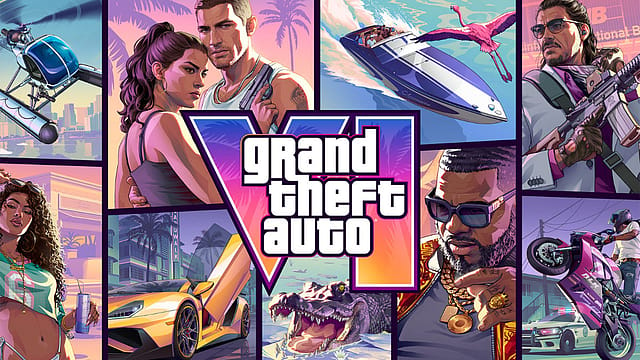
It has been evident for several years now that video games have been growing into an art form on par with the best literature and cinema. The Grand Theft Auto (GTA) franchise—whose latest installment has become a global cultural phenomenon—has been very much a part of that movement, its vast and vivid storylines set in the American criminal underworld wowing gamers with just how rich the medium can be.
The latest GTA feels very much like the apogee of this movement. Its story of a criminal duo, Jason Duval and Lucia Caminos, set in a fictionalised Vice City in the state of Leonida (a parody of Miami, Florida), has shattered internet traffic and livestreaming records, emptied offices of young people (staying up too late or calling in sick to play the game), and generated more sales in one day ($3.79 billion) than the biggest concert did across its full tour (Taylor Swift’s $2.08 billion-earning The Eras Tour across 149 shows) or the highest-grossing movie did in its entire theatrical run (Avengers: Endgame, at about $2.94 billion).

Anatomy Of A Stillborn Revolution
20 Nov 2026 - Vol 01 | Issue 01
Whatever Happened To The Cockroach Janta Party?
Not all of this was entirely unexpected. In the gaming world, unprecedented anticipation has been building for this game, which was years in the making. And yet, even though GTA VI is proving to be a major critical and commercial hit, it is unlikely that a game of this scale will ever be made again.
The realism on display and the vivid storytelling cost its publisher, Rockstar Games, somewhere between a rumoured $1 billion and $2 billion, requiring around 5,000 developers working for roughly a decade. That kind of effort and financial risk might have made sense when the game was first greenlit, but the economics of game development have radically altered since. Most publishers now have very little incentive to make such massive bets.
The gaming industry is increasingly dominated by just a handful of titles. And some big-budget releases that took years of development—like Concord, Suicide Squad, and Skull and Bones—became high-profile flops.
Then there is the impact of AI. While many believe it will eventually reduce game development costs, for now, its rise and the soaring demand for chips have driven up the price of console hardware. Consumers are instead turning to devices like the Nintendo Switch—whose computing power pales in comparison to current-gen consoles—or to PCs and mobile phones to play simpler games on platforms like Roblox.
Earlier iterations of GTA felt like a peek into the future. This one, as monumental as it is, feels like the last of its kind.