Can YouTube Deliver a Baby? The Dangerous Promise of DIY Childbirth
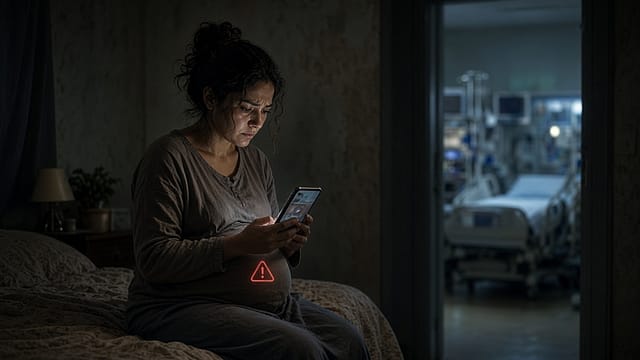
A video can show a baby being born. It cannot supply blood when the mother starts haemorrhaging.
That gap sits at the heart of a warning issued by Ariyalur District Collector Mrinalini in Tamil Nadu. Speaking on September 30, she urged pregnant women to avoid attempting deliveries at home after watching YouTube videos and to use government maternity services.
The warning sounds straightforward. The problem behind it is more complicated.
India has reported deaths following home deliveries allegedly attempted with guidance from online videos. Internationally, researchers have examined “freebirth”: deliberately giving birth without a regulated healthcare professional present. Online communities can offer encouragement, information and a sense of control to women who feel unheard by maternity services.

Losing Memory
16 Oct 2026 - Vol 05 | Issue 42
The making of a medical and social emergency
But reassurance cannot monitor a deteriorating condition or provide emergency treatment.
Understanding the danger requires separating three things often bundled together: childbirth education, professionally attended home birth and delivery without skilled assistance.
What Has Happened in India?
In June 2026, a woman in Tamil Nadu’s Tiruppur district reportedly died following severe bleeding after a home delivery attempt. Media reports, citing preliminary investigations, said the family had relied on YouTube videos. The newborn survived.
A February 2024 case in Thiruvananthapuram exposed another dimension. A woman and her newborn died after an attempted home birth. According to media reports quoting local officials, her husband had resisted hospital care and claimed that YouTube videos could guide the delivery. A local councillor alleged that the woman herself wanted hospital treatment.
That distinction matters. A delivery described as a family’s “choice” may conceal pressure on the woman whose health is at stake.
These cases establish a serious concern. They do not establish how common video-guided deliveries are across India, or whether their frequency is increasing. The Ariyalur warning supplied no district-level count.
Calling this a nationwide epidemic would go beyond the available evidence.
Is India Moving Away From Hospital Births?
The national figures point in the opposite direction.
According to the Health Ministry’s release of the National Family Health Survey-6, conducted in 2023–24, 90.6% of births took place in institutions, up from 88.6% in NFHS-5, conducted in 2019–21. Births attended by skilled health personnel rose from 89.4% to 91.3%.
The figures show growing use of maternity services. They do not tell us how many remaining births involved online advice, deliberate avoidance of care, transport failures or other circumstances.
It would be equally misleading to label every non-institutional delivery a “YouTube birth”.
The reporting challenge is to identify who lacked access, who rejected available care, who was pressured by relatives and what role online content actually played.
Home Birth and Freebirth Are Different
A planned home birth can involve antenatal assessment, a qualified midwife, appropriate equipment, continuing monitoring and arrangements for hospital transfer. In some health systems, it is an established option for selected pregnancies.
Freebirth generally means a deliberate decision to deliver without a regulated healthcare professional. An unexpected birth before an ambulance arrives is a different situation again.
Those distinctions are essential when looking abroad.
England’s NICE guidance advises that, for low-risk women who have previously given birth, planned home birth or birth in a midwifery-led unit is associated with fewer interventions, with no difference in outcomes for the baby compared with an obstetric unit.
For low-risk first-time mothers, it identifies a small increase in serious problems for babies with planned home birth: approximately nine per 1,000 births, compared with five per 1,000 in the other settings considered. These figures cover a combination of serious outcomes; they are not death rates.
Crucially, that evidence concerns organised maternity care. It cannot be used to establish the safety of an unassisted delivery guided by a screen.
Why Can Childbirth Become Dangerous So Quickly?
The challenge is recognising when a birth has stopped progressing safely and having the people, equipment and treatment to respond.
The World Health Organization identifies severe bleeding, infection and hypertensive disorders among the major causes of maternal death. It warns that severe bleeding after childbirth can kill an unattended, otherwise healthy woman within hours. Skilled care before, during and after delivery can prevent many deaths.
A newborn may also need immediate help to establish breathing. WHO includes assessment of breathing, resuscitation when needed and recognition of danger signs within essential newborn care.
A successful birth video offers no assurance that the next pregnancy carries the same risks. Nor can it establish whether a viewer has recognised a complication correctly.
Watching the sequence is not the same as being able to respond when the sequence changes.
What Is Happening Elsewhere?
International evidence shows that choosing birth without professional assistance is not confined to India.
A 2024 systematic qualitative review in Midwifery examined 22 publications from 10 high-income countries. It found that freebirth was often not women’s first preference, but emerged after barriers to obtaining the care they wanted.
The review examined experiences and motivations. It did not establish how prevalent freebirth was or demonstrate that it was safe.
Professional guidance also differs between countries and care systems. The American College of Obstetricians and Gynecologists considers hospitals and accredited birth centres the safest settings. Its guidance associates planned home birth with fewer maternal interventions but increased risks of certain serious newborn outcomes, and stresses suitable candidates, qualified attendants and timely hospital transfer.
There is no single “foreign home-birth model” that can be lifted from one country and applied to a family delivering without medical support elsewhere.
Why Do Online Communities Become Persuasive?
They can offer something a rushed consultation fails to provide: time, recognition and people who appear to understand.
A 2025 qualitative study in BMC Digital Health, involving interviews with 23 participants, examined how social networks supported women’s freebirth experiences. It described online spaces used to exchange information, share experiences and build solidarity.
That helps explain their appeal. It does not validate every claim circulating within them.
The danger arises when encouragement is treated as clinical assessment, or a reassuring personal story becomes evidence that professional help is unnecessary.
A collection of successful birth stories cannot tell a viewer how many complications occurred among all comparable pregnancies. Nor does an influencer’s confidence establish clinical competence.
Credible online education can help families prepare questions, understand care and seek assistance. Content that encourages them to disregard medical assessment serves a different purpose.
Are Hospitals Part of the Problem?
Any serious explainer has to ask.
Women’s concerns about dignity, consent and being heard cannot simply be dismissed as ignorance. WHO-backed research published in 2019 documented substantial mistreatment during facility-based childbirth in Ghana, Guinea, Myanmar and Nigeria. The findings included physical and verbal abuse and reinforced the need for respectful maternity care. They were not estimates for India or the entire world.
The international research on freebirth also suggests that difficult encounters with maternity services can influence subsequent decisions.
The implication is not that avoiding professional care resolves the danger. It is that health systems must address the experiences that make avoidance attractive.
Telling a frightened woman to trust the hospital is more persuasive when the hospital explains interventions, obtains consent and treats her respectfully.
What Should India’s Response Look Like?
A warning about YouTube should be followed by practical questions. Can the woman reach a functioning maternity facility? Does she know what care is available? Is somebody preventing her from seeking it? Will she be heard when she arrives?
India already has programmes intended to address several of these barriers.
Under Janani Shishu Suraksha Karyakram, women delivering in public health institutions are entitled to free delivery, including caesarean sections, alongside drugs, diagnostics, blood, diet and transport. The National Health Mission also identifies respectful care as a goal of its labour-room improvement and midwifery initiatives.
The task is to make those entitlements dependable in practice.
Authorities should also investigate claims that discourage necessary medical care, while distinguishing misinformation from legitimate childbirth education. Families need a clear message: online information can support conversations with qualified maternity professionals; it cannot replace them.
The Ariyalur warning raises a question bigger than what women watch on their phones.
Why does a video sometimes feel more trustworthy than the care available—and how can that trust be rebuilt before an emergency?