Can a Weight-Loss Pill Replace the Sleep Apnoea Mask?
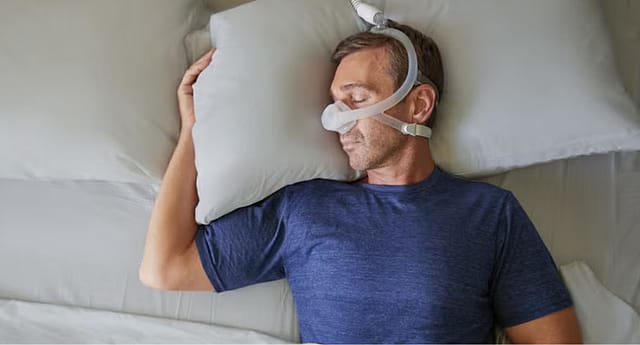
Eli Lilly’s daily weight-loss pill orforglipron helped adults with obstructive sleep apnoea breathe more steadily at night. Two Lilly-funded trials published in JAMA on 9 November found that the pill cut breathing interruptions by about 12 to 13 more episodes an hour than a placebo after one year. The results suggest a possible treatment option for adults with excess weight and moderate to severe apnoea.
Can people who use a sleep apnoea mask switch to the pill?
The trials did not test that switch. In one trial, people who could not or chose not to use a breathing machine took either the pill or a placebo. In the other, people who already used a machine kept using it while taking the pill or placebo. They paused the machine for seven days before scheduled sleep tests so researchers could measure how they breathed without it. That gave researchers a reading at the time of the test. A decision to retire the mask would require evidence that breathing stays adequately controlled without it.

The Wealth Issue 2026
06 Nov 2026 - Vol 05 | Issue 45
Portraits of Dreamers and Doers under 35
What is obstructive sleep apnoea?
The airway in the throat repeatedly narrows or closes during sleep. Breathing can stop briefly or become too shallow. Oxygen levels can drop, and the brain can briefly rouse a person so breathing resumes. A person may go through this cycle many times without remembering it. Loud snoring, gasping and daytime sleepiness can be clues. A sleep test can measure how often breathing is interrupted.
How do the mask and the pill work?
The mask delivers air from a machine that uses pressure to hold the airway open during sleep. Doctors call this positive airway pressure, or PAP. CPAP is a common type that delivers continuous pressure. The machine acts while a person uses it, including on the first night. Orforglipron works gradually. It acts on the GLP-1 receptor, part of the body’s appetite regulation system. People assigned the pill lost about 10% to 11% of their body weight over a year. Weight loss can help ease obstruction around the airway, although these trials could not pin down how much of the breathing benefit came from weight loss alone.
How much better did people breathe?
The main measure was the apnoea-hypopnoea index, or AHI. It counts pauses and episodes of shallow breathing per hour of sleep. In the trial without a breathing machine, the count fell by 17.8 an hour with the pill and 4.5 with placebo. The study estimated the difference at 13.2. In the trial of machine users, the respective falls were 17.3 and 5.3, a difference of 12.0. Oxygen dips linked to apnoea also improved on the pill.
There is another way to read the results. In the trial of machine users, about 19% of people assigned the pill reached the study’s threshold for remission or mild apnoea without excessive daytime sleepiness, compared with 9% on placebo. In the trial without a machine, the figures were about 28% and 13%. The threshold grouped people with fewer than five events an hour together with people who still had mild apnoea and scored low enough on a daytime sleepiness questionnaire. Most participants on the pill fell short of that combined threshold.
Who was studied, and what were the downsides?
The trials enrolled 712 adults with a body mass index of at least 27. Most had severe obstructive apnoea. The trials excluded people with mild apnoea, a lower BMI or diabetes, and had no sites in India. Digestive side effects such as nausea, diarrhoea and constipation affected about 68% to 71% of people assigned the pill, compared with about 37% on placebo. The year-long trials also leave open how long the breathing benefit lasts after people stop taking it.
Has any weight-loss drug already been approved for sleep apnoea?
Yes. In December 2024, the US Food and Drug Administration approved Lilly’s weekly tirzepatide injection, sold there as Zepbound, for adults with obesity and moderate to severe obstructive sleep apnoea. Orforglipron is a different medicine. The US approved it in April 2026 as Foundayo for long-term weight management in eligible adults. Lilly said on 9 November it plans to apply for a US sleep apnoea indication by the end of 2026.
Where does the pill stand in India?
An expert committee advising India’s drugs regulator recommended in May that Lilly be allowed to import and market orforglipron subject to conditions, including specialist prescribing and a study after approval. The recommendation is an advisory step. In October, Lilly chief executive David Ricks told CNBC-TV18 that an India launch for the obesity pill could come in 2027, pending approval.
When might a doctor reassess the need for CPAP?
Significant weight loss can give a sleep clinician a reason to repeat sleep testing. That test can show whether breathing interruptions persist even if snoring or sleepiness has eased. People already prescribed CPAP should speak with their sleep clinician before changing or stopping treatment. Lilly’s next announced step is the US regulatory filing. A separate clinical question will remain even if the pill is approved for apnoea. Which patients can keep breathing adequately over time without the machine?