You Can No Longer Fake It: Counterfeit Currency Notes Fell Sharply After Demonetisation
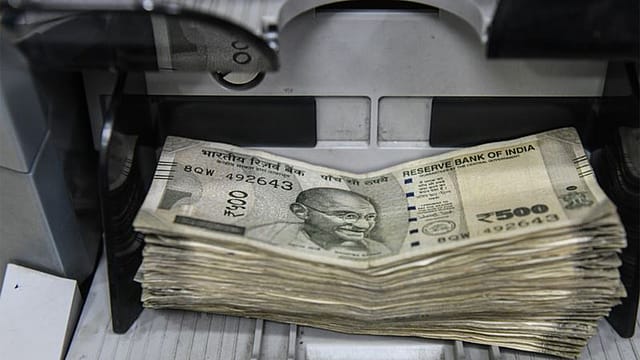
India has recorded a sharp decline in counterfeit currency since demonetisation and no longer imports security documents from abroad, Vijay Ranjan Singh, Chairman and Managing Director of the Security Printing and Minting Corporation of India Limited, said on Thursday. “We are now fully sufficient. We are not importing any security document from outside. We are doing it all in India,” Singh said.
Speaking on the sidelines of the corporation’s 21st annual awards ceremony in New Delhi, Singh said its units examine suspected counterfeit currency and certify whether a banknote is genuine or fake.
According to Singh, the number of counterfeit notes reaching the corporation has fallen substantially since demonetisation. While he did not provide nationwide figures, he cited information from its Nashik unit indicating a steep decline. “As per our Nashik centre, I was told that it has reduced very drastically,” he said.

Rise of the Pivotal Power
18 Sep 2026 - Vol 05 | Issue 38
The BRICS declaration is a strategic victory for Modi
The counterfeit problem was considerably larger when India announced demonetisation in November 2016. The withdrawal of the old ₹500 and ₹1,000 notes was officially presented partly as an attempt to tackle fake currency, which the Reserve Bank of India said was being used for illegal activities and terror financing.
During 2015-16, the banking system detected 6,32,926 counterfeit notes. That number climbed to 7,62,072 in 2016-17 as banks processed enormous volumes of currency returned after demonetisation. Commercial banks accounted for 95.7% of the notes detected that year, according to government data citing the RBI’s annual report.
The longer-term numbers show a substantial drop. Counterfeit notes detected in the banking system fell to 2,22,639 in 2023-24 and declined further to 2,17,396 in 2024-25, according to the Reserve Bank of India’s annual report. Compared with 2015-16, that represents a fall of nearly 66%.
But the counterfeiters have not exactly packed their bags and retired.
While total detections declined in 2024-25, fake ₹500 notes surged 37.3% during the year. Counterfeit ₹200 notes also increased by 13.9%. The numbers suggest that the fake-currency business has shrunk overall but continues to follow the money, particularly the ₹500 note that now dominates India’s currency system.
There is also an important caveat. RBI figures capture counterfeit notes detected by the central bank and commercial banks. They do not include fake currency seized separately by the police and other enforcement agencies, nor do they reveal how many counterfeit notes may remain undetected in circulation.
Singh also outlined plans to strengthen India’s currency-production infrastructure. The corporation currently operates nine production units and intends to establish another banknote-paper facility in Narmadapur.
He said its currency-printing facilities had been extensively renovated and now ranked among the country’s most advanced. Expanding the domestic production of banknote paper would remain a key focus under the Make in India initiative.
Singh credited government support, particularly on policy decisions, for the corporation’s financial performance and described it as “one of the few successful examples of corporatisation”.
In a video message delivered during the ceremony, Minister of State for Finance Pankaj Chaudhary described the corporation as an important pillar of India’s financial and administrative infrastructure.
Its operations extend beyond banknotes and coins to e-passports, stamp papers, commemorative coins and other high-security documents. Chaudhary said he expected the corporation to drive a new phase of innovation and operational excellence.
Anu P Mathai, Additional Secretary in the Department of Economic Affairs, also highlighted its role in strengthening the country’s economic system.
The corporation’s nine production facilities comprise four mints, two currency presses, two security presses and one paper mill. Employees from these units were recognised at the ceremony for achievements in productivity, sustainability and cost reduction.
(With inputs from ANI)