Why is the NGT Concerned About Biomedical Waste Disposal Across India? Explained
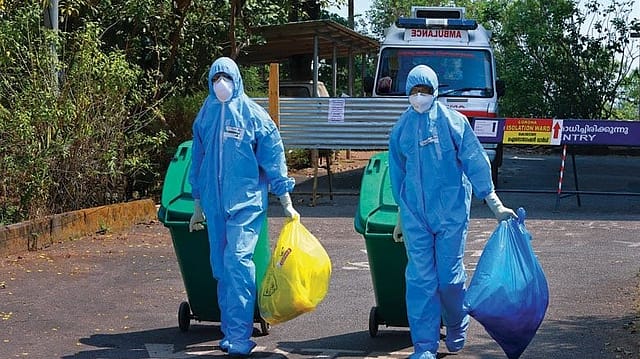
Every day, India's hospitals generate tonnes of biomedical waste, from used syringes and blood-soaked bandages to laboratory samples, medicines and infectious materials. Much of this waste is scientifically treated before disposal. But where treatment facilities are unavailable, it is often buried underground under a method known as deep burial.
Now, the National Green Tribunal (NGT) has stepped in after the Central Pollution Control Board (CPCB) reported that thousands of healthcare facilities across the country are violating the rules governing this method, raising fresh concerns over environmental contamination and public health.
What is biomedical waste?
Biomedical waste refers to waste generated during the diagnosis, treatment or immunisation of humans and animals, as well as research and laboratory activities. It includes contaminated dressings, used needles, discarded medicines, pathological waste and other potentially infectious materials. Because such waste can spread disease or contaminate the environment if handled improperly, its collection, treatment and disposal are governed by the Bio-Medical Waste Management Rules, 2016.

Rise of the Pivotal Power
18 Sep 2026 - Vol 05 | Issue 38
The BRICS declaration is a strategic victory for Modi
What is deep burial and why is it used?
Deep burial is an approved method for disposing of certain categories of biomedical waste, particularly in remote or rural areas where common biomedical waste treatment facilities are unavailable. The rules prescribe strict conditions. Burial pits must be located away from habitations and water bodies, groundwater levels must remain safely below the burial site, records must be maintained, authorised approvals obtained and the sites must be protected to prevent animals from accessing the waste.
Why has the NGT intervened?
The Tribunal was hearing a case relating to biomedical waste disposal when it examined a compliance report submitted by the CPCB. The report revealed that several States and Union Territories continue to violate the prescribed standards. Taking note of these findings, the NGT directed the CPCB to submit a fresh compliance report before the next hearing, scheduled for October 28.
How widespread are the violations?
The CPCB informed the Tribunal that 17 of India's 36 States and Union Territories currently use deep burial for biomedical waste disposal. Across these jurisdictions, 9,178 healthcare facilities rely on this method. While 5,715 facilities were found to be fully compliant with the prescribed norms, thousands of others were found violating one or more mandatory requirements. The findings suggest that compliance remains inconsistent despite the rules having been in force for nearly a decade.
What kind of violations were found?
The CPCB identified a series of recurring lapses. Many healthcare facilities had failed to maintain the mandatory groundwater clearance beneath burial pits. Others lacked proper authorisation for operating burial sites or failed to maintain statutory records. Inspectors also found burial pits located too close to residential areas or water sources, inadequate supervision during disposal and sites that were not properly secured against animals, increasing the risk of environmental contamination and disease transmission.
What did inspections reveal?
To verify compliance on the ground, the CPCB inspected 120 healthcare facilities using the deep burial method. The results were striking. Only 16 facilities complied with every prescribed requirement under the Biomedical Waste Management Rules. The remaining facilities were found violating one or more safety norms. The inspection findings reinforced the regulator's concern that non-compliance is not limited to isolated cases but is widespread across multiple states.
What action could follow now?
The CPCB has informed the Tribunal that it has already written to the concerned State Pollution Control Boards and Pollution Control Committees directing them to rectify the violations. If compliance is not achieved within eight weeks, the Board has said it will invoke powers under Section 5 of the Environment (Protection) Act, 1986, allowing it to issue binding directions against the defaulting authorities. The NGT has now asked the CPCB to place an updated compliance report before it at least one week ahead of the next hearing.
Why does this matter?
Biomedical waste is far more than ordinary garbage. If infectious material is buried without following scientific safeguards, it can contaminate groundwater, expose healthcare workers and nearby communities to disease, attract stray animals and create long-term environmental hazards. The NGT's intervention underscores a larger concern. India's healthcare infrastructure has expanded rapidly over the years, but unless biomedical waste is managed with equal rigour, the risks will continue long after patients have left the hospital.
(With inputs from ANI)