Why BMC’s AI cameras won’t end Mumbai’s garbage dumping
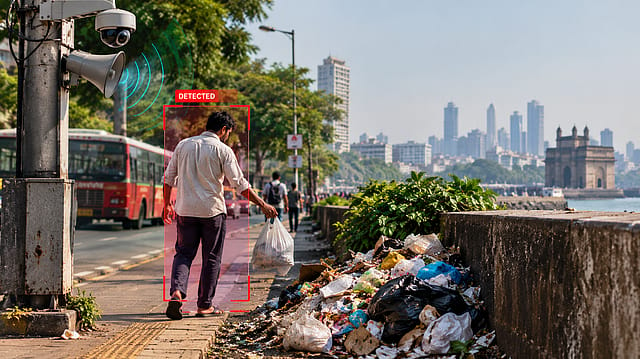
On October 29, the Brihanmumbai Municipal Corporation, the civic body that manages Mumbai, posted a video on its social media accounts. A man comes with a plastic bag filled with garbage and throws it casually on the roadside. An AI camera immediately picks him out and a loudspeaker shouts at him to behave. This, an accompanying post, says is a new initiative at one site, the rest of the city will follow. Places marked as Garbage Vulnerable Points (GVPs) will have AI cameras that detect individuals coming to dump garbage and issue ‘an audio announcement through a loudspeaker, urging them to keep the surroundings clean and refrain from littering in the open.’
Is this the answer to garbage dumping in the open in the financial capital? Probably not. The technology looks impressive and might even work in the first location because everyone, from the local ward officer to the municipal commissioner, will have eyes on it. Once you start scaling it citywide, the problem changes in form simply because success will now be a function of how efficient the BMC is in the regular course of everything it does.

Look Who's Talking Regime Change
23 Oct 2026 - Vol 05 | Issue 43
Indians don’t litter in malls and airports. They litter in railway stations and bus stops. Environment decides how people respond to it. If everything in Mumbai were spick and span, no one would litter. Technology is rarely a silver bullet when it is a behaviour problem of the entire population. Take CCTV cameras which are supposed to record traffic offences. Mumbai has a good network that covers the main roads. People still drive as they used to because many of those CCTVs are not functional. Some work but every driver in Mumbai knows which ones they are and at those points they exercise caution. In functioning societies abroad, the fear of breaking a rule is ingrained and kicks in as soon as the driver steps on the accelerator. Here it depends on circumstance.
India, of which Mumbai is a microcosm, is not really a rules-based society because no one believes the other person will follow them. The population does not believe the government follows rules either. Roads get dug up and left for years. Measures like the banning of thin plastics are announced and then left on paper without execution. When a sense of squalor surrounds you and everything around moves to a common chaotic rhythm, one camera only means that the person with the garbage bag walks two minutes to a place where there is no loudspeaker.