Why Are Cremations Moving to Rooftops in Varanasi? The Rising Ganga Is Rewriting Life Along the Ghats
Imagine arriving at Manikarnika Ghat with a loved one for their final rites.
Except the place where cremations normally happen is no longer there. The river has taken it.
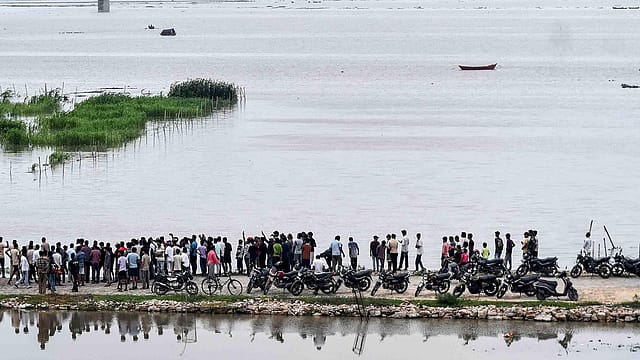
The Ganga, swollen by heavy monsoon rains upstream, has continued to rise in Varanasi, submerging stretches of the city's iconic riverfront, severing connectivity between several ghats and forcing some of the oldest rituals in the city to move upwards — sometimes onto rooftops.
In a city where life and death unfold on the river's edge every day, that is no small disruption.
So, what exactly is happening in Varanasi? How serious is the situation? And why are cremations and religious ceremonies being pushed to higher ground?
First, what is the latest situation?
According to local authorities and data from the Central Water Commission (CWC), the Ganga's water level in Varanasi has been rising steadily over the past several days.

Rise of the Pivotal Power
18 Sep 2026 - Vol 05 | Issue 38
The BRICS declaration is a strategic victory for Modi
The river was reported at around 67.68 metres, while the official danger mark for Varanasi is 71.26 metres. Local reports said the river was rising at a rapid pace, prompting authorities to closely monitor low-lying areas and riverfront activities.
The river is still below the danger mark. But anyone standing on the ghats would struggle to find reassurance in that statistic. Because the impact is already visible.
Upper platforms have disappeared under water. Staircases have vanished. Pathways connecting one ghat to another have been cut off. Areas that normally host pilgrims, priests, tourists and boat operators are increasingly being claimed by the river.
Why are cremations shifting to rooftops?
To understand that, you need to understand how closely Varanasi's cremation grounds are tied to the river.
At Manikarnika Ghat, one of Hinduism's most sacred cremation sites, pyres are traditionally lit close to the Ganga. The same is true at Harishchandra Ghat.
When floodwaters reach the cremation platforms, there are only two options: stop cremations or move them. Varanasi rarely chooses the first option.
As water entered parts of Manikarnika and other cremation areas, funeral rites began shifting to elevated locations, rooftops and higher platforms beyond the reach of the rising river. Similar scenes have been witnessed during previous flood years when the Ganga crossed warning and danger levels.
Think about that image for a moment. A ritual that has taken place beside the river for centuries is now climbing staircases to escape the river itself.
What about the famous Ganga Aarti?
The rising water is affecting that too.
Dashashwamedh Ghat, home to Varanasi's world-famous Ganga Aarti, has seen parts of its lower platforms submerged. Organisers have repeatedly shifted the location of the ceremony further back and onto higher ground as the river advances. In earlier flood situations, the Aarti was even conducted from rooftops when the usual platforms disappeared beneath the water.
The chants continue. The lamps continue. But the stage keeps moving.
That is perhaps the clearest sign of how dramatically the river can reshape the city.
Haven't floods affected Varanasi before?
Very much so.
If this sounds familiar, it is because Varanasi has seen similar scenes during previous monsoon surges. In 2025, the Ganga crossed the danger mark of 71.26 metres, submerging ghats across the city and forcing both cremations and religious ceremonies onto rooftops and raised platforms. Authorities had to shift residents from vulnerable areas, while floodwaters entered several neighbourhoods.
This year's situation has not reached that stage yet.
But the memories are fresh enough that residents are watching the river closely. And in Varanasi, people know better than most that the Ganga can change a city's daily rhythm in a matter of hours.
Why is the river rising?
The answer lies far beyond Varanasi.
Heavy monsoon rainfall across parts of Uttar Pradesh and upstream regions has increased water flow into the Ganga basin. As the river swells, downstream cities like Varanasi begin to feel the impact days later. Recent reports have also noted water flowing back into the Varuna River, a tributary that passes through the city, creating additional flooding concerns in low-lying localities.
The river that sustains Varanasi is also the river that periodically overwhelms it.
What happens next?
That depends on two things: rainfall upstream and the speed at which the river continues to rise.
Authorities are monitoring the situation using Central Water Commission data, while residents living close to the river have been urged to remain cautious. Several precautionary measures have already been taken in recent weeks, including restrictions on boat operations as water levels climbed.
For now, the danger mark remains some distance away.
But in Varanasi, the story is no longer about numbers on a gauge.
It is about what those numbers look like on the ground.
A submerged staircase. A disconnected ghat. A Ganga Aarti pushed further back. A funeral procession climbing towards a rooftop because the river has claimed the place where the pyre would normally burn.
Every monsoon, the Ganga reminds Varanasi who truly owns the riverfront.
And this year, the reminder is becoming harder to ignore.
(With inputs from ANI)