West Bengal Tarapith Hotel Fire: Pilgrims dead, owner arrested; what happened inside what it says about safety
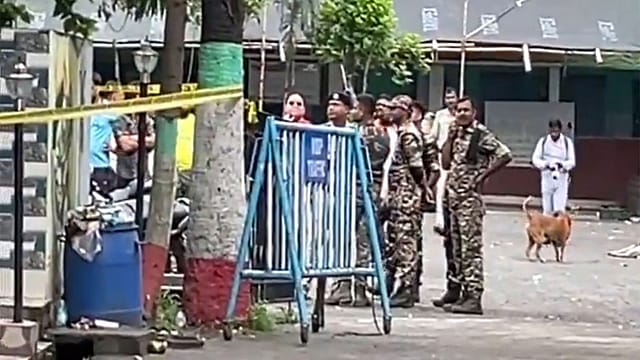
It was still dark in Tarapith when the fire began. Most of the guests at the Bideshini hotel, in West Bengal’s Birbhum district, were asleep. Within minutes, smoke had filled parts of the building and panic spread through rooms occupied largely by pilgrims who had travelled to the temple town for worship. By the time the rescue operation was over, several people had died.
And what began as a hotel fire has quickly turned into a much bigger question: were the people inside given a safe way out?
The latest reports put the death toll at eight, although several early reports, including the initial account supplied for this story, put it at seven. Several people were injured. Police have arrested the hotel's owner, Kalyan Paul, as investigators examine whether adequate fire-safety measures were in place.

Rise of the Pivotal Power
18 Sep 2026 - Vol 05 | Issue 38
The BRICS declaration is a strategic victory for Modi
What happened that morning?
The fire broke out at around 5 am on Monday on the ground floor of the Bideshini hotel in Tarapith, according to police and fire officials cited by The New Indian Express. The hotel is a four-storey building located close to the Tarapith temple and near the local police station. The timing made the situation particularly dangerous: many of the guests were sleeping when the blaze began. Firefighters rushed to the scene and battled the blaze for several hours. 22 fire tenders were reportedly deployed and the fire was brought under control in about three hours. Police and fire personnel rescued 22 people, including nine who were unconscious.
The injured were taken to Rampurhat Government Medical College and Hospital, where many were later discharged after treatment.
Who were the victims?
The people staying at the hotel were largely pilgrims who had come to Tarapith for worship. The timing was significant. Thousands of devotees had travelled to the temple town for prayers on the final Monday of the Bengali Shravan month. That meant Tarapith was particularly crowded when the fire struck. For those inside Bideshini, however, the immediate problem was not the crowd outside. It was the smoke inside.
What caused the fire?
A short circuit is the preliminary suspected cause, according to reports citing hotel officials and initial investigation findings. But investigators have not yet established the definitive cause. That distinction matters. A short circuit may explain how the fire started. It does not, by itself, explain why the blaze resulted in so many deaths. That is where the investigation into the hotel's safety arrangements comes in.
The biggest question: could guests get out?
This is now one of the central issues surrounding the tragedy. Hotel owner Kalyan Paul told reporters that the hotel had a rear exit and that guests could not find it because the building became dark after the electricity supply was cut and thick smoke filled the premises. According to his account, panicked guests instead moved towards the reception area, where they encountered the fire. But investigators are examining whether the hotel's exits and other fire-safety arrangements were actually adequate and functional.
The distinction is important: having an exit on paper is not the same as having an exit that people can find and use during a fire.
What about the hotel's fire-safety system?
The preliminary information presents a complicated picture. The hotel reportedly had firefighting equipment and two staircases. But police and fire officials are examining whether the equipment was functional and whether the building complied with all applicable safety requirements. There are also questions about the building's staircases and smoke. The original account that staircase windows were closed and contributed to smoke accumulation could not be independently corroborated from the strongest sources available on Monday, so that claim should not be presented as an established fact at this stage.
What is established is that smoke inhalation was a major part of the emergency, with nine of the rescued people reportedly found unconscious.
Why the hotel owner's arrest matters
Police have arrested Kalyan Paul while the investigation continues. The arrest does not establish guilt. It means investigators are examining whether the hotel management failed in its legal and safety responsibilities. Police are expected to establish, among other things, whether the hotel's firefighting arrangements were operational, whether the exits were accessible and whether required fire-safety rules were followed.
Those questions will ultimately determine whether this was simply a devastating accidental fire — or whether preventable safety failures made the consequences worse.
Why Tarapith makes this more than just another hotel fire
Tarapith is one of West Bengal's major pilgrimage destinations. That changes the safety equation. Hotels, lodges and guesthouses in pilgrimage towns routinely accommodate large numbers of visitors, many of whom may be unfamiliar with the buildings they are staying in. During major religious occasions, occupancy and pressure on local infrastructure can increase sharply. And when a fire breaks out at 4 or 5 in the morning, guests are not standing around looking for emergency exits. They are waking up confused. They are trying to breathe. They are trying to find their families.
That is why fire-safety systems have to work before an emergency happens — not merely exist on a checklist.
The tragedy in Tarapith is now forcing authorities to look closely at exactly that question. The fire may have started with an electrical fault. But the investigation now has to establish what happened between the first spark and the loss of life.
Because in a hotel full of sleeping pilgrims, the difference between a fire and a mass-casualty disaster can come down to something as basic as an alarm, a staircase, an unlocked exit — and whether a frightened guest can find it in the dark.
(With inputs from yMedia and agencies)