VIKRAM SINGH KILLING EXPLAINED | A Noise Complaint, Eight Accused and Delhi’s Old Northeast Fear
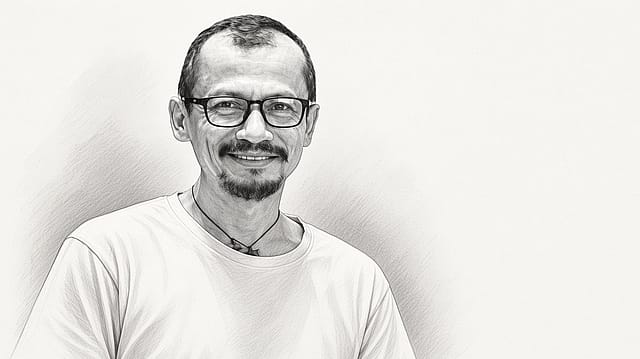
Chongtham Vikram Singh spent his life making noise. He played the electric guitar, helped pioneer Manipur’s Western music scene and later taught generations of students how to find melody inside it.
The noise outside his Delhi home was different.
In the early hours of September 7, the 54-year-old musician reportedly came downstairs after a group of men began shouting and allegedly drinking near his residence in Kilokari village, close to Ashram in southeast Delhi. Singh objected. The argument turned violent. Police allege that a group comprising delivery workers and staff from a nearby dhaba punched and kicked him. Some members of the group reportedly pursued him towards his building as he attempted to get away. His son, Yaiphaba, took him to Holy Family Hospital. Singh died several hours later. The reported provisional medical finding attributed his death to haemorrhagic shock caused by blunt-force injuries.
Seven adults have been arrested and one juvenile apprehended. Delhi Police have registered a murder case and say the investigation is continuing. The immediate story is the alleged killing of a man after a neighbourhood dispute.
Its resonance is considerably wider.
Vikram Singh had lived in Delhi for nearly two decades. He was attacked outside the home around which he had built that life. His death has triggered anger across Manipur and revived fears among Northeast communities whose experiences in Delhi have included racial abuse, housing discrimination, harassment and violence.

Zeroing In on ECI
09 Oct 2026 - Vol 05 | Issue 41
Constitutional legitimacy versus political opportunism
Police have said that no racial motive has been established. That distinction must be preserved. Singh’s identity cannot, by itself, convert the assault into a hate crime. It would be equally irresponsible to treat the anxiety produced by his death as an invention.
For many people from the Northeast, this killing has not arrived alone. It has arrived carrying memory.
What allegedly happened to Vikram Singh?
Police received a call concerning an assault under the jurisdiction of Sunlight Colony police station on September 7. Their preliminary account says Singh objected to shouting and nuisance outside his home involving delivery workers and employees of a neighbouring food establishment. Some accounts also refer to members of the group drinking in the area.
When Singh confronted them, the exchange escalated into an alleged group assault. The police case will need to establish who struck Singh, what weapons—if any—were used, the precise sequence of the confrontation and the extent to which each accused participated.
Investigators are expected to rely on CCTV recordings, witness testimony, medical evidence, call records and statements from Singh’s family and the accused. The fact that eight people have been detained or arrested does not mean that every individual will necessarily face identical criminal liability. The role attributed to each accused will matter, as will evidence of common intention or participation in the assault.
One of those apprehended is a minor and will be dealt with under the Juvenile Justice framework. Depending on the juvenile’s age and the findings of the Juvenile Justice Board, the law provides a separate process for assessing alleged involvement in a heinous offence.
Who was Chongtham Vikram Singh?
To the public, Singh became a crime victim in one night. To Manipur’s musicians, he had been Vikram the guitarist for decades. He came from a family deeply connected with music. His mother, Chongtham Kamala, is known for her contribution to Manipuri classical singing. Vikram took a different musical path, becoming part of the generation that built the state’s Western and rock-music culture.
He played lead guitar with Phoenix and other bands, earning recognition for a style remembered by musicians as technically accomplished but never ostentatious. After moving to Delhi, Singh gradually concentrated on teaching. Students and fellow performers have described him as a gentle, disciplined musician who gave more attention to developing other people’s talent than to advertising his own. He was also related to a prominent Manipuri filmmaker, but his identity within the community did not depend on that association. Vikram Singh had constructed his own legacy, lesson by lesson and performance by performance. That is why describing him merely as a “Delhi resident” or “54-year-old man” strips the case of something essential. The men accused of attacking him allegedly took a life. Manipur lost part of its musical memory.
Was Vikram Singh killed because he was from Manipur?
There is currently no publicly established evidence of a racial motive.
Delhi Police’s preliminary version treats the incident as a dispute over shouting, alleged drinking and nuisance that escalated into fatal violence. Police have reportedly said they have not found evidence so far that Singh was targeted because he came from the Northeast. No racial slur or identity-based provocation has been confirmed in the available police account.
The case should therefore not be reported as a proven racist killing. But motive can develop as an investigation proceeds. Witnesses must be questioned, audio and video evidence examined and the words allegedly exchanged during the confrontation established.
Two propositions can be true simultaneously. The police evidence may ultimately show that Singh was attacked during a neighbourhood dispute unrelated to ethnicity. His killing may still deepen the insecurity felt by Northeast residents because of the discrimination and violence they have experienced previously. Public fear does not prove the motive behind a crime. It explains why the crime has travelled far beyond Kilokari.
Why has the killing shaken the Northeast community?
Members of the community see vulnerability in the circumstances.
Singh was heavily outnumbered. He was allegedly attacked after asking people outside his own residence to stop creating a disturbance. He had lived in Delhi for years, yet familiarity with the city offered no protection when the confrontation became violent.
Manipuri scholar and activist Binalakshmi Nepram remained with the family and community members through the postmortem process at AIIMS. Manipur Lok Sabha MP Angomcha Bimol Akoijam coordinated with Delhi Police, medical authorities and community volunteers before calling for exemplary punishment.
Akoijam placed Singh’s right to “life with dignity” above any distinction between the Northeast and what is often described as mainland India. Manipur Chief Minister Yumnam Khemchand Singh remembered the guitarist’s contribution to the state’s cultural life. Former chief minister N Biren Singh also demanded swift action.
The responses reveal an anxiety that has followed students and workers from the Northeast into Indian cities for decades: when an ordinary disagreement begins, can visible difference make the consequences more dangerous? There is no evidence yet that this occurred in Singh’s case. The community’s fear, however, was not created by this case.
Why does Nido Tania’s name return whenever such an attack occurs?
Because his death forced India to acknowledge a prejudice it had frequently minimised. Nido Tania, a 20-year-old student from Arunachal Pradesh, was attacked in Delhi’s Lajpat Nagar in January 2014. He had reportedly been mocked over his hair and appearance before the altercation. He died from his injuries.
The case generated national protests and drew attention to the racial abuse endured by people from the Northeast in metropolitan India. The Central Bureau of Investigation later prosecuted the case. More enduringly, the Union Home Ministry created the MP Bezbaruah Committee to examine discrimination, harassment and violence against Northeast citizens living outside the region.
The committee spoke to more than 800 people and treated the problem as larger than street crime. It examined policing, legal protection, education, housing, media representation and the cultural distance between the Northeast and the rest of India. The killing of Vikram Singh is factually different from Nido Tania’s case because no racial provocation has yet been established.
The emotional connection remains unavoidable. Both men came from the Northeast. Both died after seemingly containable confrontations in south or southeast Delhi. Both cases raised the question of whether an ordinary dispute had become lethally disproportionate. Twelve years after Nido, the community is again asking whether institutional reform changed everyday safety.
What did the Bezbaruah Committee recommend?
The committee proposed a combination of policing, legal reform and social education. It recommended specially trained police teams, dedicated helplines, nodal officers and faster investigation of offences involving people from the Northeast. It wanted legal assistance, sensitised prosecutors and fast-track disposal of serious cases.
The committee also confronted racism directly. It proposed new penal provisions dealing with words, gestures or acts intended to insult members of a racial group and conduct prejudicial to human dignity. It asked schools to teach more about the Northeast’s history and cultures, arguing that unfamiliarity enabled stereotyping and exclusion.
Housing was another concern. Northeast migrants reported difficulties securing accommodation, hostility from landlords and conflicts shaped by food habits, clothing, language and social life. The Union government accepted several recommendations and established institutional mechanisms. Delhi Police created a dedicated unit, while helplines and community outreach programmes were strengthened.
The proposed bespoke anti-racism provisions, however, did not become law in the form recommended by the committee. India still does not possess a comprehensive standalone anti-discrimination statute covering racial prejudice across housing, employment, education and public services. The state can prosecute assault, murder, intimidation, abuse and promotion of enmity. Addressing the prejudice surrounding those offences is more fragmented.
What protection exists in Delhi today?
Delhi Police operates the Special Police Unit for North-Eastern Region, commonly known as SPUNER. The unit provides a point of contact between the police and Northeast communities, assists complainants, coordinates with local police stations and uses officers or volunteers familiar with regional languages and cultures.
The dedicated Northeast helpline is 1093. It operates around the clock, while 112 remains the number for an immediate police emergency. Delhi Police continues to list both services officially.
The helpline received 1,415 calls in 2024 and led to 101 FIRs, according to figures reported at the time. By October 10, 2025, it had received 1,062 calls, resolved or addressed 864 matters and generated 81 FIRs.
Many calls concerned quarrels, theft, landlord disputes, harassment and communication problems. That breadth demonstrates why specialised assistance matters. A person facing a hostile landlord or discriminatory abuse may require help before the situation becomes a conventional police emergency.
Legal-aid lawyers have also been empanelled for Northeast residents, and nodal officers were appointed after the Bezbaruah recommendations. The architecture exists. The recurring concern is whether it functions visibly and consistently enough to create confidence before a crisis.
What has the Supreme Court said?
The Supreme Court has repeatedly warned that the Bezbaruah report must not become another reform document abandoned after public anger subsides.
In 2016, the court directed the government to establish an effective mechanism for monitoring racial discrimination, violence and grievances involving Northeast residents. It said policing alone could not eliminate the problem because social attitudes in schools, universities, workplaces and communities also had to change.
A monitoring committee under the Union Home Ministry was subsequently constituted to review implementation and respond to complaints.
The issue returned to the Supreme Court in 2026. On February 17, a bench of Justices Sanjay Kumar and K Vinod Chandran directed the committee to meet at least once every three months. It was told to take cognisance of incidents reported in newspapers and convene urgently when a serious matter was brought to its chairperson.
That order is acutely relevant now. The monitoring mechanism was specifically told to notice cases that enter public reporting. Vikram Singh’s killing has generated community alarm, political intervention and national coverage. Even without a proven racial motive, the institutional response falls squarely within the committee’s wider responsibility for the welfare and sense of security of Northeast citizens.
What does Pawan Khera mean by a “culture of impunity”?
Congress leader Pawan Khera has argued that governments helped create conditions for the killing by tolerating loud music, public disorder and disregard for civic rules.
He did not accuse the government of carrying out the assault. His claim is that inconsistent enforcement teaches people that rules carry no consequence, allowing ordinary nuisance to evolve into intimidation and violence. That is a political argument, not an established finding of the murder investigation. The connection will require evidence.
Police must determine whether complaints had previously been made about the group, the dhaba or nuisance outside the building. Authorities must establish whether public drinking or other violations were routinely ignored. Any history of threats, police calls or enforcement failures would make the institutional question more concrete.
Without such evidence, blaming the government directly for the killing would move beyond what is currently known. But Khera’s larger phrase captures a recognisable civic problem. Impunity does not begin with murder. It develops when smaller acts of intimidation are repeatedly tolerated, people expect complainants to retreat and a group believes numerical strength will defeat both rules and consequences.
The criminal trial will judge the accused. A serious administrative inquiry must also examine whether warning signs existed before the assault.
Is this principally a noise-pollution case?
No. Singh’s objection to shouting or nuisance reportedly triggered the confrontation, but noise rules did not kill him. The alleged response to his complaint did. India’s Noise Pollution Rules regulate loudspeakers, amplification systems, firecrackers and permissible sound levels. Police and designated authorities can act against prohibited or excessive noise, particularly during restricted nighttime hours.
The available account does not suggest that Singh was pursuing a formal environmental complaint or that a loudspeaker was necessarily involved. It describes people allegedly shouting, drinking and creating a disturbance.
The important civic principle is simpler. A resident is entitled to seek police assistance when a disturbance becomes threatening. Objecting to nuisance cannot justify assault. Even an angry or impolite exchange cannot legally excuse a group beating.
The case is about the collapse of proportion. A disagreement that should have ended in lowered voices, dispersal or a police call allegedly ended in a father carrying his dying father to hospital.
What must the investigation establish now?
The first task is to reconstruct the assault without allowing political narratives to outrun evidence. Investigators must identify the role of every accused and determine whether the group acted with a shared intention. They must establish whether Singh was struck only with fists and kicks or whether another object was used.
CCTV material will be critical. So will the postmortem findings, injuries observed during treatment and accounts from residents, dhaba workers, delivery personnel and Singh’s family.
Police must also examine what was said. If racial abuse occurred, it would materially alter the public understanding of the case and could affect the offences invoked. If it did not, authorities should state that conclusion clearly once the evidence has been reviewed.
The establishment opposite Singh’s home must be examined for licences, operating conditions and any previous complaints. Authorities should determine whether alcohol was being consumed publicly and whether police had earlier been alerted to disturbances at the site.
Speed matters because evidence can disappear and witnesses can be influenced. Fairness matters because public outrage cannot substitute for proof.
What would justice look like beyond arrests?
Eight apprehensions demonstrate swift police action. They do not complete the response. Justice requires a charge sheet supported by forensic and eyewitness evidence, protection for witnesses, timely hearings and a prosecution capable of establishing individual responsibility.
The family must receive consistent information rather than being forced to navigate hospitals, police stations and court procedures alone. The juvenile’s case must follow the safeguards and assessments required by law.
The Northeast monitoring committee should examine the case and the community response surrounding it. Delhi Police should also disclose whether SPUNER has been involved, whether local residents made earlier complaints and what preventive action was previously taken in the area.
Most importantly, the state must resist two convenient exits. It should not declare a racial killing before establishing the motive. It should not use the absence of a proven racial motive to dismiss the fear produced by the killing.
What does Vikram Singh’s death finally reveal?
It reveals how fragile an ordinary civic right can become when the person exercising it stands alone against a group.
Singh did not enter a riot. He did not join a political confrontation. According to the police account, he walked downstairs to object to a disturbance outside his home.
That action should have ended with an argument at worst. Instead, a musician whose hands had spent decades teaching people how to make sound allegedly died for asking others to make less of it.
Delhi created a specialised police unit after repeated attacks on Northeast citizens. The Home Ministry created a committee. The Supreme Court demanded monitoring. Helplines were opened, lawyers empanelled and sensitisation programmes announced.
Those measures have value. Their true test is whether a person from Manipur can build a life in Delhi for 20 years and feel as entitled to safety, dignity and the protection of law as any other resident.
Police may establish that Vikram Singh’s killing had nothing to do with where he came from. India must still answer why his community immediately feared that it might.
With inputs from ANI & agencies