US Visa Rules Just Got Tougher: Can Your Application Now Be Rejected Without Warning?
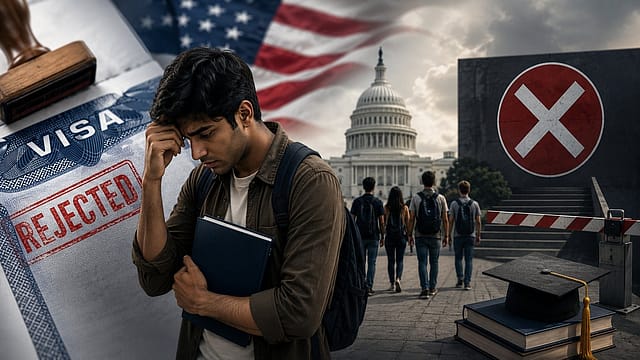
If you're planning to apply for a US visa, green card or any other immigration benefit, one small mistake could now prove far more costly. The US Citizenship and Immigration Services (USCIS) has tightened its application rules, giving immigration officers the discretion to reject incomplete or insufficiently documented applications without first issuing a Request for Evidence (RFE) or Notice of Intent to Deny (NOID). The policy took effect immediately and applies to pending as well as new applications filed on or after August 5.
Critics say the move weakens procedural safeguards. USCIS says it will make the system faster and discourage frivolous filings. Here's what has changed.
What exactly has changed?
Earlier, if USCIS found that an application was missing documents or did not adequately establish eligibility, immigration officers were generally encouraged to ask applicants to provide additional evidence before rejecting the case. Under the revised policy, officers may deny an application immediately if they believe the required evidence was not submitted at the time of filing.

Zeroing In on ECI
09 Oct 2026 - Vol 05 | Issue 41
Constitutional legitimacy versus political opportunism
What is an RFE and why does it matter?
An RFE, or Request for Evidence, is essentially a second chance. Instead of rejecting an application outright, USCIS asks the applicant to submit additional documents or clarify missing information within a specified deadline. That safeguard will now be used less frequently because officers have regained the discretion to reject certain applications without issuing an RFE first.
Why has the US made this change?
USCIS says the previous policy encouraged applicants to submit incomplete or "placeholder" applications, knowing they could provide documents later. According to the agency, such cases slowed down processing for everyone else. The government argues the new rules will improve efficiency, strengthen the integrity of the immigration system and discourage meritless applications.
Why are critics unhappy?
Ajay Bhutoria, a former adviser to US President Joe Biden and an immigration advocate, has described the move as "a major step backward" for due process and administrative fairness. He argues that the earlier policy protected genuine applicants whose cases contained minor clerical errors or missing documents rather than deliberate attempts to misuse the system. Bhutoria also warned that the change could disproportionately affect applicants without legal representation, non-native English speakers and asylum seekers navigating an already complex immigration process.
Will this affect Indian applicants?
Potentially, yes. India is among the largest sources of applicants for US employment visas, student visas and green cards. Anyone filing an immigration benefit request will now have to ensure that every required document and piece of evidence is submitted correctly at the time of filing because USCIS may no longer provide an opportunity to fix omissions later.
When does the new policy apply?
The revised guidance took effect immediately. It applies to immigration benefit requests that were pending or filed on or after August 5, 2026, unless a different procedure is specifically required under existing USCIS regulations or policy.
(With inputs from ANI)