The dark truth behind dark stores, and the hidden risk behind your 10-minute grocery order
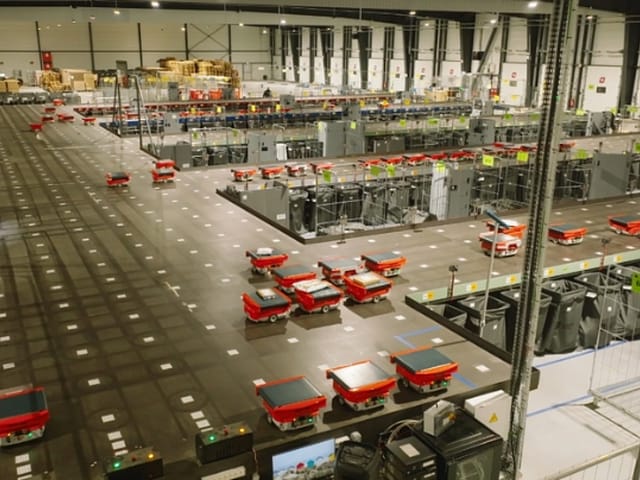
You order milk, a packet of biscuits, some paneer, maybe eggs, perhaps a tub of ice cream because you told yourself it was for the weekend. A few taps later, the order is on its way. Ten minutes, maybe 15.
The part you don't see is everything that happens before the delivery rider picks up your bag. There is a warehouse, there are shelves and storage conditions. There are expiry dates, there are labels. And, ideally, there is someone checking all of it.
Karnataka's latest food-safety crackdown has offered an uncomfortable glimpse into that hidden part of the grocery journey.
The state's Food Safety and Drugs Administration said it seized food products worth ₹1.38 crore during inspections of storage and supply units in and around Bengaluru. Another ₹4.02 lakh worth of medicines was seized after officials found them stored without the required licences, taking the total value of seized products to about ₹1.43 crore.

Zeroing In on ECI
09 Oct 2026 - Vol 05 | Issue 41
Constitutional legitimacy versus political opportunism
And the most interesting part of the story isn't the number.
It's where the products were found.
Before your grocery reaches the doorstep, it sits somewhere
The inspections covered facilities in Devanahalli, Anekal, HBR Layout, Lingarajapuram and Hoskote.
At a food storage unit in Devanahalli, officials said they seized food worth ₹14 lakh for incorrect or inadequate labelling and another ₹10 lakh worth of expired food. Medicines worth ₹2.45 lakh were also seized over alleged licensing violations.
At another facility in Anekal, officials reported ₹19 lakh worth of improperly labelled food and ₹13 lakh worth of expired food. Another ₹1.57 lakh worth of medicines was seized.
In other words, the problem wasn't sitting on a supermarket shelf waiting for a customer to notice it.
It was sitting inside the supply chain.
The department said its inspectors checked manufacturing and expiry dates, shelf life, mandatory labelling requirements and other food-safety standards, including products sold through online and e-commerce platforms.
That matters because the consumer usually sees only the final five minutes of the journey.
The regulator sees everything before it.
What did the inspectors actually find?
Some of the findings sound almost like a particularly unfortunate grocery list.
At a Bengaluru establishment in HBR Layout, officials found expired cashew biscuits, ragi flour, chicken patties, paneer, cookies, nuts, eggs and flour after receiving a complaint alleging that groceries bought through online delivery agencies were being resold after expiry.
The department said around ₹10,000 worth of expired food was seized there.
At Lingarajapuram, officials found expired and near-expiry nutritional products, beverages, chocolates, sweets, ghee and nuts and seeds.
The owner told officials that food products worth around ₹50 crore were stored at the premises, according to the department. The premises were subsequently seized.
And then came Hoskote.
At a dark-store facility there, officials said they seized expired food products worth ₹42 lakh and closed the facility after finding unhygienic conditions and violations of food-safety rules.
The department said its investigation was continuing and that expired and mislabelled products worth around ₹1 crore were suspected to have been found there.
That last point is important: “suspected to have been found” is not the same as a final finding of wrongdoing. The investigation and legal process are still underway.
The dark store is the part of quick commerce you never see
This is the strange bargain of quick commerce.
You get the convenience of a supermarket without actually walking into one.
The shelves have disappeared from your view. The cashier has disappeared. The warehouse has disappeared.
All you see is a little map showing a rider moving towards your house.
But the physical grocery supply chain hasn't disappeared. It has simply moved behind the screen.
The food still has to be received, stored, sorted, tracked and eventually removed when it expires.
And that is precisely why warehouse-level checks matter.
Karnataka's current enforcement drive has increasingly moved beyond restaurants and kitchens to storage and distribution facilities, while food-safety authorities elsewhere in India have also been scrutinising e-commerce warehouses. Reuters, reporting on India's broader food-safety crackdown, noted that regulators are increasingly targeting different points in the food chain rather than focusing only on restaurants and eateries.
Then there is the label problem
Expiry isn't the only thing regulators are looking for.
Of the ₹1.38 crore worth of food seized in the Karnataka operation, the department said ₹33 lakh was linked to incorrect or inadequate labelling, while ₹1.05 crore comprised expired and near-expiry products.
That distinction is worth noticing.
A food packet doesn't have to look suspicious to raise a regulatory problem.
The information printed on it matters too: what it contains, who made it, when it was manufactured, how long it can be stored and when it expires.
Recent enforcement action in Maharashtra has shown just how serious labelling can become. Reuters reported last week that officials there uncovered a warehouse operation allegedly altering expiry dates and nutritional labels on branded food products intended for export. The case is separate from Karnataka's seizures, but it underlines why regulators are paying increasing attention to what is printed on food packaging — not just what is inside it.
So, did expired food actually reach your doorstep?
Not necessarily.
And this is where the headline number needs some context.
The Karnataka department has reported seizures from storage and supply facilities. That does not, by itself, establish that the seized products were delivered to consumers or that any particular quick-commerce customer received expired food.
What it does show is something much less dramatic — and perhaps more useful.
The race to get your groceries to you quickly still depends on a very ordinary system of warehouses, shelves, stock checks and expiry controls.
The faster the final leg becomes, the easier it is to forget that someone still has to manage everything before it.
The next time you order in 10 minutes...
You probably won't think about the warehouse.
You shouldn't have to.
But behind that cheerful notification saying “Your order is arriving” is a chain of people and systems responsible for making sure the milk isn't past its date, the paneer has been stored properly and the packet on your doorstep says what it is supposed to say.
The delivery may take 10 minutes.
The food-safety chain begins much earlier.
(With inputs from ANI)