Suvendu Adhikari Cabinet Expansion Explained: Age, Education and Social Representation
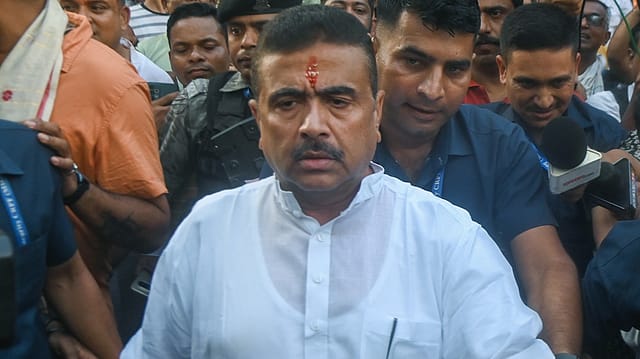
West Bengal Chief Minister Suvendu Adhikari expanded his Council of Ministers on Monday, inducting 35 new ministers during a swearing-in ceremony at Lok Bhawan in Kolkata. Governor R. N. Ravi administered the oath of office, taking the total strength of the Council of Ministers to 41.
The newly constituted cabinet brings together experienced politicians, younger leaders, representatives from diverse social groups and professionals from multiple fields, reflecting the government's attempt to balance governance experience with broader social outreach.
How old is the new West Bengal cabinet?
The average age of ministers in the newly expanded cabinet is 57 years, indicating a leadership team largely composed of experienced political figures.
At the same time, the government has also included younger faces. Four ministers are below the age of 50, with Mathabhanga MLA Nishith Pramanick emerging as the youngest member of the cabinet.
How educated are the ministers?
One of the standout features of the cabinet is its educational profile.
According to official data, 83 per cent of ministers hold graduate or higher degrees, while nearly 67 per cent possess postgraduate qualifications or above. The cabinet also includes three ministers with PhD degrees.
The educational credentials of the ministers suggest an emphasis on professional and academic achievement alongside political experience.
How diverse is the cabinet's social representation?
Exclusive: To the Heavens and Back
19 Jun 2026 - Vol 04 | Issue 76
Shubhanshu Shukla relives the space odyssey that put India into orbit
The cabinet reflects representation across 13 distinct caste groups, including members from eight of West Bengal's 10 largest caste communities.
Among Scheduled Caste representatives, the government has included leaders from both the Rajbongshi and Namasudra communities. Nishith Pramanick and Deepak Burman represent the Rajbongshi community, while Ashok Kirtania represents the Namasudra community.
Scheduled Tribe representation has also been distributed across key communities and regions. Manoj Kumar Oraon represents the Oraon community and the tea garden belt of North Bengal, while Kshudiram Tudu represents the Santhal community from the Junglemahal region.
Which regions of West Bengal have representation in the cabinet?
The cabinet has been structured to ensure regional balance across the BJP's organisational zones in the state.
Four ministers have been drawn from Uttar Banga and Nabadwip, three from Kolkata, two from HHM and five from Rarh Banga, highlighting efforts to provide representation across different parts of West Bengal.
What professional backgrounds do the ministers bring?
A notable feature of the cabinet is the inclusion of professionals from fields beyond politics.
Among those inducted are medical practitioners Dr Ajay Kumar Poddar and Dr Sharadwat Mukhopadhyay. The academic community is represented by Dr Kalyan Chakraborty and Dr Shankar Ghosh.
The cabinet also includes journalists and public intellectuals such as Swapan Dasgupta and Jagannath Chattopadhyay.
Teaching is another profession strongly represented in the ministry. Five ministers — Nishith Pramanick, Manoj Kumar Oraon, Deepak Burman, Arup Kumar Das and Kshudiram Tudu — have teaching backgrounds.
Which BJP organisational leaders have joined the cabinet?
Several ministers have held important organisational positions within the BJP.
These include former state BJP president Dilip Ghosh, state vice-presidents Deepak Burman, Agnimitra Paul and Jagannath Chattopadhyay, as well as BJP ST Morcha national secretary Kshudiram Tudu.
Their inclusion strengthens the link between the government and the party's organisational structure.
How much political and administrative experience does the cabinet have?
The expanded cabinet includes leaders with substantial legislative and administrative experience.
Among them is Nishith Pramanick, who previously served as a Union Minister, while Tapash Roy is a former state cabinet minister.
Former MPs in the cabinet include Dilip Ghosh, Arjun Singh and Swapan Dasgupta.
The ministry also features several seasoned legislators. Tapash Roy is a six-term MLA, while Arjun Singh is a five-term MLA. Manoj Kumar Oraon is a three-term MLA, and Deepak Burman, Dr Shankar Ghosh, Gauri Sankar Ghosh, Ashok Kirtania, Arup Kumar Das, Agnimitra Paul and Ajay Kumar Poddar are all two-term MLAs.
What does the cabinet composition indicate?
The composition of Suvendu Adhikari's expanded cabinet points to a strategy that combines administrative experience, educational qualifications, social representation and organisational strength.
By bringing together veteran politicians, younger leaders and professionals from diverse fields, the government appears to be positioning itself as both politically broad-based and administratively experienced as it begins its new term.
(With inputs from ANI)