Supreme Court on Delhi sexual assault cases: What the suo motu action means and why lax patrolling is in focus
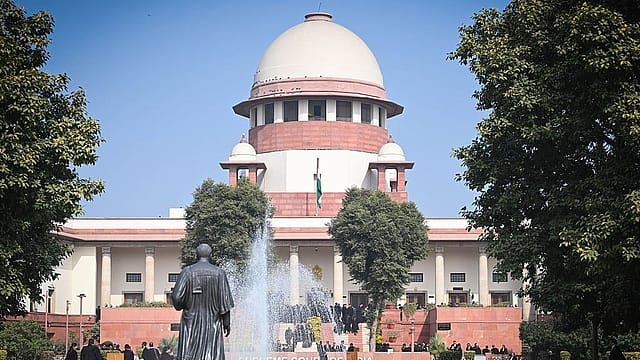
What happens when a park, a road or a Metro route, spaces meant to be part of everyday life, starts feeling unsafe? That question is now before the Supreme Court after a Bench of Justices JB Pardiwala and K Vinod Chandran took suo motu cognisance of recent rape and sexual assault cases in Delhi-NCR. The move comes days after the alleged gang rape of a 17-year-old girl at Aastha Kunj Park near Delhi's Kalkaji.
So, what exactly has the Supreme Court flagged, and why has patrolling become such a central issue?
What has the Supreme Court done in the Delhi rape cases?
The court has decided to examine the issue on its own and directed its registry to register a suo motu public interest litigation. According to Bar & Bench, the Bench's intervention was prompted particularly by the Aastha Kunj case, while also taking note of other recent incidents in Delhi-NCR.

Zeroing In on ECI
09 Oct 2026 - Vol 05 | Issue 41
Constitutional legitimacy versus political opportunism
The court is therefore looking beyond individual criminal investigations and examining whether the systems responsible for preventing such crimes and protecting people in public spaces are functioning adequately.
Why is the Aastha Kunj Park case important?
The 17-year-old girl was allegedly gang-raped inside Aastha Kunj Park on September 21 by three men who allegedly posed as policemen. All three accused were subsequently arrested.
The case also brought the park's security infrastructure under scrutiny. Hindustan Times reported that the 142-acre park had stretches with poor lighting and inadequate surveillance, while questions were also raised about patrolling and security personnel. It was also reported that Delhi Police had identified 164 dark spots across the capital where lighting required attention.
The Delhi LG subsequently ordered a safety audit of all parks and directed stronger beat patrolling, including deployment of women personnel.
What did the Supreme Court say about public spaces?
The court said public spaces cannot become high-risk zones because of failures in lighting, surveillance, patrolling or other preventable deficiencies. The court also emphasised that the right to live with dignity and without fear is part of the fundamental right to life under Article 21.
That shifts the conversation beyond what happens after a crime. The court is also examining whether authorities are doing enough to make vulnerable locations safer before an incident occurs.
Why is ‘lax patrolling’ under the scanner?
The Aastha Kunj case has highlighted how physical infrastructure and policing can overlap. Some parts of the park reportedly lacked effective CCTV coverage and that poor lighting made patrolling difficult. Residents and local groups have also raised concerns about inadequate guards, damaged boundary sections and weak monitoring.
These reports do not by themselves establish that any particular security failure caused the alleged crime. But they have raised questions about whether known vulnerabilities in public spaces are being addressed quickly enough.
That is now part of the larger issue before the Supreme Court.
Did the court refer to the Nirbhaya case?
Yes. Justice Pardiwala drew what Bar & Bench reported as “painful parallels” with the 2012 Nirbhaya case, questioning whether law-enforcement mechanisms have made meaningful progress since then. The reference places the latest cases in the context of a much longer national debate over women's safety, policing and accountability in Delhi.
What happens next?
The Supreme Court has asked its registry to formally register the suo motu PIL and list it for hearing. The case could bring greater scrutiny of how authorities handle patrolling, lighting, CCTV surveillance and safety audits in public spaces.
For now, the central question is bigger than the individual cases: when citizens enter a park, walk home, take a bus or use a Metro station, what responsibility do public authorities have to ensure that these ordinary spaces do not become high-risk zones?
The Supreme Court's intervention suggests that question will now be examined not just as a policing issue, but as a matter of the fundamental right to live with dignity and without fear.
(With inputs from agencies)