Satya Niketan Collapse: Why Do India’s Buildings Keep Falling
A building is declared dangerous. A notice is issued. People continue to live in it. Then the address becomes a rescue site.
That sequence has played out in Bhiwandi. In Virar, a fatal collapse prompted questions about how residents had bought homes in a reportedly unauthorised building. In Surat, the building that fell was only about seven years old. In Bengaluru, workers died before construction was complete.
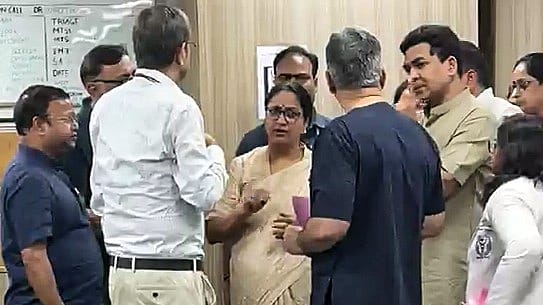
On September 6, the emergency unfolded in Delhi’s Satya Niketan, where a building being used as paying guest accommodation collapsed with students inside. Three people died, Delhi Police said in an evening update carried by ANI. Police said nine people had been rescued, including the three who lost their lives.

The Modi Years
02 Oct 2026 - Vol 05 | Issue 40
A Nation Rebuilt
“Whoever is responsible for this, whether it is the building owner or an official, will not be spared,” Delhi Chief Minister Rekha Gupta reportedly said.
As rescue teams searched the debris, the collapse opened a question stretching far beyond student accommodation: how do unsafe buildings remain places where people sleep, study and work?
The answer requires examining what happened before each collapse—and whether earlier warnings produced action.
What is known about the Satya Niketan collapse?
Gupta said the old building was undergoing renovation and excavation in the basement when a pillar shifted, bringing down the structure. That is the Chief Minister’s preliminary account; the precise sequence of structural failure and responsibility will require investigation. “The building was being used as a PG (Paying Guest), and children were inside. All agencies are continuously working,” she said.
In the update carried by ANI at 8.42 pm, Delhi Police said teams from the police, NDRF, Delhi Fire Service and other agencies were continuing search and rescue operations. Gupta visited AIIMS Trauma Centre to meet the injured. Union Health Minister JP Nadda directed AIIMS and central government hospitals to provide the necessary assistance.
The immediate questions concern the excavation: what work was being undertaken, who authorised and supervised it, and what precautions were taken while the building remained occupied?
Satya Niketan has confronted a fatal renovation-related collapse before. On April 25, 2022, two workers died when a three-storey building undergoing alterations collapsed. The then South Delhi Municipal Corporation said it had issued a notice on March 31 and asked police on April 11 to stop the work. The properties and circumstances must be investigated separately. But the earlier deaths make scrutiny of the neighbourhood’s inspection and enforcement record unavoidable. What changed after 2022?
Where else have buildings collapsed and what do those cases reveal?
In Bhiwandi, Maharashtra, a portion of the Kohinoor Building collapsed late on July 30, 2026. Subsequent reporting put the death toll at least 10.
The civic body said it had identified the building as dangerous in September 2020, issued a reminder in 2022 and eviction notices in June 2026. It also said utilities had been disconnected, families evacuated and unauthorised repairs subsequently undertaken. According to its account, a team returned on the day of the collapse and evacuated around 40 residents and workers, although some people refused to leave and instructions to stop work were resisted.
This was a danger the authorities said they already knew about. The question is how the building continued to expose people to risk despite years of notices and interventions.
In Virar, Maharashtra, a portion of a four-storey apartment building collapsed on August 27, 2025, killing 17 people. The National Human Rights Commission subsequently sought reports from Maharashtra’s Chief Secretary and police chief.
Its notice cited reporting that the building was unauthorised, while residents had been paying municipal taxes and believed their notarised documents established its legitimacy. The commission also referred to reported evacuation notices and an official’s suspicion that inferior construction materials contributed to the collapse. These were matters raised for inquiry, rather than final findings by the commission.
Virar exposes a particular vulnerability for homebuyers: paperwork that looks reassuring can leave crucial questions about approvals and safety unanswered.
In Surat, Gujarat, seven people died after a six-storey residential building collapsed on July 6, 2024. The structure had reportedly been built illegally in 2017. Its short life challenges the assumption that collapse is primarily a problem of buildings worn down by decades of use.
In Lucknow, Uttar Pradesh, eight people died when a three-storey building housing godowns and a motor workshop collapsed in Transport Nagar on September 7, 2024. Subsequent reporting on the forensic investigation identified unauthorised construction and poor-quality materials.
In Bengaluru, Karnataka, nine people died after an under-construction building collapsed in Babusapalya on October 22, 2024. The final missing body was recovered three days later. That case puts construction workers at the centre of the safety question: a building can become fatal before its eventual residents move in.
Schools have also suffered catastrophic failures. In Jhalawar, Rajasthan, seven children died when a government school roof collapsed on July 25, 2025, Reuters reported. The Union Education Ministry subsequently directed states and Union Territories to undertake school safety audits.
These cases span homes, workplaces, construction sites and classrooms. They establish the breadth of the problem; they do not establish a single cause for every collapse or, by themselves, prove that the national frequency is rising.
Is issuing a warning enough to prevent a collapse?
Bhiwandi and the 2022 Satya Niketan case show why the paper trail matters. Notices can establish that a danger or disputed building work had come to official attention. The next question is what the notice accomplished.
Was work stopped? Were occupants moved? Were repairs supervised? Was compliance checked? Could people return to a building that had been evacuated?
Those questions also require a realistic account of housing. Evacuation orders leave families needing somewhere to go. An effective response must connect enforcement with safe temporary accommodation and a clear decision about repair, demolition or continued closure. Otherwise, the immediate pressure to find a roof can collide with the instruction to leave one.
A similar test applies to safety audits. Their value depends on the buildings actually inspected, the defects identified, the deadlines imposed and the corrective work completed. Announcing an inspection drive does not tell residents whether the structure they occupy has become safer.
Where does the hostel shortage fit into this wider story?
Satya Niketan brings an additional pressure into focus: students who secure admission must also find somewhere to live.
Congress leader Rahul Gandhi linked the collapse to inadequate hostel provision, saying students were being forced into crowded PG accommodation. His intervention raises a housing-policy question; it does not establish why this particular building failed.
Delhi University’s own 2026–27 bulletin for its Undergraduate Hostel for Girls illustrates that university admission and accommodation are separate contests. The hostel has 344 twin-sharing rooms and accommodates students from 49 colleges or departments. Admission depends on merit, allocation and availability. Those figures describe one facility, not DU’s total hostel capacity.
The relevant policy test is whether students who turn to private accommodation can identify a safe, accountable provider. Increasing hostel capacity would expand their choices. Private PGs would still need scrutiny of the buildings they operate in, particularly when alterations are proposed.
What should accountability after Satya Niketan establish?
The investigation needs to reconstruct the building’s history: its approved plans, alterations, use as a PG, complaints, inspections and the work underway when it collapsed. It must establish who controlled the property and construction work, what officials knew, and whether required action was taken.
Those findings should also inform inspections of comparable occupied buildings undergoing alterations. The national cases show why an effective response must cover residents and workers as well as students, and newer construction as well as ageing properties.
Gupta has promised that the guilty will not be spared. The test will extend beyond identifying responsibility for the building that fell. It will be whether the warning reaches the next building while people can still walk out of it.
With inputs from ANI & agencies