Rajnath Singh Leaves for Philippines to Attend ASEAN Defence Ministers’ Meeting-Plus
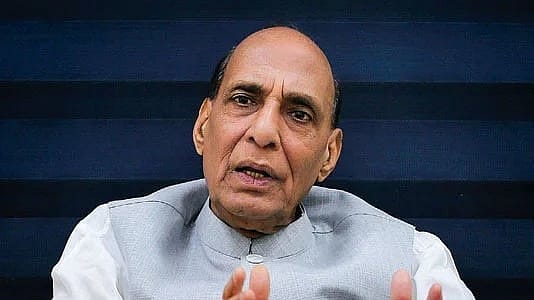
Defence Minister Rajnath Singh left New Delhi on Tuesday for Cebu in the Philippines to attend the 13th ASEAN Defence Ministers’ Meeting-Plus (ADMM-Plus) on October 28 and 29. He will lead the Indian delegation and address the forum on “Exchange of Views on Regional and International Security Issues.”
‘THE PREMIER PLATFORM’
In a post on X, Singh called the ADMM-Plus “the premier platform for defence and strategic consultations in the region.” He said he looks forward to speaking on shared regional and international security issues. “India is firmly committed to ASEAN centrality and the peace, stability, and collective growth of the Indo-Pacific region under our Act East Policy,” he wrote.
He will also hold bilateral meetings with counterparts from participating nations. “These interactions will be a great opportunity to review our ongoing defence ties and explore new avenues to strengthen our strategic partnerships,” he said.
WHAT THE ADMM-PLUS IS
According to the Ministry of Defence, the ASEAN Defence Ministers’ Meeting (ADMM) is the highest defence consultative and cooperative mechanism within the bloc. The ADMM-Plus brings together ASEAN’s member states and its eight Dialogue Partners, which are India, the United States, China, Russia, Japan, South Korea, Australia and New Zealand, to strengthen security and defence cooperation.

Look Who's Talking Regime Change
23 Oct 2026 - Vol 05 | Issue 43
ASEAN has 11 member states: Brunei, Cambodia, Indonesia, Lao PDR, Malaysia, Myanmar, the Philippines, Singapore, Thailand, Timor-Leste and Vietnam.
India became a dialogue partner of ASEAN in 1992. The inaugural ADMM-Plus met in Hanoi on October 12, 2010, and since 2017 its ministers have met every year. The Philippines chairs the ADMM-Plus in 2026. Under the framework, India co-chairs the Experts Working Group on Counter-Terrorism with Malaysia for the 2024-2027 cycle.
The Ministry of Defence said India’s active participation reflects the deepening of its defence diplomacy in Southeast Asia under the Act East Policy, aimed at peace, stability and collective growth in the region.
With inputs from ANI