QUICK TAKE | Who Are the Shankaracharyas? Seven Things to Know About Hinduism’s Spiritual Leaders
1. What does the title Shankaracharya mean?
It identifies spiritual teachers in monastic lineages associated with Adi Shankara. The heads of the four traditional Amnaya Peethams, or cardinal monastic seats, carry the title. Their authority comes from their religious lineage, scholarship and institutional traditions.
2. Who was Adi Shankaracharya?
Adi Shankara was a philosopher and religious teacher who propagated Advaita Vedanta and wrote influential commentaries on the Upanishads, Bhagavad Gita and Brahma Sutras. Tradition credits him with establishing four monastic centres to preserve these teachings across India.
3. Where are the four traditional seats?
They are Sringeri Sharada Peetham in Karnataka in the south; Dwarka Sharada Peetham in Gujarat in the west; Govardhana Peetham at Puri in Odisha in the east; and Jyotir Math at Joshimath in Uttarakhand in the north. Each maintains its own succession and institutional identity.
4. What do these institutions do?
Their work includes religious teaching, scriptural study, worship and the preservation of monastic traditions. The institutions run educational and religious activities, while their spiritual leaders travel, address devotees and guide followers. Their central philosophical tradition is Advaita Vedanta, commonly translated as non-dualism.

Anatomy Of A Stillborn Revolution
20 Nov 2026 - Vol 01 | Issue 01
Whatever Happened To The Cockroach Janta Party?
5. Are they the supreme authorities for all Hindus?
Hindu traditions have multiple spiritual institutions and leadership structures. The Shankaracharyas command particular reverence within the traditions associated with their seats. The familiar reference to “four Shankaracharyas” concerns these cardinal institutions; other institutions, including Kanchi, also use the title.
6. Who visited Ujjain?
Sri Vidhushekhara Bharati, the successor-designate to Sringeri’s senior pontiff Sri Bharati Tirtha, visited the Sringeri Shankar Math in Dendia. Sringeri’s institutional account identifies Bharati Tirtha as its 36th acharya and Vidhushekhara Bharati as his Uttaradhikari, or designated successor.
7. Why does Ujjain want permanent residences for them?
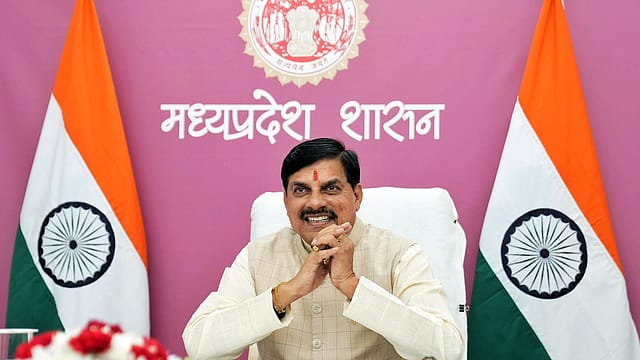
Yadav said the establishments would accommodate the spiritual leaders during their travels and support religious activity during and beyond the Simhastha Kumbh Mela. He said approval had also been granted for a Dwarka Peeth residence, with construction underway. These would be local establishments connected to the existing seats.