Pravin Krishna calls US tariff proposal a ‘carrot and a stick’ to push India into a trade deal
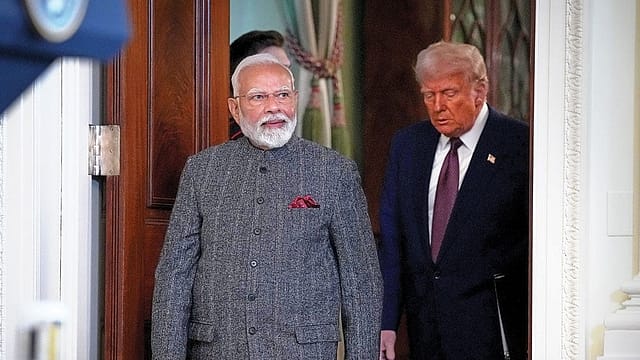
Indian-origin American economist Pravin Krishna says that the Trump administration's new tariff announcement on Indian imports is to goad New Delhi into signing a bilateral deal. The November 25 announcement by the US Trade Representative (USTR) follows an investigation launched in March this year to check if the country pursues practices and policies that place an unreasonable burden on US commerce.
“USTR’s proposed 25 percent tariff on India looks carefully calibrated to pressure New Delhi into signing a deal. At 25 percent, India would face rates 7 percentage points higher than Bangladesh, Cambodia, Indonesia, Malaysia and Thailand, which compete directly with it in apparel, footwear and light manufacturing,” Krishna, Chung Ju Yung Distinguished Professor of International Economics and Business at the School of Advanced International Studies at Johns Hopkins University, told Open.

Anatomy Of A Stillborn Revolution
20 Nov 2026 - Vol 01 | Issue 01
Whatever Happened To The Cockroach Janta Party?

He adds, “Meanwhile, the 17 percent USTR says it would consider if India concludes an agreement would put India a point below those competitors. That is the ‘lower than peers’ treatment Washington has reportedly promised in the negotiations. Overall, India gets a modest edge over its rivals in the US market if it signs a deal. If it holds out, it falls well behind them.” Krishna emphasises that this “is a carrot and a stick in the same announcement”.
“Whether an 8-percentage-point reduction (from 25 percent to 17 percent) is worth the market access Washington will demand in return is an open question, and one New Delhi will, I expect, weigh carefully in the coming weeks,” the economist avers. As of now, India has many worries about a deal on reciprocal trade, including threats to domestic industrial and farm policies and uncertainty over whether such an agreement will actually shield Indian exports from future US tariffs.
Along with 13 other nations and regions, USTR said, specifically about India, that “the Trade Representative proposes that appropriate action to obtain the elimination of the acts, policies, and practices would include applying tariffs of up to 25 percent on all goods of India, net of existing Section 301 tariffs, with exemptions for certain goods. The Trade Representative further proposes to consider whether the additional duties applied should be adjusted to account for, among others, duties applied under other, existing Section 301 actions; duties applied under other, existing Section 232 actions, or were India to reach an Agreement on Reciprocal Trade with the United States that is responsive to the determinations in this investigation into the acts, policies, and practices of India, a tariff rate of 17 percent.”
The investigation was launched in March 2026 under Section 301(b) of the Trade Act of 1974, covering 16 economies, including India, China, Japan, South Korea, Vietnam, Indonesia and the European Union, before concluding that the industrial policies and practices of 14 economies, including India, were unreasonable and restricted US commerce.
USTR is a federal agency reporting to the US President and leads trade negotiations. Its mandate includes negotiating bilateral and multilateral trade agreements, overseeing World Trade Organisation (WTO) disputes, investigating unfair trade practices (such as Section 301 actions) and managing trade-related intellectual property and investment policy.
The latest USTR announcement on November 25 said that the economies covered by “today’s determinations are China, the European Union, Singapore, Switzerland, Indonesia, Malaysia, Cambodia, Thailand, Korea, Vietnam, Taiwan, Bangladesh, Japan, and India. The Trade Representative has not made determinations with respect to Mexico or Norway at this time”.
USTR had separately proposed a 12.5% tariff on India in June under a forced-labour Section 301 probe covering 60 economies.